
How PCB Vacuum Packaging Prevents Moisture Damage in Storage
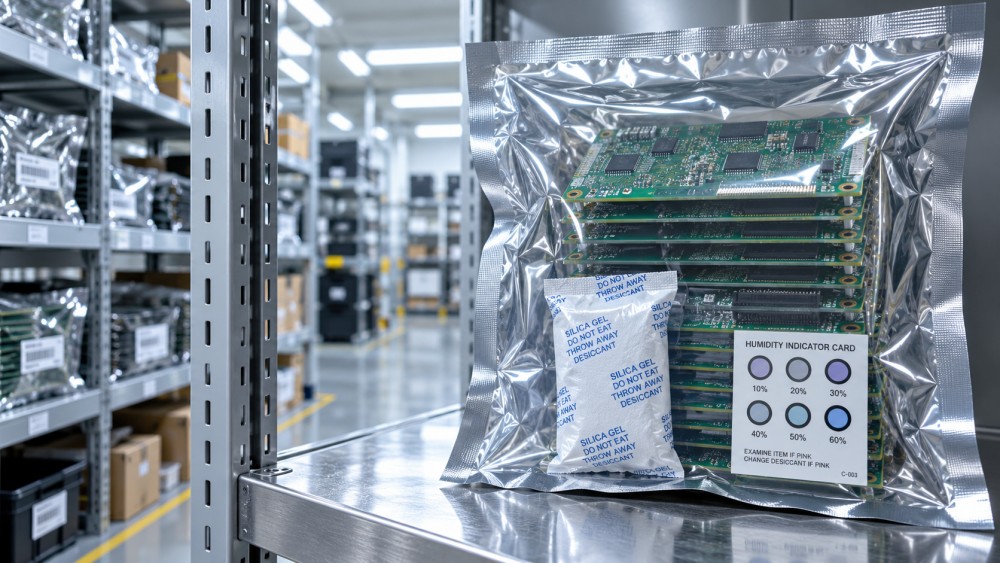
PCB assemblies can absorb moisture long before they reach the production line, especially in humid warehouses, uncontrolled transit environments, or opened packaging areas.
PCB vacuum packaging reduces this risk by limiting air exposure and combining barrier materials with desiccants and humidity indicators for practical moisture control.
For operators, the goal is not simply to remove air from a bag. The goal is to maintain a verified dry environment until the board is ready.
When correctly applied, vacuum packaging helps prevent oxidation, delamination, soldering defects, corrosion, and moisture-related failures that may otherwise appear during assembly or field use.
The most reliable approach combines suitable moisture barrier bags, controlled sealing, correctly sized desiccant, humidity monitoring, careful handling, and clear storage procedures.
Why Stored PCBs Are Vulnerable to Moisture
Printed circuit boards contain materials that can react to humidity, including copper surfaces, solderable finishes, epoxy resin systems, adhesives, coatings, and mounted electronic components.
Even when a board appears dry and clean, moisture can gradually enter through exposed edges, porous packaging, damaged seals, or repeated changes in temperature and humidity.
Moisture absorption is especially important for multilayer boards, flexible circuits, high-density assemblies, boards with fine-pitch components, and products using moisture-sensitive electronic devices.
Humidity can encourage oxidation on exposed copper, pads, and surface finishes. Oxidized surfaces may reduce solder wetting and create unstable electrical or mechanical connections.
Moisture may also enter laminate materials. During later soldering or reflow, rapid heating can turn trapped water into vapor and create internal pressure.
This pressure can lead to delamination, blistering, pad lifting, conductor damage, or the “popcorning” effect in moisture-sensitive components mounted on the assembly.
Storage damage is not always visible during receiving inspection. A PCB may pass a quick visual check but still cause soldering defects when production begins.
That delayed failure makes moisture prevention important for operators, because packaging control protects both stored inventory and future production stability.
How PCB Vacuum Packaging Creates a Moisture Barrier
PCB vacuum packaging works by placing boards inside a low-permeability moisture barrier bag, removing much of the internal air, and heat sealing the package.
Vacuum alone does not make a package completely moisture-proof. The protective performance depends mainly on barrier-film quality, seal integrity, desiccant capacity, and storage conditions.
Removing air reduces the amount of moisture initially trapped inside the package. It also keeps the bag compact, limiting unnecessary internal movement during transport.
The moisture barrier bag slows the movement of water vapor from the outside environment into the sealed package during storage or shipment.
Desiccant inside the package absorbs residual moisture and captures small amounts of vapor that may enter during the rated shelf-life period.
A humidity indicator card provides a visible check of internal package conditions. Operators can inspect it before opening without relying on assumptions about storage history.
These elements work as a system. A high-quality bag cannot compensate for a poor seal, while extra desiccant cannot correct punctures or excessive barrier-film permeability.
Vacuum packaging is therefore best understood as a controlled packaging method, not as a single machine operation performed at the end of production.
Choose Materials That Match PCB Storage Risk
Use moisture barrier bags designed for electronic products rather than ordinary polyethylene bags. Standard plastic packaging can allow water vapor to pass through too quickly.
Common electronic moisture barrier bags use multilayer constructions that may include polyester, aluminum foil, metallized films, polyethylene, or static-dissipative outer layers.
The correct bag should provide a documented moisture vapor transmission performance suitable for the expected storage duration, shipment route, and humidity exposure.
For static-sensitive assemblies, use electrostatic discharge protective packaging. Moisture protection should not create a separate electrostatic handling risk for sensitive components.
Select bag dimensions carefully. An oversized bag creates excess material that can wrinkle near the seal area and increase the chance of incomplete sealing.
A bag that is too small can place stress on sharp board corners, component leads, connectors, or mounting hardware, creating punctures during evacuation or handling.
Use protective inserts, trays, edge guards, or cushioning where necessary. These materials should protect the board without trapping contaminants or preventing reliable bag closure.
Operators should verify that packaging materials are clean, dry, undamaged, and approved for the product. Reusing questionable bags creates avoidable process uncertainty.
Set the Right Vacuum Level Without Damaging the Assembly
A deeper vacuum is not always better for every product. The practical target is sufficient air removal while protecting boards, connectors, labels, and fragile components.
Rigid bare boards usually tolerate vacuum packaging well, but fully assembled PCBs may require controlled vacuum settings to avoid stressing delicate mechanical features.
Large connectors, switches, displays, relays, and tall components can create sharp pressure points when the bag collapses tightly around the assembly.
Use cushioning or controlled vacuum programs for assemblies with vulnerable features. The package should be compact but should not deform components or damage solder joints.
Operators should follow validated machine parameters instead of adjusting vacuum time by appearance alone. Pump performance and sealing results can change as equipment ages.
Check vacuum pump maintenance, filter condition, chamber cleanliness, and gauge accuracy. An unstable vacuum system can produce inconsistent packages that look acceptable initially.
Where product requirements permit, partial vacuum may provide adequate protection when used with proper barrier bags, desiccant, and a reliable heat seal.
Document approved settings for each packaging format. This gives operators a repeatable process and helps quality teams investigate failures with traceable production records.
Use Desiccant and Humidity Indicator Cards Correctly
Desiccant is necessary because some moisture remains in the bag after evacuation, and small amounts of vapor can enter during storage through the barrier material.
Use desiccant quantities based on bag volume, barrier performance, storage duration, product sensitivity, and applicable customer or industry packaging requirements.
Do not estimate desiccant by habit or use identical quantities for every product. Larger packages and longer storage periods generally require greater drying capacity.
Place desiccant where it will not scratch surfaces, obstruct sealing, or become trapped beneath heavy boards. Use approved packets that do not shed loose material.
Humidity indicator cards should be visible when the package is opened. Their purpose is to provide an immediate condition check before boards enter production.
Operators must understand the card instructions because indicator spots can use different humidity thresholds, color changes, and interpretation methods depending on the supplier.
If the card indicates excessive humidity, quarantine the package according to site procedures. Do not assume the PCB is acceptable because the outer bag looks intact.
Quality teams may then determine whether baking, inspection, requalification, or disposal is appropriate based on board construction, component sensitivity, and exposure records.
Control Sealing Quality at the Packaging Station
The heat seal is often the weakest point in PCB vacuum packaging. A small channel, crease, contamination mark, or incomplete seal can allow moisture entry.
Keep the seal area clean and flat before closing the machine. Dust, desiccant fragments, labels, loose film, or board edges can interfere with seal formation.
Set sealing temperature, pressure, and dwell time according to the bag supplier’s specifications. Different film constructions may need different heat-sealing conditions.
Inspect seals regularly for continuous width, uniform appearance, wrinkles, burned film, trapped debris, and visible channels near the package corners.
Perform scheduled seal-strength or leak tests where process risk justifies it. Visual inspection alone may not identify every weak seal or micro-channel.
Operators should also check that vacuum bags are not punctured by board corners, screws, terminals, or component leads after the package leaves the chamber.
Apply labels outside the seal area and ensure that barcode labels remain readable. Product identification must survive storage without compromising package integrity.
A short inspection at the packaging station prevents much larger losses later, particularly when boards will travel internationally or remain in inventory for months.
Handle Vacuum-Packed PCBs Properly After Sealing
Vacuum packaging can only protect a PCB while the barrier remains intact. Storage and handling practices must prevent crushing, puncture, tearing, and unnecessary opening.
Store sealed packages in clean, dry areas away from direct sunlight, water sources, corrosive chemicals, excessive heat, and rapid temperature cycling.
Use shelves, bins, or cartons that prevent sharp edges from pressing into bags. Avoid stacking heavy materials directly on delicate vacuum-packed assemblies.
Maintain first-in, first-out inventory control so that packages do not remain in storage beyond their validated shelf-life without review.
Record packaging date, product number, lot number, operator identification, and expiration or review date. These details support traceability and material release decisions.
During receiving, inspect outer cartons and vacuum bags before accepting inventory into controlled storage. Report broken seals, punctures, wet cartons, or damaged indicators immediately.
When transferring packaged boards between work areas, use covered containers where possible. Protection during internal logistics is as important as protection during external shipping.
Do not place vacuum-packed PCBs directly on dirty benches or metal surfaces. A small puncture can invalidate the entire moisture-control system.
What Operators Should Do When Opening a Package
Open PCB vacuum packaging only when the boards are needed for the next controlled production step. Repeated opening and resealing increases moisture exposure risk.
Before cutting the bag, inspect the seal, package condition, desiccant packet, and humidity indicator card. Record exceptions according to local quality procedures.
Open the bag in an environment that meets the product’s handling requirements. High ambient humidity can quickly reduce the benefit of long-term dry storage.
For moisture-sensitive assemblies, follow the applicable floor-life controls after opening. Exposure time should be tracked from the moment the protective package is breached.
Use clean, ESD-safe workstations and approved handling methods. Moisture control does not replace normal precautions for contamination, electrostatic discharge, or mechanical damage.
If only part of a package is required, reseal the remaining boards promptly using approved materials, fresh desiccant where required, and updated identification labels.
Do not return partially used boards to storage in an unsealed bag or ordinary container. This creates mixed exposure conditions that are difficult to verify later.
Clear operator instructions at the point of use reduce confusion, especially when several PCB types have different storage limits or component sensitivity classifications.
Common PCB Vacuum Packaging Failures and Their Causes
One common failure is using vacuum packaging without desiccant or humidity indicators. This leaves operators unable to confirm whether internal moisture protection remained effective.
Another problem is sealing bags with wrinkles across the seal line. These wrinkles can create narrow leak paths even when the seal appears closed.
Using damaged bags is also risky. Tiny punctures near corners or folds may be difficult to see but can allow humidity to enter over time.
Some facilities package boards after they have already been exposed to humid conditions. Vacuum sealing then traps the existing moisture rather than solving the problem.
Incorrect bag selection can shorten protection time. A low-cost film may be acceptable for short local movement but unsuitable for long-term storage or export shipping.
Excessive vacuum can damage sensitive assemblies, while insufficient vacuum can leave unnecessary humid air inside the package. Both conditions require validated process settings.
Poor labeling creates another operational failure. Without clear packaging dates and lot details, staff cannot manage shelf-life, exposure history, or corrective action effectively.
Training should focus on these practical failure points. Operators protect PCB reliability most effectively when they understand why each packaging step matters.
Build a Repeatable Moisture-Control Procedure
A reliable procedure starts with confirming that boards are dry, clean, and correctly identified before they enter the packaging area.
Next, select the approved moisture barrier bag, protective insert, desiccant quantity, and humidity indicator card for the specific PCB package configuration.
Load the PCB carefully, keep the sealing zone clean, run the validated vacuum and heat-seal cycle, then inspect the completed package immediately.
Apply traceability labels and transfer finished packages into controlled storage. Operators should document exceptions rather than attempting informal repairs without authorization.
Review the procedure regularly using production feedback, package inspection data, supplier changes, shipping incidents, and recurring assembly defects linked to moisture exposure.
Coordination between operators, quality teams, warehouse staff, and process engineers is essential because moisture protection can fail at several points after packaging.
Well-managed PCB vacuum packaging is not an unnecessary extra step. It is a practical control that protects material value, production yield, and customer reliability.
By combining proper barrier materials, validated equipment settings, desiccant, indicators, seal inspection, and disciplined handling, operators can prevent most avoidable storage-related moisture damage.