
On June 30, 2026, China’s Ministry of Commerce and General Administration of Customs put a new dual-use export control requirement into effect for lathes, milling machines, grinding machines, and similar material-processing equipment. The update matters not only to exporters of machine tools, but also to companies involved in production lines such as Plasma Surface Treatment and Powder Coating Lines, because customs filings must now include a restricted-or-prohibited control identification code and vacuum thermodynamic performance data that can be checked during clearance.
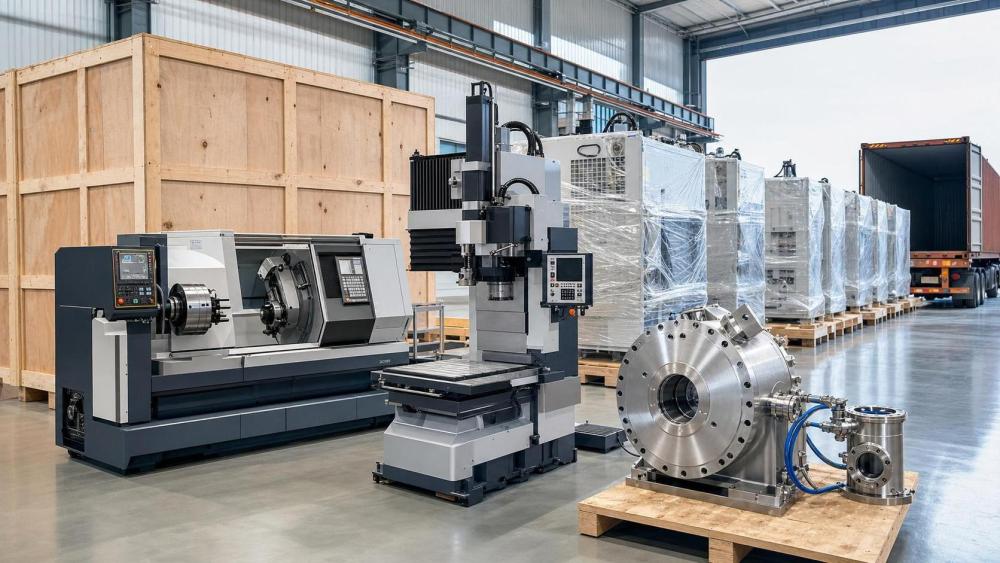
What the new filing requirement covers
According to the information provided, the joint announcement by the Ministry of Commerce and the General Administration of Customs introduced more precise export controls for lathes, milling machines, grinding machines, and similar material-processing equipment from June 30, 2026.
The confirmed new declaration items are a restricted-or-prohibited control identification code and vacuum thermodynamic performance parameters.
The requirement directly affects exports of precision machine tools used alongside production lines such as Plasma Surface Treatment and Powder Coating Lines. The parameters named in the provided information include ultimate pressure of the vacuum chamber, pumping speed curve, and condensation temperature, which must be submitted together with the customs declaration and will be subject to customs verification.
Where the operational impact is likely to appear
Exporters face a more technical declaration burden
From an industry perspective, exporters of covered machine tools are the first group likely to feel the effect because the new rule changes what must accompany a shipment at the declaration stage. The practical pressure is likely to fall on product classification, document preparation, and consistency between technical specifications and customs filings.
Production-line integrators may need closer equipment traceability
Companies supplying integrated lines that include precision machine tools for Plasma Surface Treatment or Powder Coating Lines may also need to pay closer attention. Analysis shows that the issue is not limited to the standalone machine itself; it can extend to supporting equipment within a broader delivery package where vacuum chamber performance and traceability-related parameters become relevant to export paperwork.
Customs brokers and supply-chain service providers may see tighter review points
For brokers and other supply-chain service providers, the change may increase the need to verify whether technical parameter sheets are complete before customs submission. What deserves closer attention is whether the identification code and vacuum thermodynamic data are prepared in a form that aligns with filing requirements, since missing or inconsistent data could affect processing rhythm.
Overseas buyers and project teams may need earlier coordination
Observably, buyers, project managers, and delivery teams may also be affected indirectly. If export documentation now depends on vacuum performance indicators being verified at the customs stage, communication on equipment configuration, supporting documents, and delivery timing may need to start earlier in the transaction process.
What companies should watch now
Track how official wording is applied in practice
Analysis shows that the current confirmed fact is the addition of new declaration items and customs verification requirements. Companies should therefore distinguish between the policy signal itself and how it is implemented in day-to-day clearance practice, especially for equipment categories that sit close to the scope of “similar material-processing equipment.”
Review parameter readiness before shipment filing
What deserves closer attention is whether the required vacuum thermodynamic indicators are already available in internal technical files and whether they can be submitted together with customs declarations. For affected exporters, the immediate focus is less about broad strategy and more about whether ultimate pressure, pumping speed curve, condensation temperature, and related traceability data are ready in a usable filing format.
Check supplier and documentation alignment
For manufacturers, integrators, and trading companies, a practical point is document alignment across engineering, compliance, and customs teams. If the equipment is sourced from upstream suppliers or assembled into larger line solutions, the ability to obtain consistent technical records in time may become a key operational checkpoint.
Prepare for customer communication on lead time and compliance
From an operational perspective, companies involved in export delivery may need to brief customers earlier on possible documentation steps tied to customs review. This is not yet evidence of wider disruption, but it is a reasonable area to monitor where compliance preparation and delivery scheduling intersect.
Why this looks like more than a routine filing update
In editorial observation, this development is best read as a targeted compliance signal rather than a simple paperwork adjustment. The addition of vacuum thermodynamic performance parameters indicates that export review is moving closer to the technical attributes of the equipment itself, especially where traceability and vacuum-related capability are concerned.
At the same time, it is more appropriate to understand this as a rule that now has clear filing consequences, while its broader market effect still needs observation. The provided information confirms what must be declared and checked, but it does not by itself establish how widely business flows, transaction pace, or product configurations will change over time.
How the industry may best interpret the change
The immediate significance of this update lies in compliance detail: certain machine-tool exports now require more granular technical disclosure at customs. For industry participants, the most balanced reading is that this is a concrete short-term operational change and also a longer-term signal that technical parameter transparency is becoming more central in dual-use export control practice.
That makes the issue worth sustained attention, but not overstatement. The clearest current takeaway is that affected companies should treat declaration completeness, technical traceability, and internal document coordination as near-term priorities while continuing to watch how the rule is enforced in practice.
Basis of this article and points for continued verification
This article is generated from the user-provided news title, event date, and event summary. The factual basis cited here is limited to the provided description of the joint announcement by China’s Ministry of Commerce and General Administration of Customs and the stated implementation date of June 30, 2026.
For this type of industry update, relevant source categories would typically include official notices, company disclosures, industry association information, authoritative media reporting, and standards-related documents. A specific official source link was not provided in the input, so the exact text and later implementation details still require continued verification. Areas for follow-up include any further official clarification on scope, filing practice, and customs review requirements for affected equipment categories.