
Choosing vacuum system solutions degassing for viscous materials is rarely a simple matter of selecting a larger pump. Thick fluids trap gas differently, release vapor at different stages, and react strongly to temperature, residence time, and pressure stability. In sectors covered by GIAS, from chemicals and coatings to battery materials, adhesives, and specialty compounds, degassing quality often determines whether the final process runs smoothly or becomes a source of defects, waste, and rework.
Why degassing viscous materials demands a different approach
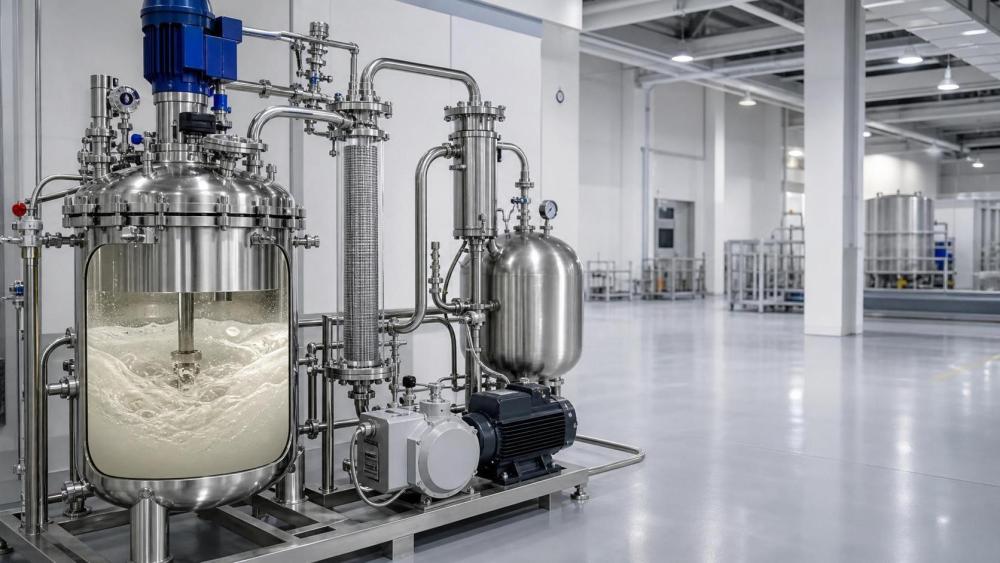
Low-viscosity liquids usually release entrained air with less resistance. Viscous materials behave differently. Air bubbles move slowly, internal circulation is weaker, and surface crusting or foaming can limit mass transfer under vacuum.
That is why vacuum system solutions degassing must be evaluated as part of a process, not as a stand-alone utility. The vessel geometry, agitator design, feed rate, heating method, and vapor handling all influence the result.
In practical terms, poor setup selection can create several familiar problems: residual bubbles in resins, voids in cast products, unstable coating thickness, inaccurate density, packaging failures, and variation in downstream curing or dispensing.
For operations that depend on traceability, compliance, and repeatable product quality, vacuum stability becomes more than an equipment issue. It becomes a process control issue.
What “the right setup” actually means
The best vacuum system solutions degassing are matched to material behavior and production goals. A strong ultimate vacuum may look attractive on paper, yet it may not improve results if vapor load is high or pressure swings trigger foaming.
A suitable setup usually balances five factors at the same time:
- target vacuum range needed to release trapped gas;
- pumping speed under real operating pressure;
- tolerance for condensable vapors and solvents;
- process stability during mixing, heating, or dosing;
- maintenance burden over continuous production.
In many plants, the degassing step sits between weighing, batching, mixing, coating, filling, or drying. That makes vacuum performance closely linked to the broader auxiliary system chain that GIAS often examines.
Key material and process variables to assess first
Before comparing pump technologies, it helps to define what the material is likely to do under reduced pressure. This early assessment avoids overspecification and prevents selecting hardware that performs well only in catalog conditions.
Viscosity profile, not just viscosity value
Some products are shear-thinning. Others become dramatically thinner when heated by only a few degrees. The degassing window can shift quickly, so the system must match the material at actual operating temperature.
Gas source and bubble origin
Entrained air from mixing is different from dissolved gas released during heating or reaction. If bubbles are generated continuously, the vacuum system must handle a moving target rather than a one-time removal step.
Vapor load and condensable components
Water, solvents, plasticizers, and reactive byproducts can raise the vapor burden. In that case, vacuum system solutions degassing may need condensers, knock-out pots, or corrosion-resistant internals to protect the pump.
Batch or continuous operation
Batch vessels often require fast pull-down and good control near the degassing setpoint. Continuous lines may prioritize stable throughput, compact footprint, and easier integration with mixers, extruders, or metering systems.
Where vacuum system solutions degassing create measurable value
The value of degassing is usually seen downstream. Better bubble removal improves product appearance, mechanical integrity, filling accuracy, coating smoothness, and curing consistency.
In adhesives and sealants, trapped gas can weaken bond lines or cause dispensing irregularity. In coatings, it can create pinholes, orange peel, or film defects. In battery and specialty chemical processing, it can affect density and process reproducibility.
That is one reason industrial intelligence platforms such as GIAS treat vacuum systems as process-support infrastructure rather than secondary equipment. Microscopic process variation often becomes a visible quality problem later.
How to compare setup options without relying on brochure claims
A useful comparison starts with the full degassing loop. The pump matters, but so do piping conductance, vessel seals, condenser capacity, instrumentation, and control logic.
Look at operating pressure, not only ultimate vacuum
Many vacuum system solutions degassing perform in a narrow pressure band. If the process spends most of its time there, pumping speed in that range is far more relevant than the lowest pressure listed in a datasheet.
Check vapor tolerance early
A pump selected without regard to condensable vapors may suffer oil contamination, corrosion, deposits, or frequent shutdowns. For solvent-bearing materials, the protective accessories may be as critical as the pump itself.
Assess controllability under load changes
Degassing is rarely steady. Feed composition, mixing intensity, and product temperature change over time. The setup should maintain pressure smoothly during those shifts, not oscillate between overpull and recovery.
Consider cleaning and maintenance intervals
A technically strong solution can still underperform if service frequency is too high. Residue build-up, seal wear, filter loading, and oil condition all influence uptime and life-cycle cost.
Common configuration elements that improve real-world results
The most reliable vacuum system solutions degassing often combine several supporting elements instead of relying on the pump alone.
- A condenser can reduce vapor load before it reaches the pump.
- A buffer vessel can smooth sudden gas release during foaming events.
- Heated lines can prevent premature condensation in cold sections.
- Pressure sensors close to the vessel improve control accuracy.
- Variable-speed control can match evacuation to process phase.
- Appropriate materials of construction reduce corrosion and contamination risk.
Simple additions like these often separate a stable production setup from one that performs well only during acceptance testing.
Decision points worth documenting before supplier comparison
A structured evaluation saves time and makes supplier proposals easier to compare. It also reduces the chance that an attractive specification hides a poor fit for the process.
- Define the acceptable residual bubble level or product quality target.
- Record viscosity across the expected temperature range.
- Estimate vapor composition, not only gas volume.
- Note whether foaming is temporary, repeated, or severe.
- Map upstream and downstream constraints, including mixing and filling speed.
- Review maintenance limits, cleaning needs, and utility availability.
When this information is available, vacuum system solutions degassing can be judged on process fit, not on generic pump size alone.
A practical next step for stronger evaluation
The most useful next step is to convert a general need for degassing into a short technical profile. Include material behavior, target pressure range, vapor characteristics, batch size or throughput, and acceptable maintenance frequency.
From there, compare vacuum system solutions degassing by operating performance, control stability, vapor handling, and service burden. That approach creates a clearer basis for pilot testing, supplier discussion, and long-term process reliability.
For advanced manufacturing environments, that discipline matters. Auxiliary systems may sit in the background, but they often decide whether process quality remains consistent when production scales.