
On July 13, 2026, the European Chemicals Agency (ECHA) added three new substances to the SVHC candidate list, with relevance to electronic coating and surface activation processes. For exporters of Plasma Surface Treatment equipment, the update matters not only at the material level but also in documentation and customer review workflows, especially where equipment is used with substrates or supporting chemicals that contain SVHCs. Automotive, medical, and precision electronics supply chains are likely to pay closer attention because EU importers may now tighten compliance checks on equipment suppliers.
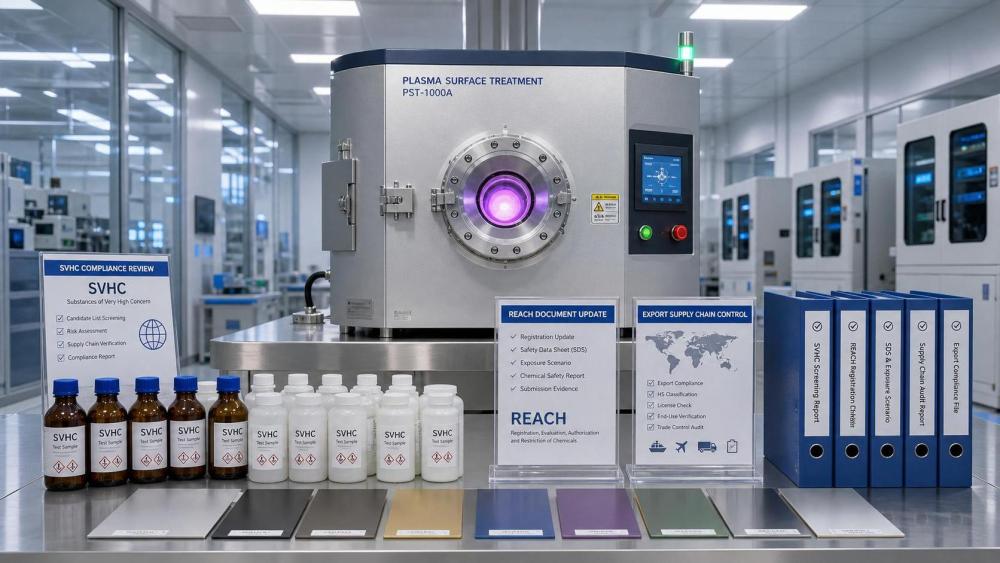
What the July 13 update confirms
According to the provided information, ECHA formally included three additional substances in the SVHC candidate list on July 13, 2026. The update concerns electronic coating and surface activation processes. Where Plasma Surface Treatment equipment is used to process substrates containing SVHCs, or where related chemicals used alongside the equipment contain SVHCs, suppliers are required under Article 33 of REACH to provide downstream importers with a safety data sheet (SDS) and a declaration on SVHC content. The adjustment directly affects the compliance review process used by EU buyers when assessing equipment suppliers.
Where the pressure is likely to appear first
Equipment exporters facing stricter document review
For companies exporting Plasma Surface Treatment equipment to the EU, the immediate impact is likely to appear in pre-shipment compliance review and customer onboarding. The issue is not limited to the machine itself; it extends to how the equipment is used with treated substrates and supporting chemicals. From an industry perspective, exporters need to expect more detailed requests from EU importers for SDS materials and SVHC-related declarations.
Manufacturers using coatings or activation chemistry
Processors and manufacturers operating in coating and surface activation steps may be affected where SVHC-containing materials or chemicals are involved in actual production. The business impact is likely to show up in material traceability, internal compliance confirmation, and communication between process owners and equipment suppliers. This is particularly relevant where Plasma Surface Treatment is part of a controlled production route.
EU buyers in regulated end-use sectors
Automotive, medical, and precision electronics buyers are specifically noted in the provided information as sectors where supplier review may be affected. Analysis shows that purchasers in these fields may place greater emphasis on whether equipment suppliers can support compliance documentation in a complete and timely way. The practical effect may be a more rigorous review of declarations before approval, ordering, or delivery acceptance.
Supply chain and service partners handling transaction flow
Distributors, import coordinators, and other supply chain service participants may also feel the effect through document handling and communication duties. What deserves closer attention is that the compliance burden can move across multiple parties once EU importers begin asking for clearer proof linked to SDS and SVHC content statements.
What companies should watch now
Check whether current declarations still match actual use scenarios
Companies should first review whether existing compliance statements still reflect the way Plasma Surface Treatment equipment is applied in projects involving relevant substrates or supporting chemicals. The key point is alignment between actual process conditions and what has been declared to downstream importers.
Prepare for more detailed importer questions
Because the update affects EU buyer review procedures, suppliers should be ready for additional document requests or more detailed questionnaires. Analysis shows that responsiveness may become part of commercial execution, not just a legal formality, particularly when serving customers in automotive, medical, and precision electronics applications.
Separate confirmed obligations from broader customer expectations
It is important to distinguish between the confirmed requirement stated in the provided information and any broader compliance demands individual buyers may add during procurement. Observably, a regulatory update often triggers stricter customer-side interpretation before market practice fully settles. That makes careful communication with importers and downstream partners especially important.
Track any further official clarification
The current information confirms the listing action and the related REACH Article 33 documentation expectation. What deserves closer attention is whether subsequent official wording, customer guidance, or procurement practice introduces more detailed interpretation for equipment transactions tied to SVHC-related processing environments.
Why this reads as more than a routine list update
This section is analysis. From an industry perspective, the development is not only about three newly listed substances; it also signals how compliance responsibility is being reflected in equipment-related trade discussions. The immediate change is procedural, with stronger scrutiny of SDS and SVHC declarations. It is more appropriate to understand this as a near-term compliance tightening with possible longer-term implications for how equipment suppliers support documentation in regulated manufacturing sectors.
How to interpret the current stage
At this stage, the update is best understood as a concrete compliance signal rather than a fully settled shift in every transaction workflow. The confirmed facts already indicate that EU buyers may strengthen their supplier review process. At the same time, the wider commercial effect will depend on how importers, manufacturers, and service partners apply the requirement in day-to-day procurement and delivery practice. A measured reading is that this is an actionable short-term change with longer-term relevance still worth monitoring.
Basis of this article and points for follow-up
This article is based on the user-provided news title, event date, and event summary. For developments of this kind, commonly relevant source types include official notices, company compliance statements, industry association updates, authoritative media coverage, and standards or regulatory documents. A specific official source link was not provided in the input, so the exact source path still requires ongoing verification. Follow-up attention should remain on any further official clarification and on how EU buyers translate this update into practical supplier review requirements.