
On July 12, 2026, the ECHA added three new fluorinated surface modification agents to the SVHC Candidate List, creating an immediate compliance issue for exporters of Plasma Surface Treatment equipment that rely on related gases or consumables. For equipment makers, EU importers, manufacturers using plasma activation or cleaning processes, and downstream buyers, the issue is not limited to regulatory wording: it directly affects customs clearance, the validity of CE marking documentation, and the REACH-related responsibilities tied to end products.
What the July 12 listing changes in practice
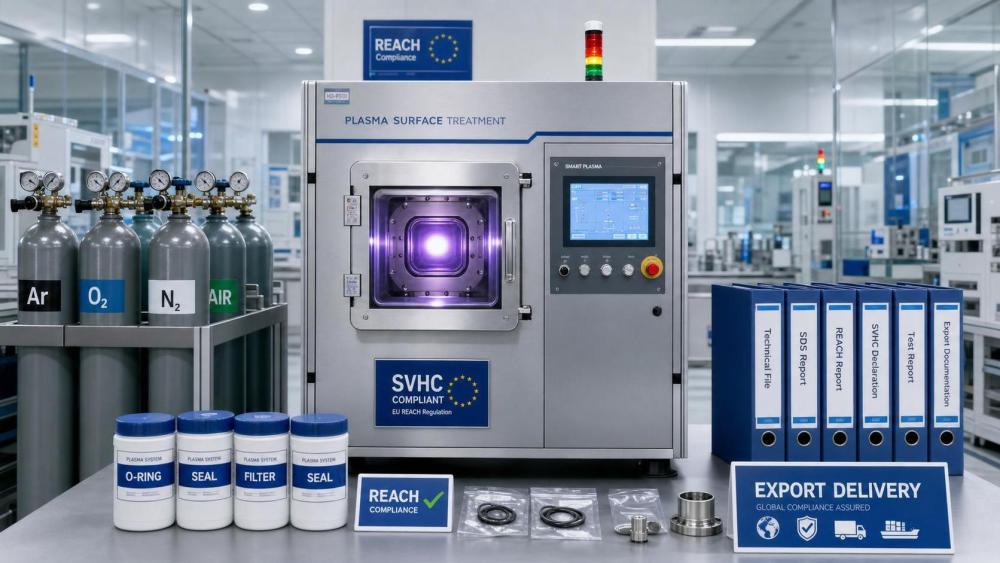
The confirmed update is that, as of July 12, 2026, three new fluorinated surface modification agents were formally included by the ECHA in the SVHC Candidate List. The change directly affects export compliance requirements for industrial equipment using plasma surface activation or cleaning processes.
Where a Plasma Surface Treatment system uses gases or consumables containing the relevant substances, suppliers must provide an SCIP notification and an updated EU Declaration of Conformity to EU importers by October 31, 2026. According to the information provided, this adjustment is directly related to overseas buyers' customs clearance, the continued effectiveness of CE marking, and associated REACH compliance responsibility for the final product.
Which parts of the supply chain may feel the impact first
Equipment exporters face a documentation and delivery risk
From an industry perspective, exporters of Plasma Surface Treatment systems are the first group likely to be affected because the change is tied directly to equipment placed into EU trade channels. The impact is most visible in export documentation, importer handover files, and shipment readiness. What deserves closer attention is whether the equipment configuration includes gases or consumables involving the listed substances, because that determines whether SCIP notification and updated conformity documents must be provided within the stated timeline.
EU importers and overseas buyers must reassess intake compliance
EU importers and overseas procurement teams may be affected at the point of customs clearance and product acceptance. The information provided makes clear that the update is linked to clearance and CE-related validity, so buyers may need to verify whether supplied systems have updated declarations and required notifications before accepting delivery or completing import procedures.
Manufacturers using plasma activation or cleaning processes may see downstream pressure
Processing and manufacturing companies that purchase or operate Plasma Surface Treatment systems may also be affected indirectly. Analysis shows that if the equipment they source involves the relevant gases or consumables, REACH-related obligations may extend into end-product compliance discussions. The operational pressure is therefore likely to appear in supplier review, equipment specification checks, and communication with customers that request clearer compliance evidence.
Supply chain and service providers may need tighter coordination
Service providers involved in delivery, regulatory file preparation, and cross-border supply chain coordination may need to watch this development closely. Observably, where compliance files are incomplete or not updated in time, the issue can move beyond a technical materials question and become a scheduling, acceptance, or documentation problem across multiple parties.
What companies should verify now
Check whether the listed substances are present in gases or consumables
The first practical issue is substance relevance. Companies supplying Plasma Surface Treatment equipment should verify whether the gases or consumables used in their systems contain any of the newly listed fluorinated surface modification agents mentioned in the update. This is the threshold issue that determines whether the new compliance response applies.
Prepare SCIP and conformity file updates against the deadline
The October 31, 2026 deadline matters operationally because the requirement is not framed as a future policy discussion but as a concrete documentation obligation for affected systems. Companies should focus on whether the SCIP notification and the updated EU Declaration of Conformity can be prepared and delivered to EU importers within the required timeframe.
Separate policy signal from shipment-level execution
Analysis shows that one of the main risks in this kind of update is treating a regulatory listing as a background compliance matter rather than a shipment-level execution issue. In this case, the consequences described in the input are linked to customs clearance, CE marking validity, and end-product REACH responsibility. That means internal legal review alone may be insufficient unless it is connected to export documentation, delivery planning, and importer communication.
Align supplier records and customer communication early
What deserves closer attention is the handoff between upstream suppliers, equipment manufacturers, and EU-side customers. If a system depends on third-party gases or consumables, companies may need clearer supplier substance information before they can update their own declarations. At the same time, EU importers may expect early confirmation on whether affected systems will arrive with revised compliance files.
Why this looks like more than a short-term paperwork update
This section is an editorial observation. It is more appropriate to understand this development as both an immediate compliance trigger and a signal that substance-level scrutiny around plasma-related process inputs can quickly become an equipment market issue. The confirmed facts do not show the full scale of impact across all product categories, so it should not be overstated as a settled market outcome. Even so, the combination of an SVHC listing, a defined documentation deadline, and direct implications for customs clearance and CE-related validity makes this a development the industry cannot treat as routine background noise.
How the market should read this update for now
At this stage, the most balanced reading is that the July 12 update creates a near-term compliance task with potential knock-on effects across export, import, and downstream product responsibility. It is not yet a basis for broad conclusions about long-term market restructuring, but it is clearly more than a procedural footnote. Current attention should stay on affected equipment categories, related gases and consumables, and whether document updates can be completed in time for EU trade continuity.
Basis of this article and points requiring continued verification
This article is based on the user-provided news title, event date, and event summary. For this type of development, source categories typically relevant to verification include official notices, company disclosures, industry association information, authoritative media reporting, and standards or compliance documentation. No specific official source link was provided in the input, so the exact official reference still requires ongoing verification. Continued attention should focus on any further official wording, importer-side implementation expectations, and any clarifications affecting SCIP notification or updated EU Declaration of Conformity requirements.