
In many factories, the big machines get the attention. The support systems do not. Yet when traceability breaks down or uptime slips, the root cause is often not the main production asset at all. It is a missed code read, an unstable vacuum level, a batching deviation, poor part cleanliness before joining, or a coating process drifting out of control without anyone noticing soon enough.
That is why process support systems automation has moved from a nice-to-have upgrade to a practical requirement in advanced manufacturing. For project managers, the real value is not just labor reduction. It is the ability to make hidden process steps visible, measurable, and linked to the production record in real time.
When automation is designed well across coding and marking, weighing and batching, vacuum management, ultrasonic cleaning, and surface treatment, two things improve together: you know exactly what happened to a product, and you spend less time reacting to avoidable stoppages.
Traceability gets stronger when support processes stop being isolated
A traceability system is only as reliable as its weakest process input. Many manufacturers already capture batch numbers, machine IDs, and shift data. The gap usually appears in the supporting operations between core production stages. If a laser marker applies the correct code but the upstream cleaning process was inconsistent, the trace record may show identity without showing process integrity. If a batching skid logs the target recipe but no one verifies actual dosing against tolerance, the production history looks complete while the quality risk remains hidden.
Automation changes this by pulling support systems into the same digital thread. A marked part can be linked to cleaning cycle status, weld parameters, vacuum pressure trend, coating line conditions, or actual dispense weight. That does not mean every project needs a full manufacturing execution system from day one. In many cases, a more realistic first step is to standardize data capture at the equipment level and make sure timestamps, lot references, alarm history, and pass/fail logic can be exported consistently.
This is one reason platforms such as GIAS matter in project research. The challenge is rarely understanding one machine in isolation. It is understanding how auxiliary equipment affects quality records across the full process chain.
Uptime improves when the “small” process deviations are caught early
Unplanned downtime often starts small. A vacuum pump begins drifting from its normal operating window. An inkjet coding line experiences intermittent print quality issues due to environmental variation or maintenance lag. An ultrasonic cleaning bath loses consistency because contamination loading changed faster than the maintenance schedule assumed. None of these problems looks dramatic at first. But they tend to create rework, rejects, or downstream interruptions that are harder to diagnose after the fact.
Automation helps because it turns support equipment from reactive utilities into monitored process assets. Instead of waiting for failure, teams can track condition indicators, alarm frequency, recipe deviations, cycle completion status, and basic trend data. In practice, this is often where project managers see the clearest return: fewer ambiguous stoppages and faster root-cause isolation when something does go wrong.
A common mistake is to judge uptime only by whether the support system itself is running. The better question is whether it is running within the process window required by the product. A vacuum system that is technically online but unstable can still compromise packaging, coating, freeze-drying, degassing, or semiconductor-related steps. The same logic applies to weighing and batching systems: operation without verified dosing accuracy is not true availability.
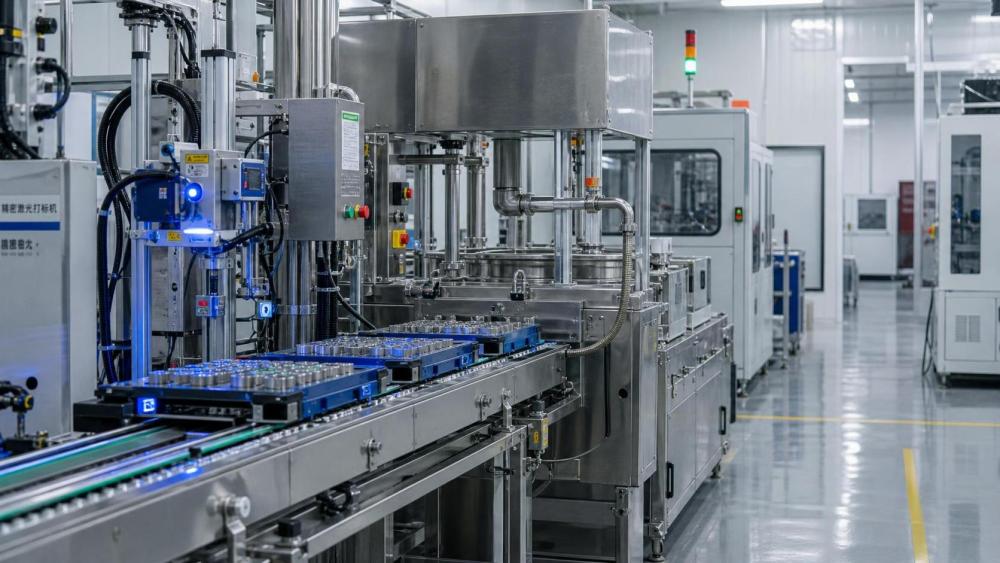
Where automation usually makes the biggest difference
Not every auxiliary process needs the same level of automation. Some points are usually more valuable than others.
The best candidates are usually the processes that are hard to inspect after completion. You can often test a final dimension. It is much harder to reconstruct whether a contamination issue originated from incomplete cleaning three hours earlier, or whether a coating defect was linked to unstable pretreatment conditions that were never logged.
Project reality: integration is the hard part, not the dashboard
Most automation discussions sound clean on paper: connect machines, collect data, build traceability, optimize uptime. On the factory floor, the harder work is more ordinary. Different suppliers use different communication methods. Legacy support equipment may offer only limited signal access. Data naming is inconsistent. Time synchronization is poor. Operators may still rely on manual overrides because the automated sequence does not match actual changeover behavior.
For project leaders, this is where practical scoping matters. A useful automation plan should answer a few uncomfortable questions early:
- Which support-system events must be tied to each product, lot, or batch record?
- Which process deviations should stop production, and which should trigger warning-only review?
- What data needs to be stored locally, and what needs to be pushed upward to MES, ERP, or quality systems?
- Can existing equipment provide trustworthy signals, or will extra sensors and verification devices be needed?
- Who owns the response workflow when the automation flags a process exception?
Without those decisions, it is easy to collect a lot of data and still miss the exact records needed during an audit, customer complaint review, or scrap investigation.
Traceability without verification is only partial control
One of the more persistent misconceptions in industrial automation is that digital records equal control. They do not. A system can log every cycle and still allow the wrong job file, wrong coating parameter set, or wrong batch ingredient to pass through if no verification logic exists.
This matters especially in sectors where recipe integrity, labeling accuracy, anti-counterfeiting, or cleanliness verification have downstream regulatory or customer consequences. The exact obligations vary by product and market, so project teams usually need to check the relevant local and sector-specific requirements. But the engineering principle is consistent: automate both recording and validation.
For example, in coding and marking, the useful automation layer is not just sending print content to the device. It is confirming that the correct code was actually applied and remains readable. In weighing and batching, it is not enough to record the recipe target; actual dosing, tolerances, and material confirmation need to be part of the decision logic. In cleaning and surface treatment, completed cycle status should be linked to release criteria, not filed away as background history nobody checks.
How to decide what level of automation is worth it
There is no universal template. Some lines justify deep integration because the cost of traceability failure is high. Others benefit more from targeted automation at bottleneck support steps. The right decision usually depends on three things: the cost of downtime, the cost of non-conformance, and how difficult the process is to verify afterward.
If a support process affects product identity, recipe accuracy, vacuum integrity, or surface performance in a way that cannot be fully recovered later, that process should usually move higher on the automation list. If the process is stable, low-risk, and easily inspected downstream, a simpler control approach may be enough.
This is also where cross-functional input matters. Quality teams often focus on record completeness. Maintenance wants warning visibility and easier troubleshooting. Operations wants fewer nuisance trips. Procurement may focus on supplier compatibility and lifecycle support. A good project scope balances all four instead of letting one viewpoint dominate.
What experienced teams usually avoid
They avoid over-automating low-value signals while leaving critical failure points manual. They avoid assuming all supplier data is equally usable. They avoid building traceability around operator memory or spreadsheet re-entry. And they usually resist the temptation to launch with dozens of KPIs before the core exception logic is stable.
The more durable approach is narrower and less flashy: identify the support-system conditions that can stop the line, trigger rework, or weaken compliance evidence; automate those first; make the records searchable; and ensure someone actually owns the response when the system detects drift.
For manufacturers working across cleaning, marking, batching, vacuum, and coating technologies, that mindset is often what turns process support systems automation into something useful rather than decorative. Better traceability and better uptime come from the same discipline: knowing what happened, when it changed, and whether the process was still within the window the product required.
If a project team starts there, the automation architecture tends to become clearer. Not simpler, necessarily. But clearer—and that usually saves more trouble than another dashboard ever will.