
What Affects Automated Dosing Accuracy in Micro-batching Systems?
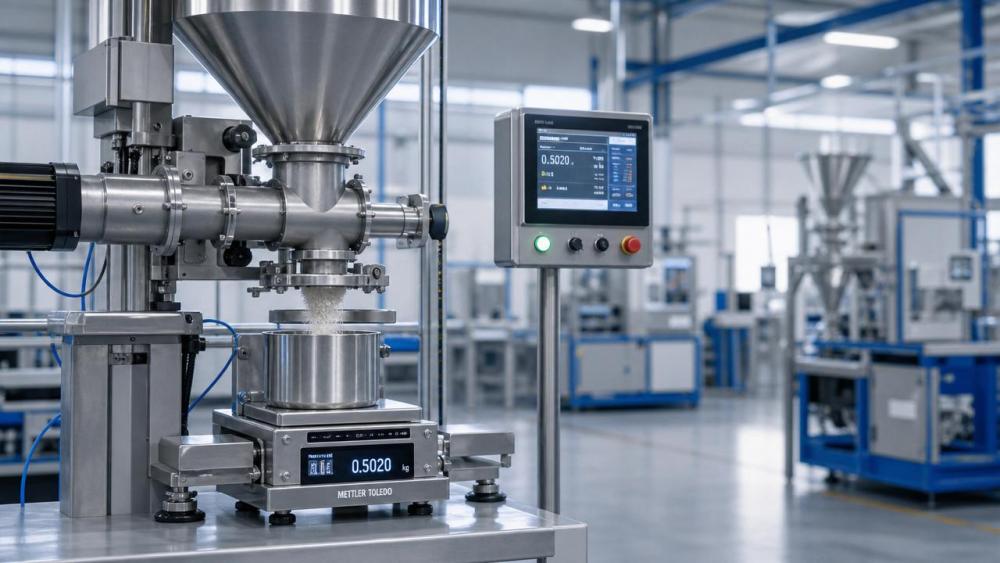
In micro-batching, small dosing errors can create big production problems. That is why automated dosing accuracy matters far beyond the control panel.
A one-gram drift may look minor. In high-value powders, additives, or active ingredients, it can affect quality, traceability, cost, and compliance.
The main challenge is simple. Micro-batching systems handle tiny target weights, but the process around them is never perfectly stable.
Material behavior changes. Feeders respond differently. Load cells pick up vibration. Airflow, humidity, and cleaning routines also shift actual results.
So when teams ask what affects automated dosing accuracy, the answer is rarely one setting or one component.
It is a system issue. Mechanical design, control logic, calibration discipline, and operating habits all work together.
In practical terms, better automated dosing accuracy comes from understanding where variation starts, how it grows, and how to stop it early.
Why micro-batching is harder than standard batching
Standard batching often allows a wider tolerance. Micro-batching does not. The smaller the target dose, the less room there is for feeder lag or scale noise.
This also means automated dosing accuracy depends on how quickly the system can detect, calculate, and stop material flow.
A feeder that performs well at 20 kilograms may struggle at 20 grams. The turndown requirement becomes much more demanding.
More importantly, fine materials can bridge, compact, aerate, or cling to surfaces. These behaviors cause irregular discharge and unstable dosing cycles.
That is why automated dosing accuracy in micro-batching systems should be judged under real production conditions, not only during an empty test run.
Material flow behavior is often the first source of error
Material properties strongly influence automated dosing accuracy. Powders, granules, flakes, liquids, and pastes all behave differently under the same control logic.
Fine powders may flood one minute and rat-hole the next. Sticky blends can remain on hopper walls and then fall suddenly.
Bulk density variation is another hidden issue. If density changes during storage or transport, volumetric feed becomes less reliable.
Moisture also plays a role. Higher humidity can increase cohesion, slow discharge, and leave more residual material in the feeder or nozzle.
Electrostatic behavior matters too, especially in dry environments. Lightweight particles may cling to contact surfaces instead of entering the batch cleanly.
For this reason, improving automated dosing accuracy often starts with material trials, flow testing, and hopper design review.
- Check whether the material bridges, flushes, or compacts.
- Track density changes between batches or suppliers.
- Review wall finish, hopper angle, and discharge geometry.
- Confirm whether humidity shifts material flow during the day.
Feeder design and response speed directly shape dosing results
Even with a stable material, feeder performance can limit automated dosing accuracy. Different feeder types offer different levels of control.
Screw feeders are common for powders. Vibratory feeders often suit free-flowing materials. Pumps may serve liquids or slurries.
The key question is not only feed rate. It is how precisely the feeder starts, slows, and stops near the target point.
Overshoot usually comes from delayed cutoff. Material already in motion continues after the stop command has been sent.
This is why two-stage dosing is widely used. A fast feed stage handles bulk filling, and a slow trim stage improves automated dosing accuracy near the setpoint.
Mechanical wear also matters over time. Screw clearance, vibration consistency, valve sealing, and drive stability can drift slowly and quietly.
When the trend is subtle, production teams often blame software first. In reality, feeder response may have changed long before alarms appear.
Common feeder-related warning signs
- Cycle-to-cycle variation increases at low target weights.
- The system overshoots after normal stop commands.
- Trim mode takes longer than usual.
- Accuracy changes after cleaning or part replacement.
Scale sensitivity and signal stability are easy to underestimate
Load cells and weighing modules are central to automated dosing accuracy. But raw sensitivity alone does not guarantee better results.
The signal must be both sensitive and stable. If the scale reacts to every disturbance, the controller may chase noise instead of real weight gain.
Vibration from nearby machines is a common cause. So are platform resonance, pipe forces, and mechanical contact between fixed and moving parts.
Air currents create another problem. A fan, open door, or dust extraction flow can shift readings enough to affect automated dosing accuracy.
Signal filtering helps, but too much filtering slows response. That tradeoff becomes critical in fast micro-dosing applications.
A good setup balances resolution, update speed, mechanical isolation, and control tuning. No single parameter solves everything.
A practical check table
Control logic, calibration, and environment complete the picture
Software settings matter, but only in context. Good control logic supports automated dosing accuracy when physical conditions are already under control.
Cutoff compensation is one example. The controller can learn expected in-flight material and stop early to hit the target more closely.
However, if material flow changes sharply, yesterday’s compensation value may cause today’s overfill or underfill.
Calibration discipline is equally important. A scale can pass a basic check and still perform poorly across the full operating range.
Routine verification should use realistic test points near actual micro-batch weights. That is where automated dosing accuracy is truly tested.
Temperature swings can also affect electronics, viscosity, and density. In some processes, morning performance differs from afternoon performance for this reason.
Cleaning practices deserve attention too. Residue left in contact parts can change effective dose weight. Aggressive cleaning can alter feeder surfaces or alignment.
A useful improvement routine
- Record actual error by recipe, shift, and material lot.
- Separate mechanical, material, and signal-related causes.
- Tune bulk and trim stages after mechanical checks.
- Verify calibration near real production setpoints.
- Review environment changes before changing software again.
How to maintain automated dosing accuracy over time
Long-term automated dosing accuracy depends on consistency, not occasional troubleshooting. The goal is to catch drift before it becomes scrap.
Trend data helps a lot here. Small shifts in refill time, trim duration, or standard deviation often appear before hard failures.
Standard work also matters. When start-up checks vary by operator, process stability becomes difficult to compare.
A useful practice is to link automated dosing accuracy reviews with maintenance, quality records, and supplier change notices.
That approach makes root causes easier to spot. It also supports better process documentation for regulated or export-driven production.
In the end, automated dosing accuracy is not just about meeting a number. It protects recipe integrity, production efficiency, and repeatable product quality.
Start with material behavior, then check feeder response, weighing stability, calibration, and environmental control. That sequence usually delivers the fastest gains.
When those basics are managed well, micro-batching systems become more predictable, less wasteful, and much easier to trust in daily production.