
Weighing and Batching Automation: Key System Components and Accuracy Factors
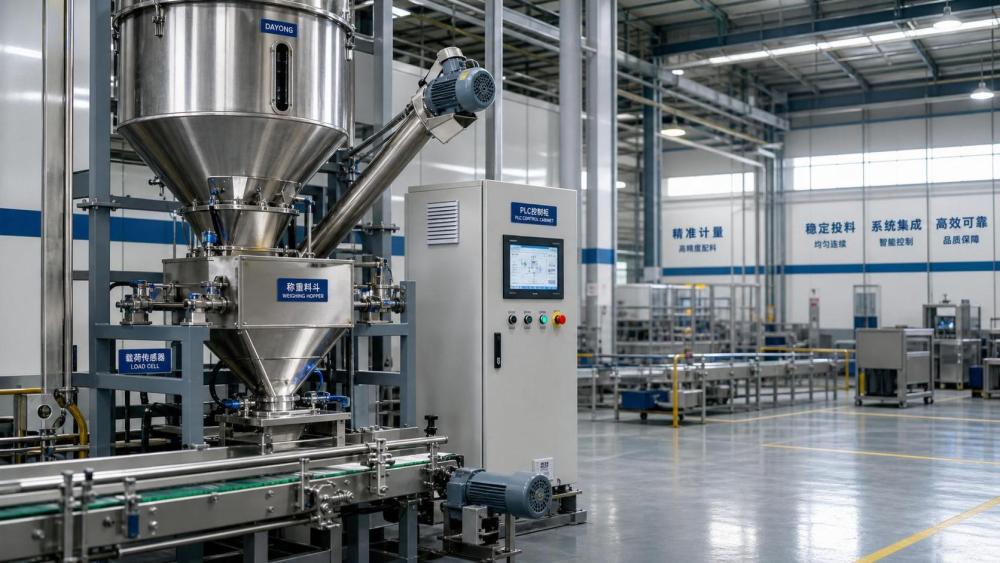
Weighing and batching automation is now a core control layer in modern manufacturing. It supports throughput, traceability, and consistent product quality across complex process lines.
In practical terms, the system does more than add materials. It decides how accurately each ingredient enters the process, when correction happens, and how stable production remains over time.
That matters in food, chemicals, pharmaceuticals, building materials, and battery production. A small dosing error can become a yield loss, a compliance issue, or a batch rejection.
For that reason, weighing and batching automation should be evaluated as a full system. Accuracy depends on mechanical design, sensing quality, control logic, environment, and maintenance discipline.
From recent project trends, the clearer signal is integration. Plants want weighing and batching automation that connects cleanly with MES, ERP, recipe control, and quality records.
This article explains the essential components and the main accuracy factors. It also highlights practical points that affect system selection, startup performance, and long-term reliability.
Why Weighing and Batching Automation Matters
A manual process may work at low volume. Once recipes become tighter, manual correction becomes slow, inconsistent, and difficult to trace.
Weighing and batching automation improves repeatability by controlling feed rates, cut-off points, and discharge sequences. It also records what happened in every batch.
This creates value in several ways:
- Reduces overfeed and material waste.
- Supports recipe compliance and audit readiness.
- Improves batch consistency across shifts and sites.
- Shortens cycle time through stable automatic dosing.
- Provides traceable data for quality investigation.
In real operations, this also lowers process risk. When raw material variation increases, a well-configured automation platform helps operators react faster and with better control.
Core System Components
The performance of weighing and batching automation starts with architecture. Each component affects dosing stability and total system accuracy.
1. Material Storage and Feeding Equipment
Bins, hoppers, silos, screws, belts, and vibratory feeders determine how material moves before it reaches the scale. Poor flow behavior can ruin good instrumentation.
Bridging, rat-holing, segregation, or inconsistent bulk density often create unstable feed rates. That leads to overshoot, refill delays, and unpredictable batch times.
2. Weighing Module and Load Cells
Load cells are the measurement foundation of weighing and batching automation. Their capacity, sensitivity, protection rating, and mounting design must match the process.
A high-quality load cell still needs the right mechanics. Misalignment, binding, side loads, and thermal expansion can all distort the measured signal.
3. Scale Structure and Vessel Design
The scale frame, support points, flexible connections, and vessel geometry influence signal stability. Even a good controller cannot fix a mechanically noisy platform.
Pipes, cables, and dust extraction lines should not transfer unintended force. Small mechanical interference often causes large measurement drift during production.
4. Control System and Software Logic
PLC, HMI, industrial PC, and batching software define sequence control, setpoint handling, tolerances, alarms, and reporting. This is where accuracy becomes operationally usable.
Most advanced weighing and batching automation uses fast and slow feed stages. It may also apply adaptive cut-off values based on previous batch behavior.
5. Discharge, Transfer, and Downstream Interfaces
Accuracy is not only about filling. It also depends on how material leaves the weigh vessel and reaches the next process without residue or cross contamination.
Valves, gates, pumps, and conveyors should discharge cleanly and repeatably. Otherwise, the measured quantity and the delivered quantity may not match.
Main Factors That Influence Accuracy
When evaluating weighing and batching automation, accuracy should never be treated as a single nameplate number. It is shaped by several interacting conditions.
Material Characteristics
Powders, granules, liquids, flakes, and pastes behave differently. Flowability, stickiness, moisture, aeration, and particle size can change feed response significantly.
This is why one dosing method rarely fits every material. Feeder type and cut-off strategy should be selected from real material testing, not only catalog assumptions.
Resolution and Signal Quality
Load cell resolution, analog-to-digital conversion, filtering, and signal stability directly affect how precisely the controller can respond near the target weight.
Too much filtering slows the response. Too little filtering increases noise. The right balance depends on vessel size, fill speed, and acceptable cycle time.
Mechanical Vibration and Environment
Nearby mixers, conveyors, presses, and fans often transmit vibration into the scale. Airflow, temperature change, and dust buildup also shift reading stability.
In demanding plants, weighing and batching automation must include isolation design, shielding, proper grounding, and realistic installation spacing.
Feed Rate and Cut-Off Control
Fast dosing improves output, but it increases the risk of overshoot. Material in flight after a feeder stops can still enter the vessel.
That is why well-tuned weighing and batching automation uses staged filling. Bulk feed handles speed, while dribble feed protects final accuracy.
Calibration and Verification Practice
Calibration confirms measurement integrity, but routine verification confirms daily performance. Both are needed if the process has strict quality or legal requirements.
A stable system can still drift over time because of wear, contamination, operator changes, or seasonal temperature variation. That also means maintenance planning matters.
How to Evaluate System Design for Real Projects
A useful specification goes beyond target capacity. It should define the operating context of weighing and batching automation in measurable terms.
- Material range: density, moisture, flowability, and hazard level.
- Batch profile: minimum and maximum dose size.
- Accuracy target: legal, internal, or process-based tolerance.
- Throughput need: hourly output and cycle time expectation.
- Data need: recipe versioning, audit trail, and system integration.
- Cleaning need: washdown, contamination control, or product changeover.
This is where many projects succeed or fail. If the process assumptions are weak, even strong hardware may underperform after commissioning.
A practical review should also check spare part strategy, local service support, software access, and the ability to tune parameters without vendor dependency.
Typical Risks and How to Reduce Them
Most accuracy problems in weighing and batching automation are preventable. They often come from ordinary design shortcuts rather than rare technical failures.
More importantly, risk control should begin before FAT and SAT. It should start with material trials, installation rules, and clear acceptance criteria.
What Good Performance Looks Like
Strong weighing and batching automation is not defined by speed alone. It should deliver stable accuracy, predictable cycle time, and useful process data.
A good system typically shows low batch deviation, fast recovery after disturbance, clean operator interaction, and clear reporting for audits or process improvement.
It should also support future changes. Recipe expansion, upstream raw material shifts, and downstream automation upgrades are common in growing plants.
That is why modular design matters. Scalable weighing and batching automation reduces the cost of later expansion and avoids disruptive redesign.
For teams comparing suppliers, the most useful question is simple. Can the system maintain accuracy in real production, not only in a controlled demonstration?
The best answer usually comes from application evidence, commissioning discipline, and service capability, alongside hardware specifications.
In short, weighing and batching automation works best when mechanical design, sensor integrity, software logic, and verification practice are treated as one system.
If the goal is reliable production consistency, start with material behavior, define realistic tolerances, and choose a system built for control, not just basic dosing.