
Industrial batching for food sits behind some of the most visible results in production: flavor consistency, label accuracy, line efficiency, and fewer costly recipe errors. In food plants, batching is not just about moving ingredients into a mixer. It is a control point that affects traceability, allergen management, waste levels, and day-to-day operating stability.
That is why industrial batching for food remains a practical topic across the wider industrial auxiliary systems landscape covered by GIAS. Precise support equipment often determines whether the final product meets quality targets, even when it is not the most obvious machine on the line.
What food batching really controls
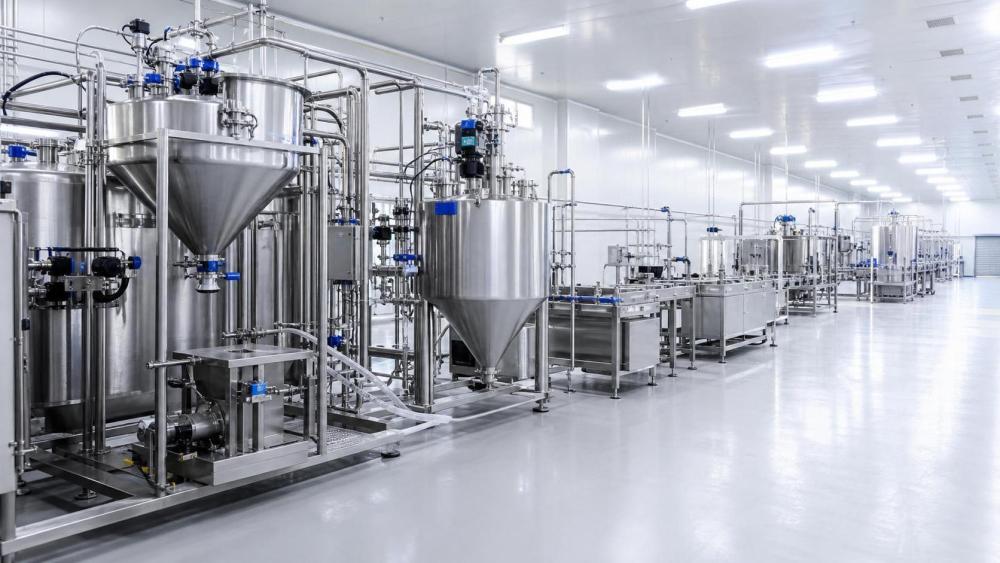
At a basic level, industrial batching for food means measuring and combining ingredients according to a defined recipe. The system may handle powders, liquids, minor ingredients, or a mix of all three.
The batching stage often connects upstream storage with downstream mixing, cooking, filling, or packaging. If dosing is unstable here, every later process step becomes harder to manage.
In actual use, batching systems also record lot numbers, control ingredient sequence, and reduce manual handling. That gives them a direct link to food safety and production documentation.
Why the topic matters more now
Food production has become more sensitive to variation. Shorter product runs, more stock keeping units, tighter allergen controls, and rising ingredient costs all increase the value of accurate batching.
A small weighing drift can create a chain of problems. Texture changes, taste shifts, rework, scrap, and delayed release may all start with one incorrect batch.
There is also a traceability issue. When plants need to prove what entered a batch, when it was added, and in what quantity, the batching system becomes part of the compliance record.
This is consistent with the broader GIAS view of auxiliary equipment. Process support systems shape product quality at the detail level, where small control failures become large commercial risks.
Common system types and where each one works best
Not every food process needs the same architecture. The best choice depends on recipe complexity, throughput, ingredient behavior, and cleaning demands.
Manual or semi-automatic batching stations
These systems usually combine floor scales, bench scales, guided prompts, and operator confirmation steps. They are common in facilities with frequent recipe changes or many minor ingredients.
They work best in seasoning blends, bakery premixes, test kitchens, specialty products, and medium-volume operations. Their strength is flexibility rather than top-line speed.
When well designed, semi-automatic industrial batching for food can still provide barcode verification, lot tracking, and tolerance alarms. That makes manual handling more controlled and less error-prone.
Automatic gain-in-weight batching systems
In this setup, ingredients are added into a vessel placed on load cells. The control system stops each feed at the target weight.
This type is widely used for sauces, dairy mixes, beverage bases, prepared foods, and multi-ingredient liquid processes. It suits recipes where exact accumulation in one tank matters.
Gain-in-weight systems are often easier to understand during operation. The batch grows step by step, and the total can be checked directly against the recipe.
Loss-in-weight batching systems
Here, the feeder or hopper sits on load cells, and the system measures how much material leaves the unit. This is especially useful for powders and difficult dry ingredients.
Loss-in-weight industrial batching for food performs well when flow consistency is critical. Examples include flour dosing, sugar feeding, starch addition, spice handling, and continuous dry blending.
It is often chosen where feed accuracy must remain stable despite bulk density changes. For lightweight or aerated materials, that can be a major advantage.
Continuous batching systems
Continuous systems meter ingredients without stopping for discrete batch cycles. They are common in very high-volume lines with repeatable formulations.
They work best in snack processing, cereal production, beverage preparation, and large-scale powder handling. The main benefit is throughput with less start-stop disruption.
The tradeoff is flexibility. If recipes change often, cleaning and transition control can become more demanding than in batch-based equipment.
Micro-ingredient and minor ingredient systems
These are designed for small-dose additions such as flavors, colors, vitamins, enzymes, preservatives, and functional additives. Accuracy requirements are usually tighter than for bulk ingredients.
They work best where a tiny deviation has an outsized effect on taste, labeling, or nutritional claims. In some applications, this is the most sensitive part of industrial batching for food.
The practical issues that shape system choice
In real plants, the choice is rarely based on throughput alone. Ingredient behavior often matters more than nameplate capacity.
Sticky pastes, free-flowing powders, hygroscopic materials, oils, and fragile inclusions each place different demands on feeders, valves, load cells, and cleaning design.
Recipe structure matters too. A process with three bulk ingredients is very different from one with twenty additions, including allergens and low-dose additives.
Industrial batching for food also depends on how the system fits with upstream silos, transfer lines, mixers, coding systems, and production records. Isolation from the rest of the line usually creates blind spots.
Questions worth asking before selection
- How many recipes run each week, and how often do changeovers happen?
- Which ingredients create the highest cost when overfed or underfed?
- Where are the strictest tolerance limits: bulk ingredients or micro-dosing points?
- How much traceability is required at lot, batch, and shift level?
- What cleaning method is realistic between products with different allergen risks?
- Does the system need to support future automation or line expansion?
Where batching performance is usually won or lost
People often focus on scale accuracy alone. In practice, performance depends on a wider group of details.
Feeder control, discharge consistency, vibration isolation, ingredient refill timing, software interlocks, and operator prompts all affect repeatability. A precise scale cannot compensate for unstable material flow.
Cleaning design is another decisive factor. If washdown takes too long or dry cleaning leaves residue, industrial batching for food becomes harder to sustain over multiple product runs.
More attention is also going to digital records. Batch reports, alarm history, and recipe version control support investigations when deviations happen.
That is why auxiliary technologies deserve coordinated review. Identification systems, weighing controls, and process data collection often work better when planned together, not as separate purchases.
A sensible next step for evaluation
A useful starting point is to map one real recipe from ingredient intake to final mix release. That quickly shows where batching errors, waiting time, manual checks, and documentation gaps actually occur.
From there, compare system types against production reality rather than brochure language. The best industrial batching for food setup is the one that matches ingredient behavior, hygiene needs, traceability demands, and daily operating rhythm.
It also helps to review batching alongside adjacent support systems, because food quality is rarely shaped by one machine alone. A stronger decision usually comes from assessing the full control chain around weighing, identification, transfer, and verification.
When that comparison is done carefully, system choice becomes less about general preference and more about fit. That is usually where better consistency, lower waste, and more reliable production begin.