
Why does the choice of a micro-batching system manufacturer matter so early?
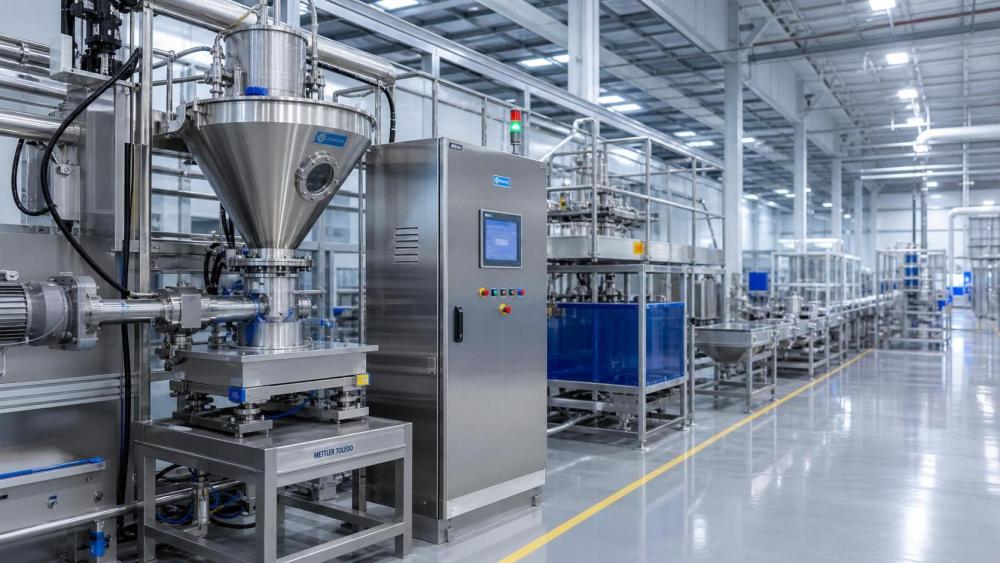
A micro-batching system often looks like a supporting unit, not the headline machine.
In practice, it can decide whether a process stays stable, traceable, and scalable.
That is why selecting a micro-batching system manufacturer should start before layout freeze or pilot validation.
The real question is not only dosing resolution on a datasheet.
It is whether the supplier can hold repeatability across materials, shifts, recipe changes, and future throughput increases.
This matters across advanced manufacturing.
Food, pharma, chemicals, and battery production all depend on controlled micro-dosing and batch consistency.
GIAS frequently frames auxiliary equipment this way: process support systems shape final quality more than their footprint suggests.
A weak micro-batching system manufacturer can create hidden losses.
Those losses appear as off-spec batches, rework, unstable traceability records, and difficult scale-up.
A capable partner reduces those risks by proving control, integration, and service discipline.
What should accuracy really mean when comparing suppliers?
Accuracy is usually the first filter, but it is often misunderstood.
One micro-batching system manufacturer may quote static precision under ideal conditions.
Another may show actual dosing deviation during continuous production.
Those are not equivalent.
A useful evaluation asks how the system behaves with your material characteristics.
Powder flow, humidity sensitivity, bulk density variation, and feeder refill behavior all affect result quality.
More importantly, repeatability matters as much as nominal accuracy.
If the first ten cycles are precise, but drift appears after two hours, the specification has limited value.
A dependable micro-batching system manufacturer should be able to explain:
- how weighing cells are protected from vibration and dust
- how feeder design matches fine powder, granule, or liquid behavior
- how control logic compensates for overshoot and refill disturbances
- how calibration and verification are handled during normal production
If those answers remain vague, the supplier may be selling hardware, not process capability.
A quick judging table helps narrow the field
Before deeper trials, it helps to compare suppliers against a practical checklist.
This kind of comparison is more useful than ranking suppliers by headline accuracy alone.
When scale-up is likely, what should be checked beyond the pilot result?
Pilot success can be misleading.
Many systems dose well at low speed with frequent operator adjustment.
Scale-up exposes the harder issues: refill timing, vibration transfer, recipe switching, and control lag.
A reliable micro-batching system manufacturer should show a scale-up logic, not just a larger frame.
Ask whether the same dosing principle remains stable at higher throughput.
Also ask whether software architecture, data logging, and operator workflows scale with line complexity.
In actual plants, expansion usually means more than volume.
It often means tighter compliance, more recipe variants, and stronger traceability expectations.
That makes integration a serious selection factor.
The better micro-batching system manufacturer can explain communication protocols, alarm logic, batch records, and audit readiness.
This fits the broader GIAS view of industrial support systems.
Traceability, process quality, and consistency depend on how auxiliary equipment connects into the production environment.
Questions that usually reveal scale-up readiness
- Can the same platform support pilot, mid-volume, and production-scale configurations?
- What throughput increase is possible before accuracy loss becomes significant?
- How are recipe data, user permissions, and production records managed?
- What changes when handling abrasive, cohesive, or sensitive materials at larger scale?
- Can line expansion happen with minimal shutdown?
How can you compare one micro-batching system manufacturer against another fairly?
A fair comparison starts with a common test basis.
Without that, every supplier highlights different strengths, and the results become difficult to trust.
A useful approach is to prepare one application brief covering material type, target batch size, tolerance, environmental conditions, and expected future capacity.
Then ask each micro-batching system manufacturer to respond against the same requirements.
The strongest suppliers usually welcome this discipline.
They know their process data, control philosophy, and failure limits.
The weaker ones often retreat to broad claims or generic model sheets.
During comparison, separate three layers of evaluation:
- technical fit: dosing method, feeder type, weighing architecture, controls
- delivery fit: lead time, FAT support, commissioning depth, spare parts planning
- lifecycle fit: cleaning effort, recalibration frequency, software support, upgrade path
This helps prevent one common mistake.
Many teams compare price before they compare operating risk.
For a micro-batching system manufacturer, the lower quote may carry higher validation cost, longer tuning time, or more scrap later.
Where do supplier risks usually hide?
Most selection failures do not come from a single obvious flaw.
They come from small gaps that only become visible after startup.
One common issue is underestimating material behavior.
A micro-batching system manufacturer may have a good platform, but poor application matching for sticky powders or fragile additives.
Another risk is incomplete compliance support.
If your process needs documented calibration, controlled access, or batch-level data integrity, confirm this early.
Needless customization is also risky.
Custom features can solve a real problem, but they can also create maintenance complexity and software dependence.
In many cases, the better micro-batching system manufacturer offers a modular standard design with controlled options.
That usually leads to easier support and more predictable validation.
A practical risk screen before final selection
- Request sample test data using material close to your real process.
- Review alarm history and fault recovery logic, not only normal operation.
- Check whether wear parts are standard and regionally available.
- Confirm documentation depth for calibration, maintenance, and validation.
- Look for reference cases in industries with similar consistency demands.
What is the smartest next step before making the final decision?
The smartest next step is to turn selection into a structured proof exercise.
Shortlist each micro-batching system manufacturer against the same acceptance criteria.
Those criteria should cover dosing tolerance, repeatability, throughput window, data handling, cleaning time, and scale-up path.
Then connect those findings to business risk.
A slightly higher capital cost may be justified if it lowers recipe loss, commissioning delay, and compliance exposure.
This is where industry intelligence becomes useful.
Platforms such as GIAS help put one supplier proposal into a wider context of process technology, traceability needs, and manufacturing quality expectations.
That context matters because auxiliary systems influence final output long after installation is complete.
If the process depends on precise dosing today and production expansion tomorrow, the right micro-batching system manufacturer should prove both.
Do not close the decision on brochure precision alone.
Compare real process evidence, integration readiness, and long-term operating discipline.
That is usually the clearest route to stable batches, lower risk, and a scale-up plan that holds under production pressure.