
It usually starts with a complaint that sounds small: a batch recipe is correct on paper, the feeder settings have not changed, and the operator follows the same sequence as yesterday, yet the dosed amount keeps drifting just enough to create trouble downstream. In micro-batching systems, that “just enough” matters. A tiny overfeed can change viscosity, curing behavior, moisture balance, color consistency, reactivity, or tablet uniformity, depending on the process. A tiny underfeed can be even harder to catch because the line may keep running while quality quietly moves out of range.
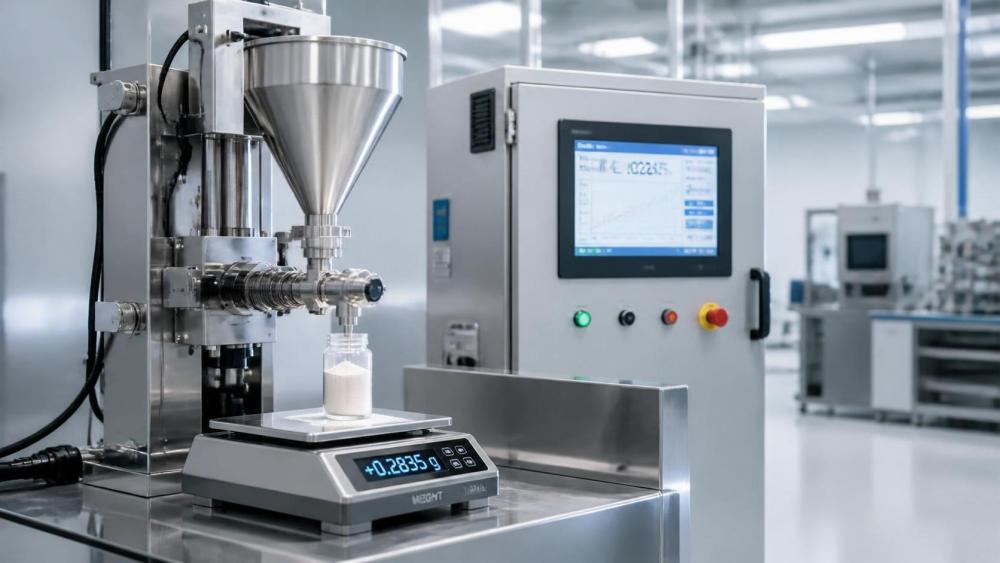
If you have spent time around compact dosing stations, bench-top batching frames, or enclosed ingredient dispensers, you have probably seen this pattern: the first instinct is to blame the controller, then the screw feeder, then the operator. But many repeatability problems begin earlier, at the weighing point itself. That is where precision dosing technology load cell performance stops being a specification buried in a catalog and becomes a practical factor in whether a micro-batching system behaves predictably from one cycle to the next.
Load cell accuracy affects more than the final displayed weight. It influences when the dosing system decides to slow down, when it decides to stop, and whether the control logic can trust the signal enough to make fine corrections. In a large hopper, small signal imperfections may be absorbed by scale. In micro-batching, there is less room for averaging, less material mass to stabilize the reading, and less tolerance for delay.
Where the problem usually shows up first
In smaller dosing applications, the symptoms are often misleading. The system may appear stable during coarse feed but become erratic during dribble feed. A target weight may be reached too late because the controller receives a noisy or delayed signal and keeps feeding longer than intended. Sometimes the opposite happens: vibration or electrical disturbance causes unstable readings, so the system stops early and compensation creates a cycle of overcorrection.
Common situations include powders that bridge and then release suddenly, small-volume liquids dispensed into lightweight vessels, or additives introduced in gram-level or sub-kilogram increments. In these cases, the weighing assembly is expected to distinguish meaningful mass change from everything else happening around it: frame movement, motor vibration, airflow, cable tension, thermal drift, and the mechanical memory of the mounting structure.
That is why a technical review should not treat “accuracy” as a single number detached from the application. A load cell can perform well in static weighing and still create trouble in dynamic dosing if the installation, resolution, response characteristics, and environmental conditions do not match the batch size and feed profile.
The misunderstanding that causes bad equipment choices
One of the most common mistakes is assuming that if the nominal capacity is correct, the weighing side is already solved. In practice, oversized load cells are a frequent source of disappointing dosing behavior. When the rated capacity is much higher than the actual working load, the usable signal for each tiny mass increment becomes less distinct. That weakens sensitivity exactly where micro-batching needs it most: near cutoff, during fine feed, and when the controller is trying to settle the final value without hunting.
Another mistake is focusing only on readability on the indicator screen. A display that shows small increments does not guarantee that the underlying measurement is stable or meaningful. If the signal contains mechanical or electrical noise, finer display resolution can simply make instability more visible. Technical evaluation should separate display behavior from actual weighing performance.
A third misconception is that software filtering can fix poor mechanical design. Filtering is useful, but excessive filtering slows the response of the weight signal. In precision dosing, delayed response can push the stop point beyond the intended target, especially with fast-responding feeders or free-flowing material. The result is a system that looks calm on screen but still misses the batch target in operation.
Why load cell accuracy changes dosing behavior so directly
The reason is simple: a micro-batching controller does not work from material flow alone. It works from feedback. The load cell signal tells the system whether mass is increasing at the expected rate, whether it should switch from coarse to fine feed, and when the target has effectively been achieved. If the signal is distorted, every control decision built on that signal becomes less reliable.
Accuracy in this context is not only about linearity or calibration at a few known points. It also includes repeatability under real mounting conditions, creep behavior during short hold periods, zero stability, sensitivity to off-center loading, and the ability to maintain a clean signal while nearby equipment is operating. For micro-batching, these details affect whether the system can make the same decision the same way every cycle.
Think of two systems using the same feeder and recipe. In one, the weighing assembly responds quickly and consistently to small mass changes. In the other, the signal lags, oscillates, or drifts after the vessel is filled. The second system will often need wider tolerances, more manual adjustment, slower throughput, or more frequent operator intervention. The feeder may not be the true limitation; the measurement quality may be.
Practical signs that the load cell deserves closer attention
When micro-batching errors appear, several clues point back to the load cell or its installation. One is inconsistent cutoff behavior near the target point even when material properties have not changed much. Another is a scale reading that settles differently depending on whether nearby actuators are moving. A third is a dosing result that changes after maintenance work, vessel cleaning, or cable rerouting, even though the weighing module itself was not replaced.
It is also worth paying attention when deviations become worse after reducing batch size. That often happens because the same weighing hardware is being asked to control a smaller process window without a corresponding improvement in signal quality. The system may have been acceptable for larger additions but is no longer suitable for fine dosing.
If the process includes multiple ingredients, the symptom may not look like a weighing problem at first. The first ingredient may dose well, while later additions become inconsistent because the dead load increases, mechanical friction changes with vessel movement, or the mounting arrangement responds differently under a partially filled condition. Evaluators sometimes overlook this because calibration with static test weights can still appear acceptable.
A more useful way to evaluate suitability
Instead of asking only whether the load cell is “accurate,” it helps to ask whether it is accurate enough for the smallest controlled addition under actual operating conditions. That shifts the evaluation from generic scale performance to application fit.
Start with the real dosing task. Consider the minimum batch size, the smallest ingredient increment, the expected feed speed near cutoff, and the allowed process deviation before product quality is affected. Then examine whether the weighing system can produce a stable, timely signal in that range. The useful question is not whether the load cell can measure the total vessel weight, but whether it can support the control decisions needed during the most sensitive part of the dose.
Mechanical layout matters just as much. A good load cell installed on a frame that twists, binds, or picks up vibration will not perform like its datasheet suggests. Support points should allow force to transfer cleanly. Piping, flexible connections, and cable routing should not introduce side loads or drag. The vessel should not rub against guards or brackets during filling. In many troubleshooting sessions, these non-electrical details explain more than the electronics do.
Steps that usually improve dosing reliability
The first step is to separate measurement problems from material flow problems. If the weight signal is unstable while the feeder is off, the issue is unlikely to be dosing logic alone. If the signal is stable until a motor starts, the disturbance may be vibration, grounding, or cable shielding. If the reading changes after the vessel is touched or repositioned, mechanical interference becomes a likely cause.
Next, review load cell capacity against actual working load. In micro-batching, there is often pressure to choose a higher-capacity sensor for safety margin, but too much margin can reduce effective sensitivity. Capacity selection should reflect vessel weight, product load, and operational forces without making the measurement range unnecessarily broad for the control task.
Then look at response behavior. Fast response is not always better if the system becomes noisy, but a signal that is too heavily damped can force the feeder to overshoot before the controller sees the true weight. The right balance depends on material flow characteristics and stop precision. This is why tuning should be done with real product or a close equivalent, not only with static calibration weights.
Calibration itself should be treated carefully. A passing calibration check does not prove dosing suitability. It confirms that the system can relate signal to weight under test conditions. For micro-batching, you also need to observe zero return, short-term repeatability, and signal behavior during actual feed transitions. Those operational checks reveal problems that a simple span check can miss.
Where a new system is being specified, it helps to evaluate the weighing module as part of the complete batching process rather than as an isolated component. Industrial weighing and batching applications often perform best when the load cell, mount, controller, and feeder dynamics are considered together, because each part affects the practical meaning of “accuracy” in production.
When the issue is not the sensor alone
It is important not to over-assign blame to the load cell. Some micro-batching problems come from refill disturbances, air drafts over lightweight vessels, pulsating pneumatic feeders, or recipe logic that switches too late from bulk to trim feed. But even in these cases, the quality of the weight signal determines how well the system can compensate. A stronger measurement foundation gives the control strategy a better chance to work.
There are also applications where a different dosing architecture may be more suitable than trying to force higher precision from the existing setup. If material behavior is highly inconsistent or the installation space creates unavoidable vibration, it may be necessary to rethink vessel isolation, feeder type, or batching sequence. The point is not that one sensor specification fixes everything, but that load cell accuracy sets the floor for what the rest of the system can realistically achieve.
Making a decision without getting trapped by brochure numbers
For technical evaluators, the safest approach is to judge the weighing system by behavior in context. Ask for clear information about sensitivity, repeatability, and installation requirements, but also examine how the signal will be protected from mechanical disturbance and how the control logic uses that signal during cutoff. If possible, review performance at the smallest meaningful dose, not only at a comfortable mid-range value.
The phrase precision dosing technology load cell should therefore be understood as a process requirement rather than a marketing label. In micro-batching systems, load cell accuracy affects whether the machine can hold a recipe consistently, whether adjustments stay stable after changeovers, and whether traceable production depends on constant operator correction. When these systems are evaluated with the actual dosing window in mind, it becomes easier to choose hardware and setup methods that support repeatable production instead of creating avoidable variation.
That is usually the turning point in troubleshooting. Once the weighing function is examined as a live control input rather than a passive measurement device, many stubborn dosing problems become easier to interpret. The solution may be a better-matched load cell, cleaner mounting, revised filtering, improved isolation, or tighter integration between weighing and feed control. But the path forward starts with recognizing that in micro-batching, accuracy is not an abstract number. It directly shapes every dose the system makes.