
Food Safety Batching Systems for GMP: Critical Controls, Records, and Validation Points
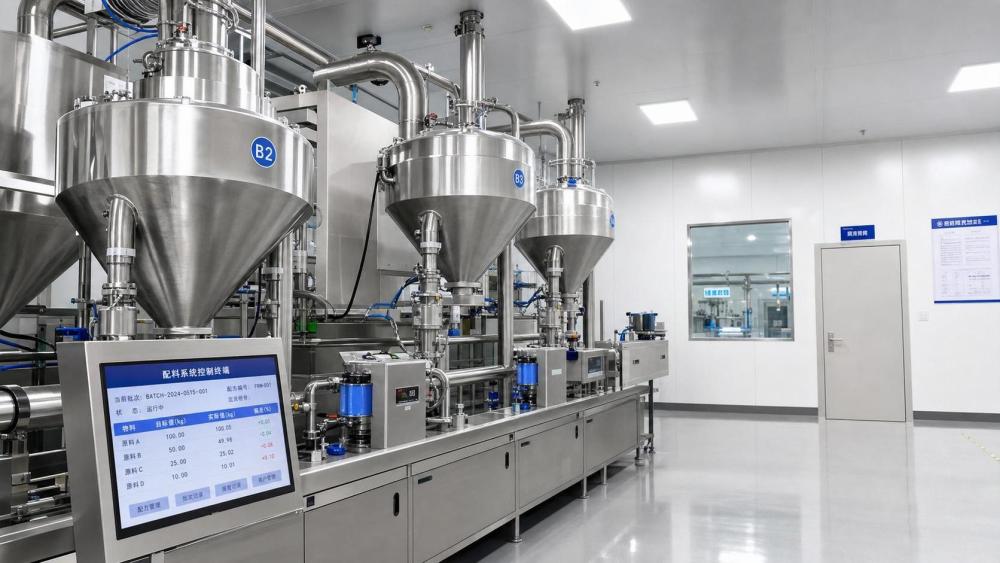
In regulated food production, food safety batching systems GMP requirements go far beyond accurate dosing.
They shape how ingredients move, how operators work, and how records stand up during audits.
That matters because one weak control point can compromise an entire batch.
For engineering teams, the real challenge is system design, not only scale accuracy.
A compliant batching line must connect hygiene, automation, traceability, validation, and operator discipline.
This is where food safety batching systems GMP planning becomes a project risk issue, not just a machine issue.
From a practical standpoint, buyers should evaluate the full control architecture before final equipment approval.
That includes ingredient identification, weighing sequence, alarm handling, batch release logic, and electronic records.
Why GMP Changes the Design Basis
Under GMP, a batching system is part of the controlled manufacturing environment.
Its function is not simply to combine materials within tolerance.
It must also prevent contamination, support cleaning, and prove what happened in each production run.
More clearly, food safety batching systems GMP programs need both process accuracy and evidence integrity.
This affects equipment layout, software permissions, sensor selection, and material transfer design.
Open frames, dead legs, hidden product traps, and manual overrides quickly become compliance concerns.
In actual operations, these weaknesses often appear during changeovers and sanitation verification.
That also means early design reviews should involve QA, maintenance, and operations, not only engineering.
Critical Controls in Food Safety Batching Systems GMP Projects
The strongest food safety batching systems GMP installations control the batch from receiving to release.
Each critical control should be defined, monitored, and linked to a clear response.
- Ingredient verification before dosing, using barcode, lot code, or approved material matching.
- Automatic interlocks that stop addition when the wrong ingredient is presented.
- Calibrated weighing modules with defined tolerance windows for minor and major ingredients.
- Sequencing logic that prevents skipped steps, duplicate additions, or out-of-order charging.
- Controlled transfer paths to reduce cross-contact between allergen and non-allergen recipes.
- Temperature, time, and hold-state monitoring where ingredients are sensitive or perishable.
- Alarm management with operator acknowledgement, reason capture, and escalation rules.
These controls are especially important where powders, liquids, rework, or micro-ingredients are involved.
A small dosing error can become a labeling, allergen, or shelf-life issue very quickly.
For that reason, food safety batching systems GMP reviews should rank failure modes by product risk, not only downtime cost.
Hygienic Design Is a Control Point
Hygienic design is often treated as a mechanical detail, but in practice it is a control measure.
Surfaces should be cleanable, corrosion-resistant, and accessible for inspection.
Connections should minimize crevices where residues can remain after cleaning.
If the system uses CIP, spray coverage and drainability must be demonstrated, not assumed.
If it uses manual cleaning, access time and verification points should be built into the design.
Records That Make Food Safety Batching Systems GMP Audit-Ready
Good records are not administrative overhead.
They are the proof that food safety batching systems GMP controls actually worked during production.
Without complete records, even a well-designed system becomes difficult to defend.
In recent compliance trends, traceability depth is receiving more scrutiny than before.
A useful batch record should capture the following data points clearly.
- Recipe version and approved formula status at execution time.
- Ingredient lot numbers, supplier references, and material status.
- Actual weights, target weights, tolerance results, and any manual adjustment.
- Time stamps for each addition, hold step, and completion milestone.
- Operator identity, supervisor approval, and electronic signature trail where required.
- Alarm events, deviations, corrective actions, and release disposition.
- Cleaning status and line clearance confirmation before the next batch.
The better approach is to generate these records automatically from the control system.
Manual transcription creates delay, inconsistency, and avoidable data integrity gaps.
For multi-site companies, standardized record structure also improves benchmarking and supplier audits.
Electronic Data Integrity Priorities
Electronic records should be attributable, legible, contemporaneous, original, and accurate.
That principle directly affects software selection and user access design.
Shared logins, editable raw data, and missing audit trails weaken food safety batching systems GMP compliance immediately.
A practical specification should define backup, retention, review workflow, and change-control expectations from the start.
Validation Points That Deserve Early Attention
Validation is where many projects lose time because requirements were not translated into testable criteria.
For food safety batching systems GMP applications, validation should begin during specification, not after installation.
The sequence usually includes design review, factory testing, site acceptance, and performance confirmation.
Still, the useful question is simpler: what must be proven for safe release?
One clear lesson from recent projects is that software functions need as much validation discipline as hardware.
A passing load cell test does not prove compliant batch execution logic.
This is why food safety batching systems GMP documentation should include functional specifications, test scripts, deviations, and approval records.
Commissioning and Validation Should Connect
Commissioning data often contains the first evidence of performance capability.
If captured correctly, it can reduce duplicated testing later.
That requires disciplined handover between integrator, site engineering, and quality teams.
When handover is weak, validation slows down and unresolved exceptions remain hidden until startup.
Common Failure Modes and How to Reduce Them
Most food safety batching systems GMP issues do not begin with dramatic equipment failure.
They usually begin with small gaps that seemed manageable during design or startup.
- Unclear ingredient status control, leading to accidental use of quarantined material.
- Poor allergen segregation in hoppers, transfer lines, or rework paths.
- Operator workarounds created because the interface slows routine tasks.
- Calibration schedules disconnected from actual production risk.
- Recipe changes made locally without formal review or version control.
- Incomplete alarm investigation, leaving repeated deviations unresolved.
The practical response is to treat these as system design topics, not training topics alone.
Well-structured food safety batching systems GMP projects reduce manual judgment where the consequence of error is high.
That usually means smarter interlocks, clearer screens, and stronger exception workflows.
What to Prioritize During Specification and Supplier Review
Specification quality sets the ceiling for compliance performance.
If requirements stay vague, suppliers will fill the gaps with assumptions.
For food safety batching systems GMP procurement, the review should ask for evidence, not broad capability claims.
- Request documented hygienic design standards and cleaning method assumptions.
- Review functional descriptions for weighing, interlocks, alarms, and exception handling.
- Confirm how electronic batch records are generated, protected, and retrieved.
- Define calibration points, maintenance access, and spare strategy early.
- Ask for validation support documents, including FAT and SAT protocols.
- Check whether supplier references match similar food risk and cleaning requirements.
That level of review supports better budgeting, faster qualification, and fewer startup surprises.
It also helps teams compare solutions on compliance value, not just purchase price.
A Practical Closing View
Food safety batching systems GMP performance depends on whether controls, records, and validation work together.
Accurate dosing remains essential, but it is only one layer of protection.
The stronger benchmark is audit-ready execution with clean design, locked process logic, and defensible batch history.
In practical business terms, that reduces recalls, rework, line stoppage, and supplier disputes.
For upcoming projects, start with a risk-based specification and map every critical control to a record and a validation step.
That approach gives food safety batching systems GMP investments a stronger path to reliable, compliant production.