
Batching Precision Engineering Solutions for Tight Tolerances and Lower Material Loss
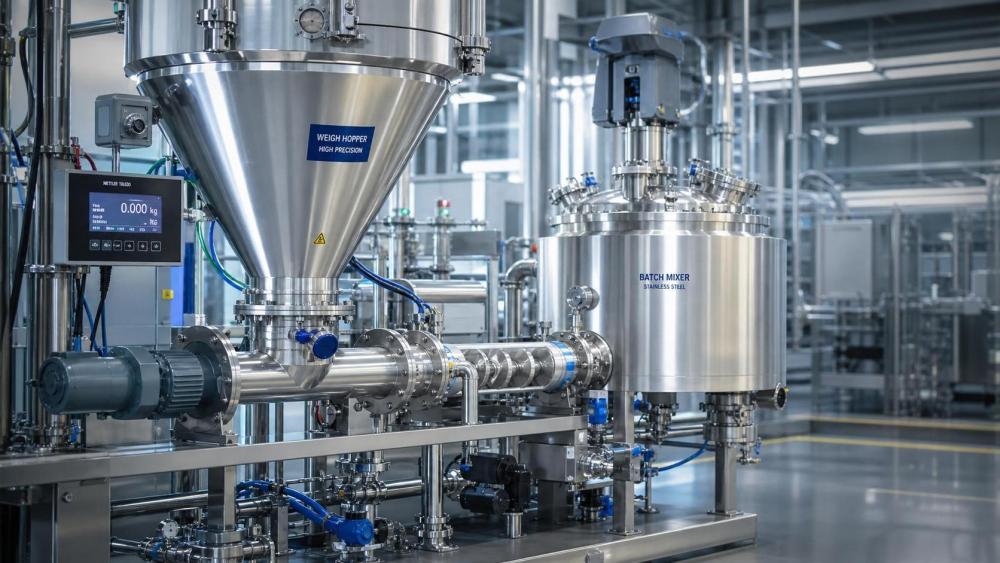
For procurement teams, choosing the right batching precision engineering solutions is critical to achieving tight tolerances, reducing material loss, and maintaining consistent product quality.
In production environments, small dosing errors quickly become expensive. A slight drift in ingredient ratio can affect yield, compliance, product stability, and downstream processing.
That is why batching precision engineering solutions are now treated as process-critical assets, not simple support equipment. They help factories control recipe accuracy, traceability, and repeatability.
This matters across food, chemicals, pharmaceuticals, coatings, advanced materials, and lithium battery manufacturing. In each case, better batching control lowers waste while protecting product performance.
From a sourcing perspective, the real question is practical. Which batching precision engineering solutions actually improve tolerances without creating maintenance, integration, or operator complexity?
The answer depends on material behavior, production speed, plant layout, compliance needs, and data visibility. Strong decisions come from matching system capability to the application, not just the price.
Why tight tolerances start with the batching stage
Many quality issues begin before mixing, coating, molding, or filling. The problem often starts when raw materials enter the process with inconsistent weight, flow, or sequence.
Batching precision engineering solutions reduce those variations by controlling feed rate, cut-off timing, weighing stability, and material transfer behavior. This creates a stronger base for every later step.
In practical terms, tighter batching improves several outcomes:
- Less giveaway from overfilling or overdosing
- Fewer rejected lots caused by off-spec ratios
- More stable product properties across shifts
- Better traceability for audits and root-cause analysis
- Lower operator dependence in complex recipes
More importantly, precision at the batching stage protects margin. Material loss is rarely just scrap. It also includes rework, cleaning time, energy use, and schedule disruption.
Where batching precision engineering solutions deliver the most value
Not every line needs the same level of dosing sophistication. The best batching precision engineering solutions are selected according to risk, tolerance window, and material cost.
High-value applications usually show the fastest return. These sectors are especially sensitive to weighing and batching accuracy:
Food and beverage
Ingredient consistency affects taste, texture, labeling compliance, and shelf stability. Precision batching also helps reduce giveaway in high-volume production.
Pharmaceuticals and nutraceuticals
Dose accuracy is directly linked to safety and validation. Batching precision engineering solutions support electronic records, repeatable recipes, and stricter documentation control.
Chemicals and specialty materials
Raw materials may vary in bulk density, flowability, and sensitivity. That makes adaptive feeding, stable load cells, and clean material handling especially important.
Lithium battery production
Slurry preparation depends on exact solid-to-liquid ratios. Here, batching precision engineering solutions help maintain electrochemical consistency and reduce expensive material losses.
Key system features that reduce material loss
When comparing suppliers, headline accuracy numbers are not enough. Lower material loss depends on how the whole system behaves under real production conditions.
Several design features usually separate basic equipment from effective batching precision engineering solutions:
- Multi-stage feeding control for fast bulk filling and fine final dosing
- High-resolution load cells with vibration-resistant mounting
- Recipe management with access control and audit trails
- Automatic compensation for feeder lag and material fall time
- Dust-tight or hygienic construction based on the material class
- Integration with MES, ERP, SCADA, or quality systems
A strong system also supports cleaning efficiency. Dead zones, poor discharge design, and hard-to-access surfaces often cause residual loss between batches.
That is one reason batching precision engineering solutions should be evaluated as part of the broader material handling process, not as isolated weighing hardware.
How to evaluate suppliers beyond nominal accuracy
Quoted precision often reflects ideal lab conditions. Real factories deal with humidity, vibration, abrasive powders, sticky ingredients, operator variability, and shift pressure.
Because of that, supplier evaluation should focus on application fit. The most useful discussions usually cover these points:
- What material types has the supplier handled successfully?
- What repeatability can be proven at target throughput?
- How is overrun controlled at the end of each batch?
- What data can be exported for compliance and traceability?
- How fast are cleaning, changeover, and maintenance tasks?
- Which local service and spare parts resources are available?
It also helps to request performance data from installations with similar materials. For batching precision engineering solutions, proven field behavior is more valuable than broad marketing claims.
A practical comparison framework for sourcing decisions
A structured comparison prevents underbuying and overbuying. It keeps the decision tied to process risk, cost of error, and expected operating life.
This framework is simple, but it keeps conversations grounded. It also makes supplier comparisons more defensible during internal approval.
Common risks when batching systems are mismatched
The wrong solution may still operate, but it often creates hidden cost. Those costs usually appear as variability, downtime, labor burden, and material waste.
Common failure points include undersized feeders, weak controls, poor sealing, or weighing platforms exposed to plant vibration. Each one can undermine batching precision engineering solutions.
Another frequent issue is ignoring upstream and downstream effects. Inconsistent raw material discharge or unstable mixer demand can make even accurate weigh systems look unreliable.
This is why application reviews should include process engineers, quality teams, and operations staff. Better alignment usually leads to better equipment choices.
What better batching precision engineering solutions look like in practice
In real operations, effective batching precision engineering solutions are measurable. They tighten recipe control, reduce correction work, and improve confidence in production data.
The strongest installations usually show a combination of outcomes:
- Stable tolerances across multiple shifts and operators
- Lower raw material variance per finished unit
- Shorter batch release times through cleaner records
- Less manual intervention during recipe execution
- Faster issue investigation when quality drifts appear
For organizations managing international production or export markets, these gains also support compliance, customer trust, and long-term process reliability.
The most effective next step is straightforward. Define the tolerance target, quantify the cost of loss, map the material behavior, and source batching precision engineering solutions around those facts.
That approach leads to better technical fit, clearer supplier discussions, and more consistent returns from every batch produced.