
On June 1, 2026, the U.S. Department of Commerce launched a second sunset review covering anti-dumping and countervailing measures on melamine from China. The development is drawing attention beyond melamine trade itself because U.S. case materials also identified PFAS-containing seals used in Loss-in-Weight Feeders for precise chemical dosing as a supply chain contamination risk factor. For chemical equipment exporters, procurement teams, and compliance functions serving U.S.-linked customers, the immediate issue is no longer only trade review language, but whether delivery documentation for feeder sealing systems can meet updated customer access requirements from July 2026.
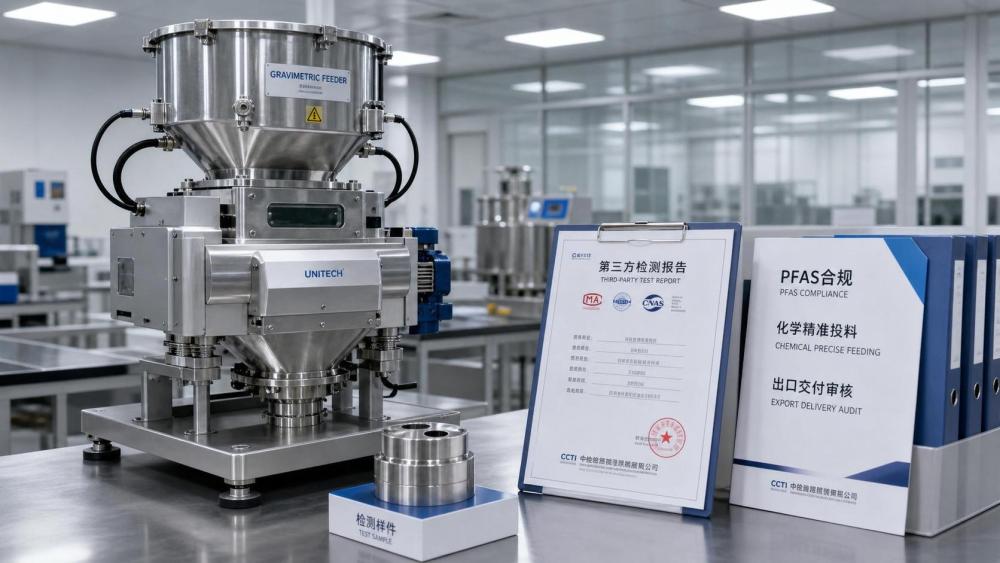
What Has Been Confirmed So Far
The confirmed facts are limited but commercially relevant. The U.S. Department of Commerce initiated the second anti-dumping and countervailing duty sunset review on Chinese melamine on June 1, 2026. Although the product itself is not described as falling under GIAS coverage in the provided information, U.S. investigation documents, for the first time in this context, listed the use of PFAS seals in continuous Loss-in-Weight Feeders for accurate chemical raw material feeding as a supply chain contamination risk factor.
The same input also confirms that several U.S.-invested chemical companies have already notified Chinese suppliers of a new procurement condition. Starting in July 2026, all delivered Loss-in-Weight Feeders must be accompanied by a third-party test report showing that the sealing system is free of PFAS substances. If that requirement is not met, procurement access will be suspended.
Why the Impact Extends Beyond the Trade Case
Export-facing equipment suppliers may face a documentation gap
From an industry perspective, the most direct effect falls on suppliers shipping Loss-in-Weight Feeders to chemical customers with U.S. procurement exposure. The issue is not limited to product delivery, but extends to technical files, material declarations, third-party test arrangements, and customer qualification status. Where PFAS-free proof is missing, the business risk may appear first in order approval and shipment release rather than in product redesign alone.
Chemical buyers may tighten supplier screening
Procurement teams at chemical companies are likely to focus on whether feeder systems used in precise dosing can create a compliance or contamination concern within their supply chain controls. Analysis shows that this can shift attention toward supplier onboarding, specification review, and supporting certificates for seals and related components. Even where melamine is the trigger in the trade context, purchasing behavior may widen to adjacent equipment used in chemical material handling.
Supply chain service providers may see pressure on lead times
For testing, documentation, logistics, and delivery coordination roles, the practical impact may emerge in timing. If third-party reports become a precondition for acceptance from July 2026, scheduling, document completeness, and communication between component suppliers and system integrators may become more sensitive. What deserves closer attention is whether compliance paperwork becomes part of the delivery critical path.
Where Companies Should Focus Now
Track the distinction between investigation language and customer enforcement
Analysis shows that companies should separate two layers of risk: the official trade review process itself and the procurement actions already being implemented by customers. The first is a regulatory and policy signal within the review process; the second is an immediate commercial requirement affecting shipment eligibility from a defined month.
Check sealing-system evidence before July deliveries
For suppliers of Loss-in-Weight Feeders, the key operational question is whether existing sealing materials, declarations, and test evidence are sufficient for customer review. If the customer now requires third-party confirmation that the sealing system contains no PFAS substances, incomplete files may become a direct barrier to continued supply.
Review supplier coordination and contract execution risk
Observably, the requirement does not only concern the final equipment seller. It may also affect upstream component sourcing, document handover, and promised delivery schedules. Companies involved in export fulfillment should pay attention to whether seal suppliers, assemblers, and final exporters are aligned on the same compliance standard and supporting paperwork.
Prepare customer communication around scope and timing
What deserves closer attention is how each customer defines the applicable scope for the feeder system and what form of third-party report it expects. Since the provided information confirms a July 2026 procurement threshold, suppliers may need to clarify expectations early to avoid disputes over acceptance, missing documents, or delayed qualification.
How This Signal Should Be Read
As an editorial observation, this development is better understood as a cross-over signal between trade scrutiny and supply chain material compliance rather than as a completed industry outcome. The confirmed facts do not show a final broad regulatory ruling on all relevant equipment, but they do show that customer-level procurement controls are moving faster than many companies may expect. Observably, the significance lies in the way a trade review document has begun to influence purchasing conditions for equipment used in chemical dosing.
Analysis also suggests that the market should continue watching whether this remains a case-linked requirement from specific buyers or becomes a wider standard request across similar chemical procurement channels. At this stage, it is not yet appropriate to treat the development as a settled industry-wide rule, but it is equally difficult to view it as a minor paperwork adjustment.
What the Industry Meaningfully Takes Away
The clearest takeaway is that melamine-related trade action has already spilled into a narrower but practical compliance issue for Loss-in-Weight Feeders supplied to certain chemical customers. For affected businesses, the near-term challenge is document readiness and procurement continuity, while the longer-term question is whether PFAS-related seal declarations will become a routine access condition in more chemical equipment transactions. It is more appropriate to understand this development as an active industry signal with immediate operational relevance and a need for continued monitoring, rather than as a final market conclusion.
Basis of This Article and What Still Needs Verification
This article is based on the user-provided news title, event date, and event summary. The available input confirms the date of the U.S. action, the launch of the second sunset review, the reference to PFAS seal use in Loss-in-Weight Feeders as a supply chain contamination risk factor, and the customer notices requiring third-party PFAS-free test reports from July 2026.
For this type of industry development, commonly relevant source categories may include official government notices, company procurement notifications, industry association updates, authoritative media reporting, and standard-related documents. A specific official source link was not provided in the input, so further verification remains necessary. Continued attention should focus on subsequent official wording, any clarification of scope affecting Loss-in-Weight Feeders, and whether customer-side PFAS documentation requirements expand beyond the currently described notices.