
Choosing industrial weighing systems sounds straightforward until the project reaches the detail that actually drives success: what exactly must be weighed, how fast, under what environmental conditions, and with what level of documented control. In practice, weight is rarely the only variable. A system may need to feed a batching line, trigger reject mechanisms, record lot data, support legal-for-trade transactions, or prove recipe compliance during an audit. That is why technical evaluation should start with process reality, not catalog specifications.
Across advanced manufacturing, weighing equipment sits in the same family of “secondary” process systems as coding, marking, vacuum support, cleaning, and surface treatment. They may not be the largest machine on the floor, but they often determine whether production stays consistent and traceable. This is one reason platforms like GIAS attract engineers and procurement teams looking beyond headline machine capacity to the smaller control points that quietly affect yield, compliance, and product quality.
Start with the application, not the scale type
A common mistake is to begin by comparing platform scales, checkweighers, load cells, bench scales, hopper scales, or loss-in-weight feeders before defining the process function. The better sequence is simpler: identify what decision the weight signal must support.
For example, static receiving inspection has very different requirements from in-motion package verification. A batching vessel for chemicals or food ingredients is not evaluated the same way as a floor scale in a warehouse. In pharmaceutical or high-spec powder handling, repeatability, cleanability, and data integrity may dominate the decision. In bulk solids or mining, survivability and maintenance access often matter just as much as fine resolution.
If the weighing point controls recipe accuracy, ask how much deviation the downstream process can tolerate. If it controls shipping quantity, ask whether legal metrology rules apply. If it sits inside an automated line, focus early on communications, response speed, and mechanical integration. That initial framing usually eliminates half the unsuitable options.
Accuracy is not one number
Buyers often ask for “high accuracy,” but that phrase means little without context. A weighing system can look impressive on a datasheet and still perform poorly in the plant because the installed conditions are different from the test conditions. Accuracy needs to be broken down into several practical questions:
- What is the minimum and maximum load?
- What resolution is actually useful for process control?
- How repeatable are readings under normal operating conditions?
- How much vibration, airflow, temperature variation, or product buildup will the system see?
- Will the system be calibrated in-house, by a service partner, or under a regulated quality program?
This matters because a dosing station that handles small additions into a larger batch may require very stable low-end performance, while a truck scale or bulk hopper may care more about robustness across a wide range. In a fast line, signal filtering can improve stability but slow down response. In other words, chasing the finest resolution is not always the right engineering decision if it makes the process less usable.
Another point that gets missed: system accuracy is not just the load cell. It includes the mechanics, mounting, vessel design, cable protection, indicator, software logic, and calibration method. If the structure binds, if the frame twists, or if operators routinely overload the platform, the best sensor in the world will not save the result.
Throughput changes the equipment shortlist very quickly
When production teams say they need speed, the conversation should move beyond line rate and into timing detail. How long is the available weigh window? Is the product static, semi-static, or in motion? Does the system need to settle fully before each reading, or can control logic work with dynamic measurement? These distinctions affect whether a simple scale, an in-motion checkweigher, a multi-head system, or a continuous feeder makes sense.
In packaging, for instance, throughput pressure often pushes companies toward high-speed checkweighing. But if upstream filling variation is large, the checkweigher becomes a sorting device rather than a quality control tool. The right fix may be better fill control, not a faster weigh conveyor. In batching, increasing throughput may require redesigning the material feed sequence so coarse and fine dosing are separated. That is often more effective than trying to force one weighing instrument to do everything.
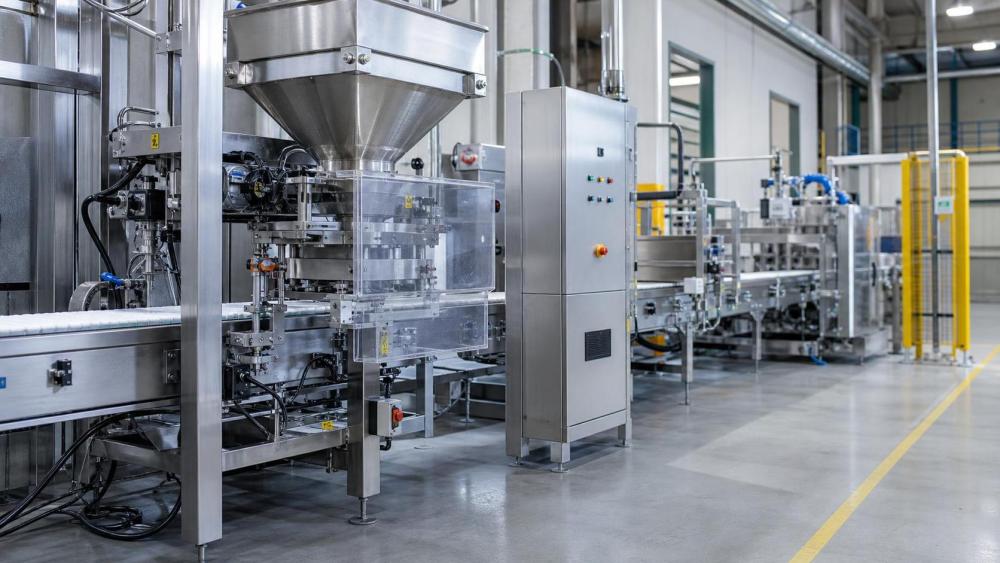
Mechanical product handling also affects speed. Sticky powders, unstable containers, vibration from adjacent machines, and poor conveyor transfer can all reduce real-world throughput even when nominal weighing capacity looks sufficient. A serious evaluation should include line layout, not just instrument specs.
Compliance depends on industry, market, and how the data will be used
Compliance in industrial weighing is not one universal checkbox. The required controls depend on the product, geography, and commercial use of the measurement. Food, pharmaceuticals, chemicals, and export-oriented manufacturing may each face different expectations around hygiene, documentation, labeling accuracy, traceability, and calibration records.
For technical evaluators, the practical question is: what evidence must this system produce later? That might include calibration traceability, audit logs, user access control, batch records, or legal-for-trade approval. If a weight result is tied to product labeling, invoice value, or regulated formula control, the documentation requirements usually become much stricter.
This is also where weighing connects with the wider auxiliary process chain. In many plants, weighing data does not stand alone. It may feed MES or ERP records, trigger lot code printing, connect to inkjet or laser marking for traceability, or support quality release decisions. If the weighing point is isolated, compliance gaps often show up later in data reconciliation rather than in the weighing hardware itself.
Integration is where good projects are won or lost
A weighing system that measures well but does not integrate cleanly will become a maintenance burden. At evaluation stage, ask very directly how the system will communicate with PLCs, SCADA, MES, printers, reject devices, feeders, or dosing valves. Confirm protocol support, update rates, alarm handling, and what happens during communication loss.
There is also a human-factor side. Operators need screens they can understand quickly, especially where recipe changes, manual confirmations, or rework decisions happen under time pressure. Quality teams need records that can be retrieved without involving a controls engineer every time. Maintenance teams need load cell access, spare part clarity, and fault diagnostics that do not turn every sensor issue into a multi-day shutdown.
This is one reason application-based technical content matters. GIAS, for example, is useful not because it treats weighing as an isolated product category, but because it places it alongside process-support technologies that often share the same production and compliance objectives. Engineers rarely buy one function in a vacuum; they evaluate how multiple support systems work together on the line.
Environmental conditions deserve more attention than they usually get
Many weighing problems are environmental before they are electronic. Dust accumulation, washdown exposure, corrosive chemicals, thermal drift, vibration, airflow from HVAC or open doors, and unstable foundations can all distort readings. In some sectors, especially fine powders, battery materials, chemicals, and food ingredients, the product itself can create conditions that challenge weighing stability.
Ask what the plant really looks like at 2 p.m. during peak production, not what it looks like during a supplier visit. Are forklift impacts common? Are operators leaning on the platform? Is there aggressive cleaning? Will material bridge in the hopper and create false confidence in net weight? These are ordinary plant realities, and they should be designed around early.
Do not ignore lifecycle questions
The purchase decision should include maintenance reality. How often will the system need calibration checks? Are replacement load cells standardized or proprietary? Is local service available in the regions where the equipment will run? For exporters and multinational manufacturers, that last point matters more than many teams expect.
Long-term performance also depends on whether the system can adapt. If future products will come in different pack sizes, if recipes may expand, or if digital traceability requirements are becoming stricter, it is worth checking whether software, interfaces, and capacity range leave room for change. Overbuying is wasteful, but buying a dead-end system is usually more expensive.
A practical evaluation path
A solid selection process usually comes down to a short set of disciplined questions:
- What process decision depends on this weight value?
- What is the true operating range, not just the nominal range?
- How fast must the system respond under normal production conditions?
- What records, controls, and approvals will be required later?
- How will the system connect to upstream and downstream equipment?
- What environmental or maintenance factors are most likely to degrade performance?
If suppliers cannot answer these questions in application terms, not just product terms, that is a warning sign. Good weighing system selection is less about finding the most sophisticated hardware and more about matching measurement behavior to the process, the operators, and the compliance burden the plant actually carries.
In the end, the best industrial weighing systems are the ones that stay accurate when production gets messy, keep pace without creating new bottlenecks, and produce records that still make sense months later when quality or compliance teams come asking. That is usually the difference between equipment that merely weighs and equipment that genuinely supports manufacturing control.