
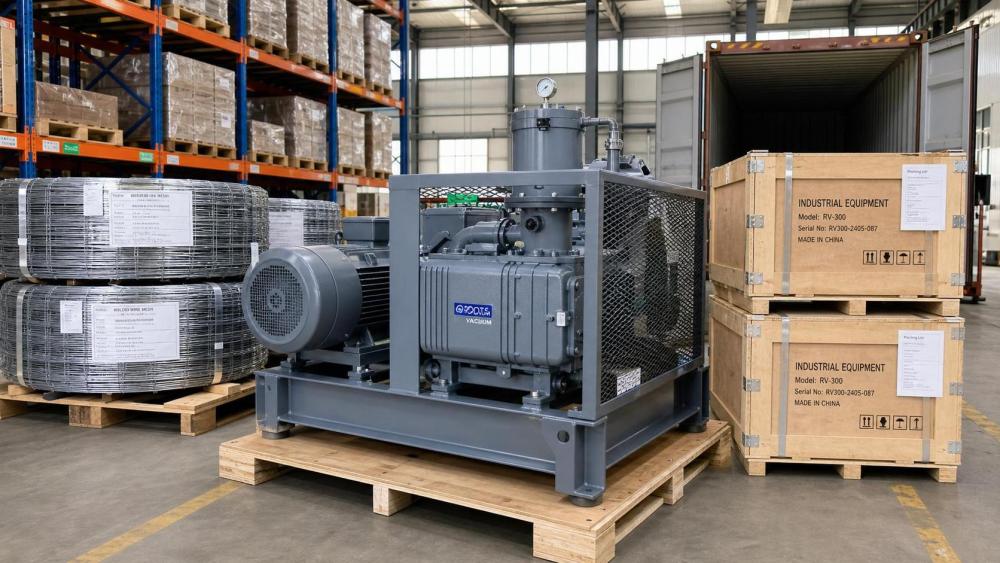
On June 3, 2026, the European Commission opened an anti-dumping investigation into welded steel mesh originating in China, including CN code 7314 20 90. For companies involved in Roots Vacuum Systems, this matters because welded steel mesh is used in structural parts such as frames, protective covers, and mounting bases. Although the product under review is not the vacuum system itself, the shared supply chain has already prompted some EU importers to recheck material traceability and origin declarations for complete equipment suppliers, with possible effects on customs timing and project delivery.
What has been confirmed so far
The confirmed event is the launch of an anti-dumping investigation by the European Commission on June 3, 2026, covering welded steel mesh from China, including CN code 7314 20 90. The provided information also confirms that this product is widely used in structural components of Roots Vacuum Systems, including frames, protective covers, and installation bases. In addition, some EU importers have already begun reviewing material traceability and origin declarations from complete equipment suppliers because these supporting parts are treated as key components within a connected supply chain.
Why the review may spread beyond the listed product
Structural component suppliers face closer document scrutiny
From an industry perspective, suppliers of frames, guards, and mounting structures may be affected because the investigated product is used in these assemblies. The immediate impact is less about product redesign and more about whether origin statements, material descriptions, and supporting trade documents remain consistent across shipments and supplier tiers.
Complete equipment exporters may see pressure at the shipment stage
For exporters of Roots Vacuum Systems, the issue is not that the full machine has been identified as the investigated product, but that shared sourcing can trigger additional questions from importers. What deserves closer attention is the handoff between component sourcing records and final export documentation, since any mismatch may slow customs processing or alter delivery coordination.
EU importers and procurement teams may tighten upstream checks
Importers and buyers may be affected because they are already reassessing material traceability and origin declarations tied to complete-system deliveries. In practice, this can shift more compliance work into procurement review, supplier qualification, and pre-shipment document checks, especially where supporting structures form part of the delivered package.
Supply chain service providers may need to prepare for timing risk
Logistics, customs, and delivery coordination teams may also feel the impact. Analysis shows that when importer-side reviews expand from a component category to documentation around related assemblies, the practical consequence is often schedule uncertainty rather than an immediate change in product acceptance.
What companies should watch now
Keep traceability files aligned across component and system levels
Companies should pay close attention to whether material traceability records for welded steel mesh-linked parts match the declarations used for complete Roots Vacuum Systems exports. This is especially relevant where frames, guards, or bases are sourced separately and then incorporated into final equipment packages.
Review origin declarations before shipment milestones
Observably, origin-related statements may now receive more attention from EU importers than before. Businesses should therefore recheck whether origin declarations, packing descriptions, and technical documentation use consistent product wording and supplier references before customs or delivery milestones are reached.
Reassess delivery plans where importer review is likely
The provided information does not confirm a final enforcement outcome, but it does indicate possible customs delay and project disruption. For that reason, exporters, procurement teams, and project managers should watch for additional review time in contracts, shipment planning, and customer communication.
Monitor any change in review language from buyers
What deserves closer attention is not only the investigation itself, but also how importer requests evolve in practice. Changes in required declarations, material backup files, or supplier confirmation wording may become an early signal of how the rule is being applied at transaction level.
How this development is best understood at this stage
Analysis shows that this development is better understood as an execution signal rather than a fully settled trade outcome for the broader Roots Vacuum Systems supply chain. The confirmed fact is the anti-dumping investigation on welded steel mesh; the broader industry relevance comes from importer behavior already shifting toward upstream verification of materials and origin. That means companies should not assume a final market result, but they also should not treat the event as limited to a single tariff code in isolation.
A measured reading for the vacuum equipment chain
At this stage, the significance of the event lies in its effect on compliance workflow, sourcing transparency, and shipment readiness for equipment linked to the investigated material. It is more appropriate to understand this as a developing trade-control signal with operational implications, especially for exporters and importers handling structural parts within Roots Vacuum Systems deliveries. The final commercial effect still requires observation, but the need for cleaner traceability and more consistent origin documentation is already visible in market execution.
Basis of this article and points still under review
This article is generated from the user-provided news title, event date, and event summary. For events of this kind, relevant source categories typically include official notices, releases from regulatory authorities, customs or trade administration information, industry association updates, standard-setting documents, and reporting by established business media. A specific official source link was not provided in the input, so it still needs to be verified on an ongoing basis. Further observation should focus on any later official clarification, practical review standards used by importers, changes in tender or procurement documents, industry feedback, and how companies adjust execution at shipment and delivery stages.