
On June 10, 2026, China began rolling out a new regulatory model for multimodal transport across 45 key cities, allowing large export equipment such as Roots Vacuum Systems to complete customs declaration, inspection, and sealing at the point of departure with one multimodal transport application document. For exporters, overseas engineering contractors, and logistics providers handling high-value cargo that typically moves by rail and sea, the development is worth watching because it directly affects delivery timing, repeat port procedures, and cross-border fulfillment coordination.
What the new filing process changes
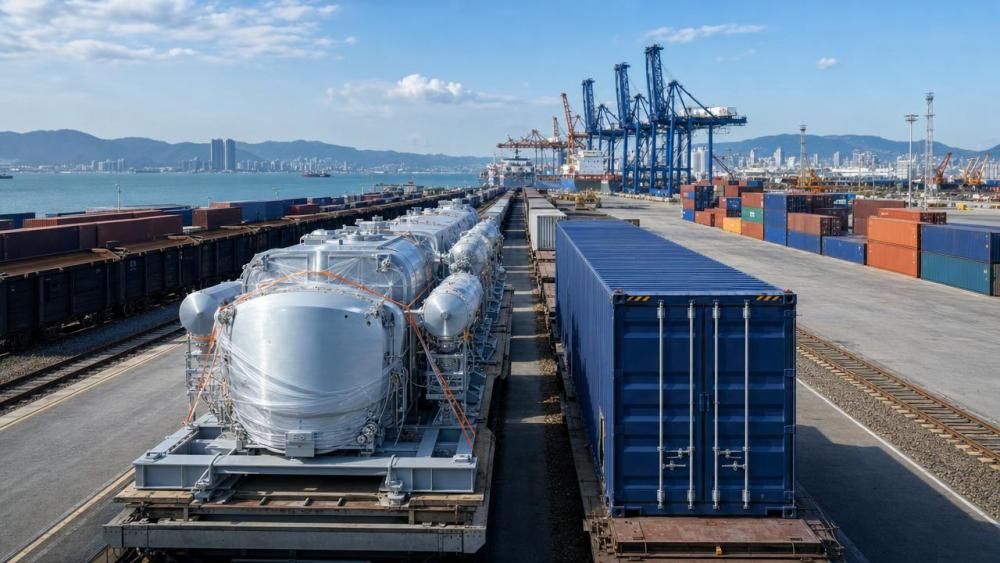
According to the provided information, the General Administration of Customs has introduced a "single-document" supervision model for multimodal transport in 45 key cities nationwide starting June 10, 2026. Under this arrangement, large vacuum system equipment including Roots Vacuum Systems, especially cargo that is bulky, high in value, and suited to combined rail-sea transport, can use one multimodal transport application form to complete declaration, inspection, and sealing at the departure location.
The same information states that exporters no longer need to repeat customs declaration at the port during the shipment process. The reported operational effect is a reduction in cross-border delivery time of three to five days and a logistics cost decrease of 12% to 18%.
Where the impact may be felt first
Project exporters face fewer handoff points
From an industry perspective, exporters of large equipment may be affected first because their shipments often involve more document coordination and tighter control over transit stages. The practical impact is likely to appear in the export filing stage, the inspection sequence, and scheduling between inland dispatch and port transfer. What deserves closer attention is whether internal export documentation and logistics planning can align smoothly with a one-time filing process at origin.
Engineering contractors gain more certainty in delivery coordination
Analysis shows that overseas engineering contractors may view this development through the lens of project execution rather than customs procedure alone. If a shipment can avoid repeat port declaration and reduce lead time, the main effect is on delivery coordination, installation planning, and milestone management. The key issue to monitor is whether the shorter timeline can be translated into more predictable contract performance in actual shipments.
Supply chain service providers may need to adjust operating workflows
Observably, logistics and supply chain service providers involved in rail-sea movements may need to revise how they organize pre-port documentation, cargo checks, and sealing arrangements. The impact is less about demand volume at this stage and more about process design. Service providers should pay attention to how origin-side execution standards are applied in the newly covered cities and how clients expect timeline savings to be reflected in service commitments.
What companies should watch in day-to-day execution
Check whether cargo profiles match the intended use case
The provided information clearly points to large, high-value equipment that depends on rail-sea transport. Companies should therefore focus on whether their export cargo fits this operational profile before assuming the new model applies in practice.
Prepare origin-side documents with greater accuracy
Because declaration, inspection, and sealing are handled at the departure point under one application document, document completeness and accuracy at origin become more important. In practical terms, this shifts attention toward upstream preparation rather than later correction at the port.
Separate policy signal from shipment-level execution
Analysis shows that a national rollout across 45 key cities is a strong procedural signal, but shipment execution still depends on how each transaction is organized. Companies should avoid treating reported time and cost improvements as automatic outcomes for every order and instead compare actual booking, customs, and transfer performance case by case.
Align customer communication with realistic delivery expectations
For exporters and contractors working together, the immediate operational value may lie in better communication around lead time, customs progress, and delivery planning. What deserves closer attention is how sales, logistics, and project teams present the new process to customers without overstating certainty before repeated execution data becomes available.
Why this looks like more than a one-off procedural tweak
As an editorial observation, this development is more appropriate to understand as a meaningful operational signal rather than a fully settled result. The confirmed facts point to a clearer preference for origin-based processing in multimodal export supervision, especially for cargo that is difficult to move and expensive to delay. At the same time, the industry still needs to observe how consistently the model works across different cities, cargo types, and fulfillment arrangements.
How to read the signal now
At this stage, the news suggests a practical improvement in export handling for large equipment moving through rail-sea routes, with clear implications for timing and logistics cost. A neutral reading is that the policy direction is concrete, while the full business effect still needs to be assessed through actual execution. It is more appropriate to understand this as an important near-term operating change with longer-term implications worth continued monitoring.
Source context and verification notes
This article is based on the user-provided news title, event date, and event summary. For developments of this kind, relevant source types often include official customs notices, company announcements, industry association updates, authoritative media reporting, and standard-setting or regulatory documents. A specific official source link was not provided in the input, so the precise official publication path still requires continued verification. Follow-up attention should remain on any later official clarifications, execution details, and evidence of how the model performs in real export operations.