
On June 26, 2026, Vietnam’s Ministry of Industry and Trade announced QCVN 32:2026, introducing a new compliance requirement for imported vacuum equipment such as Dry Screw/Claw Pumps and Roots Vacuum Systems. From September 1, 2026, covered products must pass a VOCs fugitive emission test at or below 0.05 g/h and carry Vietnam’s dual energy-efficiency and environmental label. The update matters because it reaches beyond product specification and directly affects certification, customs filing, shipment readiness, and delivery planning for exporters, importers, and supply-chain service providers.
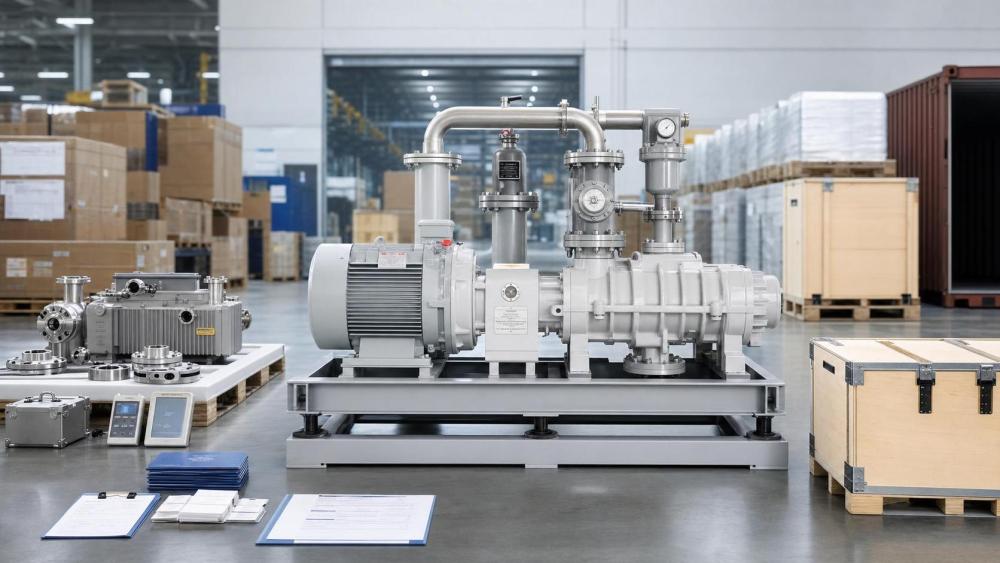
What the New Requirement Formally Introduces
According to the provided information, QCVN 32:2026 was published by Vietnam’s Ministry of Industry and Trade on June 26, 2026. The mandatory standard applies to imported vacuum equipment including Dry Screw/Claw Pumps and Roots Vacuum Systems. Starting on September 1, 2026, affected products must pass testing showing VOCs fugitive emissions of no more than 0.05 g/h. The same products must also carry Vietnam’s dual energy-efficiency and environmental label.
The provided information also states that the new rule is being paired with an electronic customs clearance system that will automatically block customs declarations for products without the required label. For Chinese vacuum pump exporters, VIEC certification must be completed in advance.
Where the Pressure Will Likely Appear in the Supply Chain
Export preparation moves closer to a certification-first model
From an industry perspective, exporters of covered vacuum equipment are likely to feel the change first because the new requirement combines product testing, labeling, and customs compliance in one chain. The practical effect is that shipment preparation may no longer depend only on product completion and trade documents; it may also depend on whether VOCs test results and VIEC certification are ready before dispatch.
Import and procurement teams face a stricter document check before shipment release
Importers and procurement teams may be affected because the rule ties market entry to both labeling and customs processing. What deserves closer attention is whether purchasing specifications, supplier qualification reviews, and pre-shipment document checks are aligned with the new threshold and label requirement. For buyers, the risk is less about general product availability and more about whether ordered units are compliant at the point of declaration.
Customs, logistics, and delivery coordination become more compliance-sensitive
Supply-chain service providers, including customs filing and logistics coordination teams, may also be affected because the provided information points to automatic interception of unlabeled declarations in the electronic clearance system. Analysis shows that this makes labeling status a frontline operational issue rather than a back-end paperwork issue. Delivery schedules, port handling, and handover timing may therefore become more sensitive to whether compliance documents and physical labeling are complete before filing.
Testing and certification-related service demand may shift toward timing and readiness
Certification and testing-related businesses may see greater attention from exporters that need to complete VIEC certification ahead of shipment. Observably, the key issue is not simply demand for testing itself, but whether testing reports, product files, and certification timing can support shipment plans under the September 1, 2026 implementation date.
What Companies Should Track Before the Rule Starts Biting
Check whether target product lines are within the covered scope
Companies dealing in Dry Screw/Claw Pumps, Roots Vacuum Systems, and similar imported vacuum equipment should first verify which product lines are intended for the Vietnam market and whether they fall within the scope described in the provided information. This is a basic but necessary step for deciding which shipments require testing, labeling, and VIEC certification preparation.
Review testing, labeling, and certification files as one package
Analysis shows that the new requirement should be treated as a combined compliance package rather than separate technical tasks. Businesses should pay close attention to VOCs test evidence, label readiness, and VIEC certification status together, because customs interception for unlabeled declarations suggests that missing one element may affect the entire shipment process.
Recheck trade documents and delivery milestones
Exporters, importers, and logistics teams should review whether commercial documents, customs declarations, and shipment milestones reflect the new requirement. The provided information does not specify detailed filing procedures, so it is more appropriate to understand this as an area requiring close monitoring rather than a settled operational template. Companies should therefore watch for any further clarification in compliance wording, document expectations, or customs practice.
Watch for procurement and after-sales implications
Where supply contracts, bidding documents, or customer specifications involve the Vietnam market, businesses should review whether technical and compliance wording needs adjustment. Observably, after-sales and traceability teams may also need to confirm that shipped units can be matched to the relevant testing, certification, and labeling records if customers or authorities request verification later.
How This Should Be Read at This Stage
Analysis shows that this development is more than a policy signal and less than a fully described execution framework. The confirmed facts already point to a concrete rule change: a mandatory emissions threshold, a required dual label, an implementation date, customs system interception, and advance VIEC certification for Chinese exporters. At the same time, the provided information does not include detailed operational guidance, so the market still needs to observe how certification handling, customs interpretation, and transaction documents are applied in practice.
From an industry perspective, the most important feature of this update is that technical compliance is being linked directly to border clearance. That makes the rule relevant not only to engineering and quality teams, but also to trade operations, procurement planning, and delivery management.
Why the Update Matters Now
This update is best understood as a rule change with immediate preparation value for companies shipping vacuum equipment into Vietnam. The confirmed facts already indicate that compliance will affect whether a declaration can move through customs once the implementation date arrives. A cautious reading is therefore warranted: the market has a clear execution signal, but businesses should continue tracking how certification practice, labeling review, and transaction-level enforcement are interpreted after rollout.
Basis of This Article
This article is based on the user-provided news title, event date, and event summary regarding QCVN 32:2026, published on June 26, 2026. For developments of this kind, relevant source categories typically include official ministry notices, regulator releases, customs or trade-administration updates, standard-setting documents, industry association notices, and reporting by authoritative trade media.
No specific official source link was provided in the input, so the exact official publication path still requires further verification. Observably, the market should continue watching for later detail on implementation wording, certification practice, bidding-document changes, industry feedback, and how companies execute the new requirement in actual trade flows.