
Vacuum Pump System Selection Guide: Key Parameters for Stable Process Performance
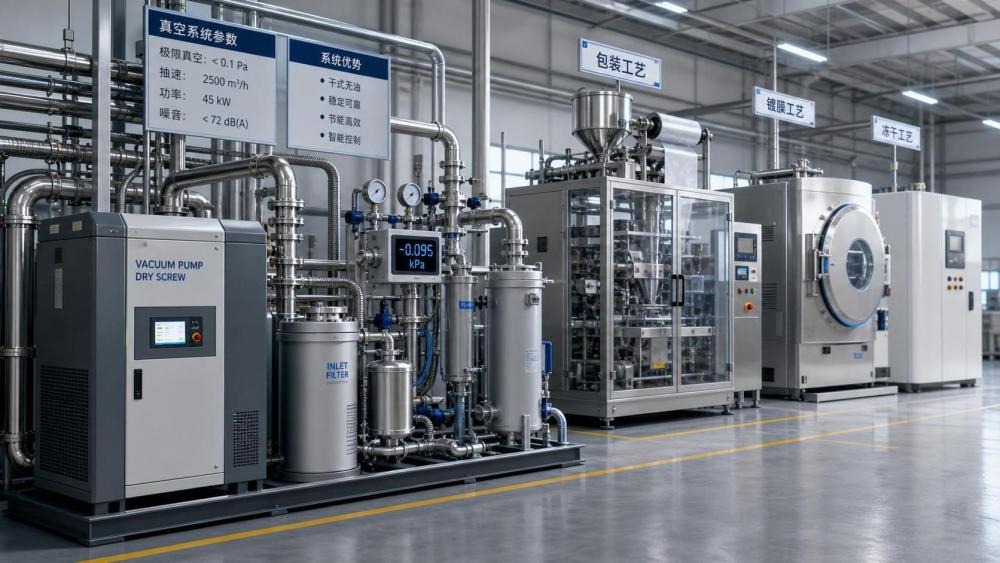
Selecting the right vacuum pump system is critical for keeping industrial processes stable, efficient, and compliant.
The decision goes far beyond pump size or quoted flow rate.
In real projects, a vacuum pump system affects cycle time, contamination control, product quality, and maintenance planning.
That is why early specification work matters.
A well-matched vacuum pump system keeps pressure stable during load changes.
A poor match often leads to slow pump-down, unstable process windows, and unexpected service interruptions.
From recent manufacturing trends, the stronger signal is tighter tolerance across more complex production environments.
This also means vacuum system selection now needs a broader view of process risk.
Whether the application is packaging, coating, freeze drying, degassing, or semiconductor support, the same rule applies.
Stable performance comes from matching technical parameters to actual operating conditions.
Start With the Process, Not the Pump Catalog
The first step is understanding what the process truly demands.
Many selection errors happen when teams begin with product brochures instead of process data.
A vacuum pump system should be defined by application behavior.
That includes target pressure, gas composition, cycle frequency, startup conditions, and contamination sensitivity.
For example, food packaging may prioritize fast evacuation and hygiene.
A thin film coating line may care more about pressure stability and clean operation.
A drying process may involve heavy vapor loads that change pump behavior over time.
In practical business terms, process definition protects the project from under-specification and expensive oversizing.
Questions That Shape a Reliable Vacuum Pump System
- What is the required ultimate pressure and operating pressure range?
- How fast must the chamber reach target pressure?
- What gases, vapors, particles, or condensables will enter the system?
- Is the process continuous, batch, or highly variable?
- How much downtime can the production plan tolerate?
- Are there compliance, cleanliness, or noise restrictions?
Key Parameters That Determine Selection Quality
Once the process is clear, the next step is evaluating the parameters that define system fit.
These factors directly influence vacuum pump system stability.
1. Required Pressure Range
Different pump technologies perform best in different pressure zones.
A low vacuum packaging process does not need the same design as a high vacuum coating application.
If the selected vacuum pump system operates outside its efficient range, performance drops quickly.
2. Pumping Speed and Pump-Down Time
Nominal pumping speed alone does not tell the full story.
The useful metric is how the vacuum pump system behaves across the actual pressure curve.
This matters when cycle time affects throughput and labor planning.
3. Gas Load and Process Variability
Gas load can change with material condition, ambient temperature, and product recipe.
A vacuum pump system that looks sufficient on paper may struggle during peak load periods.
That is why safety margin should be based on realistic load swings, not guesswork.
4. Vapor and Particle Tolerance
Water vapor, solvents, powders, and reactive byproducts can shorten pump life.
In these cases, the vacuum pump system may need filters, condensers, knock-out stages, or corrosion-resistant materials.
Ignoring contamination load usually increases maintenance cost faster than expected.
5. Leak Tightness and System Conductance
Even a strong pump cannot compensate for poor piping layout or leakage.
Long lines, narrow piping, and unnecessary bends reduce effective performance.
A vacuum pump system should be assessed as a complete flow path, not as a single device.
Choosing the Right Pump Technology
Technology choice should follow process behavior and service expectations.
Each vacuum pump system architecture has tradeoffs.
For many facilities, the best vacuum pump system is not the most advanced model.
It is the configuration that performs consistently under real operating stress.
That often includes controls, buffering, filtration, and thermal protection around the pump itself.
Operational Factors That Affect Long-Term Cost
Selection decisions should also reflect total operating impact.
A cheaper vacuum pump system can become expensive if energy use, spare parts, and downtime are high.
Energy Consumption
Energy cost rises when systems run far from their design point.
Variable speed control and staged operation can improve efficiency in variable-load applications.
Maintenance Access
Routine service is easier to manage when filters, seals, drains, and sensors are accessible.
This sounds basic, but layout decisions often affect maintenance more than the pump brand.
Utility and Environmental Requirements
Noise, cooling water, exhaust treatment, and waste handling should be reviewed early.
The vacuum pump system must fit plant infrastructure, not just process specifications.
Service Network and Parts Availability
For global manufacturing programs, local service coverage matters.
A vacuum pump system with weak parts support can delay recovery after failure.
That risk should be included in supplier evaluation.
Common Selection Mistakes and How to Avoid Them
Several problems appear repeatedly across industries.
- Choosing by maximum flow rate only, without pressure curve analysis.
- Ignoring vapor load until oil degradation or corrosion begins.
- Oversizing the vacuum pump system so far that energy use becomes excessive.
- Treating pipework and control logic as secondary details.
- Skipping supplier validation on service response and application experience.
The practical response is simple.
Ask for application-specific performance data, not generic catalog claims.
Review the vacuum pump system under normal load, peak load, and upset conditions.
That approach usually reveals weak points before installation.
A Practical Evaluation Framework
A structured comparison helps turn technical detail into a clear decision.
- Define target pressure, gas load, duty cycle, and cleanliness level.
- Check pump performance across the full operating range.
- Review material compatibility with vapors and byproducts.
- Estimate maintenance intervals and critical spare requirements.
- Compare energy demand and utility needs.
- Confirm supplier references for similar vacuum pump system applications.
- Validate layout, controls, and monitoring strategy before final approval.
This framework keeps the decision grounded in process performance, not sales language.
It also supports stronger budgeting and lower commissioning risk.
Final Decision Focus
The best vacuum pump system is the one that protects process stability over time.
That requires balancing pressure performance, contamination tolerance, maintainability, and operating cost.
When selection is based on real load conditions and complete system design, process reliability improves noticeably.
Before placing an order, confirm test data, service scope, and lifecycle assumptions.
That final review often makes the difference between a vacuum pump system that simply runs and one that supports stable production for years.