
How to Evaluate an Industrial Vacuum Technology Manufacturer for Process Reliability
Choosing the right industrial vacuum technology manufacturer is a high-impact procurement decision.
Vacuum performance affects contamination control, cycle stability, drying quality, coating results, and equipment uptime.
A weak supplier can create hidden risks.
A capable industrial vacuum technology manufacturer helps protect process consistency, compliance, and operating cost over time.
That is why evaluation should go beyond price and lead time.
In practical buying decisions, the better question is simple: can this manufacturer support reliable production in your real operating environment?
Start With the Process, Not the Product Catalog
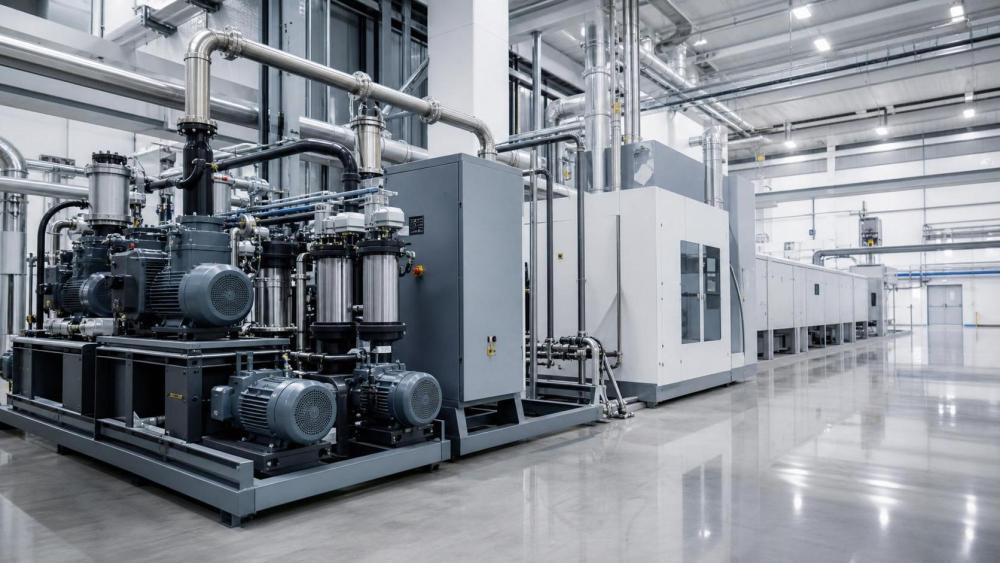
Every industrial vacuum technology manufacturer will highlight pump types, ultimate pressure, and installed base.
Those points matter, but they are not enough.
Reliable selection starts with process mapping.
Define what the vacuum system must achieve under normal production conditions.
That usually includes target pressure range, pumping speed, gas load, duty cycle, contamination profile, temperature, and maintenance window.
For example, vacuum needs differ sharply across semiconductor processing, freeze-drying, degassing, packaging, and thin-film coating.
A manufacturer that understands these differences will ask better technical questions early.
That is often the first sign of strong application capability.
- What pressure level must be held during peak load?
- What vapors, particles, solvents, or condensates enter the system?
- Is continuous operation required, or batch operation?
- What failure modes create scrap, downtime, or compliance risk?
If an industrial vacuum technology manufacturer responds with generic recommendations, that should raise concern.
In contrast, a strong supplier connects vacuum design directly to process reliability.
Assess Technical Fit Beyond Basic Specifications
Many buyers compare only flow rate, base pressure, power, and price.
That approach misses the real drivers of stable performance.
A reliable industrial vacuum technology manufacturer should explain how the system behaves in use, not just on paper.
Focus on Operating Stability
Ask how the system handles pressure fluctuation, gas surges, vapor loads, and frequent start-stop cycles.
Stable operation matters more than ideal performance under laboratory conditions.
Review Material and Seal Compatibility
Chemical compatibility affects lifetime and cleanliness.
Elastomers, coatings, oils, and internal surfaces should match the process media.
This is especially important in corrosive, humid, or solvent-heavy environments.
Check Contamination Control Strategy
Backstreaming, particle generation, and condensate buildup can quietly damage quality performance.
A capable industrial vacuum technology manufacturer should present mitigation methods clearly.
These may include trap design, filtration, purge systems, dry pump configurations, or tailored piping layouts.
Look at Integration Readiness
A vacuum system rarely works alone.
It must interact with chambers, controls, sensors, utilities, and upstream or downstream equipment.
Ask whether the manufacturer supports interface design, control logic, and commissioning coordination.
Verify Application Experience in Comparable Industries
Process reliability improves when the industrial vacuum technology manufacturer knows your application reality.
That does not always mean the largest supplier is the best fit.
What matters is relevant experience.
Ask for project references close to your operating conditions.
Look for evidence in sectors such as electronics, pharmaceutical processing, chemical production, food packaging, metal treatment, or battery manufacturing.
The useful signal is not a broad customer list.
It is the ability to explain why one vacuum architecture worked better than another.
In procurement reviews, ask for short case examples with measurable outcomes.
- Cycle time reduction
- Improved vacuum stability
- Lower contamination rate
- Longer maintenance interval
- Higher uptime or yield
Recent market shifts make this even more important.
As manufacturers tighten quality control, buyers need suppliers that understand both equipment performance and production consequences.
Examine Service Depth, Not Just Service Promises
A strong industrial vacuum technology manufacturer should support the full operating life of the system.
That includes installation, startup, preventive maintenance, troubleshooting, and spare parts planning.
This is where many procurement decisions succeed or fail later.
Do not rely on broad statements like “global support available.”
Check the actual service model.
A reliable industrial vacuum technology manufacturer can describe response times, stocking policy, escalation path, and warranty boundaries without hesitation.
That level of detail usually reflects real operational maturity.
Review Compliance, Documentation, and Quality Systems
For many industries, compliance is tied directly to process reliability.
An industrial vacuum technology manufacturer should be able to support both technical performance and documentation needs.
Ask for the quality framework behind the equipment.
This may include ISO certifications, test records, inspection procedures, material traceability, and acceptance protocols.
If your application is regulated, review documentation discipline even more closely.
That is especially true for pharmaceutical, food, medical, electronics, and export-oriented production lines.
Good documentation shortens qualification time and reduces audit pressure.
More importantly, it improves repeatability when service teams change or lines expand.
Compare Total Cost of Ownership, Not Purchase Price Alone
Price pressure is real, especially in competitive sourcing cycles.
Still, the lowest quote from an industrial vacuum technology manufacturer may create the highest long-term cost.
A sound decision compares total cost of ownership.
Include energy use, consumables, oil management, maintenance frequency, spare parts, downtime exposure, and expected service life.
Also evaluate the cost of process instability.
In many plants, one vacuum-related quality issue costs more than the initial price gap between suppliers.
This is where supplier transparency matters.
A trustworthy industrial vacuum technology manufacturer will discuss operating assumptions openly and help model realistic lifecycle cost.
Use a Practical Supplier Evaluation Checklist
To make comparison easier, use a structured review format across all candidates.
A practical checklist keeps technical and commercial priorities aligned.
- Confirm process requirements and risk points before requesting quotations.
- Score each industrial vacuum technology manufacturer on application fit, not brochure claims.
- Review comparable case studies and ask for measurable operating results.
- Check service infrastructure, spare part access, and escalation procedures.
- Validate compliance documents, testing methods, and quality control practices.
- Compare lifecycle cost and process risk, not just unit price.
- Run a technical clarification meeting before final approval.
In real sourcing work, this structure helps separate well-prepared manufacturers from generic vendors.
Final Decision: Choose Reliability You Can Verify
The best industrial vacuum technology manufacturer is not simply the one with the broadest product range.
It is the one that can prove technical fit, service depth, documentation quality, and long-term process understanding.
When vacuum stability supports contamination control and uptime, the business impact becomes visible fast.
Better yield, fewer disruptions, easier audits, and more predictable operating cost usually follow.
So before making a final sourcing decision, return to the core question.
Can this industrial vacuum technology manufacturer support your process reliably, at scale, and over time?
If the answer is backed by data, application evidence, and service readiness, you are much closer to a sound decision.