
Choosing the right gas extraction technology supplier is not a routine sourcing task when vacuum performance directly affects product quality, cycle stability, contamination risk, and equipment uptime. For technical evaluators, the real question is whether a supplier can deliver repeatable vacuum behavior under actual process conditions, support integration with existing equipment, and maintain performance over time without creating hidden reliability problems.
This matters across semiconductor processing, coating, degassing, packaging, drying, and other vacuum-dependent operations. A supplier may present acceptable pump curves and standard specifications, yet still fall short in gas load handling, material compatibility, response stability, controls integration, or service execution. The practical evaluation therefore needs to focus on process fit, not just catalog data.
What Technical Evaluators Should Actually Verify First
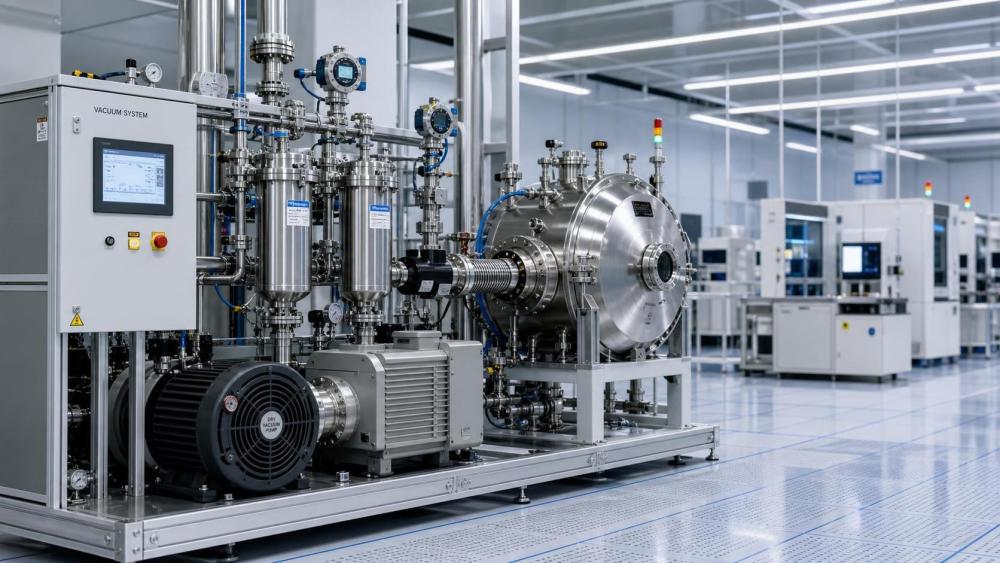
When engineers search for a gas extraction technology supplier, the core intent is usually supplier evaluation rather than basic education. They want a defensible way to compare vendors, reduce process risk, and confirm that the selected system will support reliable vacuum conditions in production rather than only in a demonstration environment.
The first filter is whether the supplier understands the process itself. Vacuum reliability depends on gas composition, pressure range, cycling pattern, contamination profile, leak sensitivity, thermal behavior, and downstream quality requirements. A supplier that cannot ask detailed application questions is unlikely to design or recommend a stable solution.
Technical evaluators should therefore begin by checking how the supplier defines the duty profile. That includes base pressure targets, pump-down time, steady-state pressure control, peak gas load, condensable vapor presence, corrosive media, particulate risk, and acceptable maintenance intervals. Good suppliers make these parameters explicit before they discuss equipment models.
This early stage is also where weak vendors often expose themselves. Some rely on nominal pumping speed as the main selling point. In real production, however, vacuum process reliability is shaped by the whole extraction architecture, including conductance, seals, controls, filtration, materials, exhaust treatment, and serviceability.
Can the Supplier Match Technology to Your Gas Load and Process Window?
The most important technical question is not whether the supplier sells vacuum equipment, but whether they can match the right extraction technology to the actual gas load behavior of the process. Different applications place very different demands on the system even when target pressure values appear similar.
For example, a clean dry process may prioritize fast pump-down, low backstreaming risk, and precise pressure control. A wet or vapor-heavy process may require strong condensate handling, corrosion resistance, staged pumping, purge strategies, or upstream trapping. A supplier that treats these as minor options is not evaluating process reliability seriously.
Technical teams should ask how the supplier selects between dry pumps, liquid ring systems, screw designs, roots combinations, claw technologies, boosters, or hybrid architectures. The answer should be tied to process chemistry, contamination tolerance, maintenance philosophy, and total lifecycle performance rather than generic claims about efficiency.
It is also necessary to understand the operating window across startup, normal production, upset conditions, and shutdown. Some systems perform well at design point but become unstable during repeated cycling, variable gas bursts, or temporary overload. A reliable supplier will explain how their system behaves across those transitions.
How Strong Is the Supplier’s Approach to Contamination Control?
In many vacuum applications, contamination control is inseparable from reliability. A system that reaches pressure but introduces oil vapor, particles, condensate carryover, or corrosion byproducts may still cause yield loss, rework, cleaning burden, or product rejection. This is why contamination pathways should be evaluated early.
Technical evaluators should ask where contamination can enter or accumulate within the extraction path. Important points include pump internals, seal materials, exhaust handling, foreline design, trap configuration, drain strategy, and maintenance access. The supplier should be able to explain both failure mechanisms and prevention measures clearly.
Material compatibility is especially important in corrosive or reactive environments. If the gas extraction technology supplier cannot provide a reasoned material selection basis for wetted components, coatings, elastomers, and filters, long-term vacuum reliability may be compromised even if initial commissioning appears successful.
For clean manufacturing sectors, documentation matters as much as design. Technical buyers may need particle performance data, cleanliness protocols, factory test records, surface finish details, or contamination control procedures during assembly. Suppliers that support traceable documentation reduce qualification effort and improve confidence during internal review.
Will the System Deliver Stable Vacuum Performance Over Time?
Vacuum reliability is fundamentally about consistency. The selected system must not only achieve target conditions once, but maintain them across shifts, batches, maintenance cycles, and changing production demands. Evaluators should therefore ask for evidence of long-term stability, not only initial performance numbers.
Useful indicators include pump-down repeatability, pressure recovery behavior, control loop stability, thermal drift characteristics, and performance under expected gas composition changes. A capable supplier should be able to show test data, field references, or application cases that resemble the intended duty conditions.
Another practical issue is how the system handles degradation before failure. Every pump and extraction train experiences wear, fouling, seal aging, and gradual efficiency loss. The best suppliers design for predictable maintenance intervals, early warning signals, and performance monitoring rather than allowing silent deterioration to affect process quality.
This is where instrumentation and control integration become important. Pressure sensors, temperature monitoring, vibration tracking, current signatures, purge logic, and alarm thresholds can all support more reliable operation. A supplier that can connect hardware performance with condition visibility will usually be stronger in production environments.
What Evidence Shows the Supplier Can Support Real Industrial Integration?
Even a technically sound extraction unit can become unreliable if system integration is weak. Technical evaluators should examine whether the supplier can adapt the solution to chamber design, line layout, utilities, automation architecture, safety requirements, and space constraints without compromising maintainability.
Ask how the supplier manages interface responsibilities. That includes inlet sizing, conductance calculations, utility stability, cooling requirements, exhaust routing, noise treatment, electrical standards, control protocol compatibility, and interlocks. Reliability problems often come from these boundaries rather than from the pump alone.
It is also worth checking whether the supplier supports factory acceptance testing, site commissioning, and process tuning. A reliable gas extraction technology supplier should treat startup as a verification phase, not a handoff moment. They should be prepared to confirm vacuum behavior under actual operating conditions and adjust settings as needed.
For multinational manufacturing groups, integration support may also involve documentation quality, export readiness, multilingual service materials, and familiarity with regional compliance expectations. These factors do not replace engineering capability, but they strongly influence how smoothly the system can be deployed and sustained.
How Should You Evaluate Service Capability and Spare Parts Support?
Long-term process reliability depends heavily on post-installation support. Technical evaluators should look beyond warranty language and examine service depth, response speed, parts availability, and the supplier’s ability to diagnose process-linked vacuum issues rather than only mechanical faults.
A useful question is whether the supplier can define preventive maintenance intervals based on actual application conditions. Maintenance plans should reflect condensable load, corrosive exposure, duty cycle, and cleanliness expectations. Generic schedules copied from a brochure are usually a warning sign.
Spare parts strategy also deserves close review. Critical seals, bearings, filters, valves, sensors, and control components should have clear replacement paths and realistic lead times. If a single failed component can stop a production line for weeks, the supplier’s lifecycle support model is not strong enough for high-reliability operations.
Service competence becomes especially visible when abnormal conditions occur. Ask for examples of how the supplier handled vacuum instability, contamination incidents, pressure drift, or unexpected gas load changes in the field. Their problem-solving method often reveals more than standard marketing case studies.
Which Supplier Credentials Actually Matter for a Technical Decision?
Certifications and references are useful, but technical evaluators should distinguish between general corporate credentials and application-relevant evidence. A supplier may have quality certifications and a broad global presence while lacking real experience in the specific vacuum regime or gas chemistry your process requires.
The strongest credentials include documented success in comparable industries, reference installations with similar duty cycles, validated performance data, and the ability to explain failure prevention in technical detail. Relevant engineering depth is more valuable than a long generic product list.
Ask whether the supplier can provide case examples involving similar contamination risks, pressure ranges, throughput demands, or uptime targets. The goal is not to collect promotional examples, but to verify whether the supplier has already solved problems close to yours and can transfer that experience effectively.
It is also reasonable to evaluate organizational depth. Can the supplier bring together application engineers, field service specialists, controls personnel, and project management when needed? Vacuum reliability is often a multidisciplinary outcome, so supplier competence should be assessed the same way.
A Practical Evaluation Framework for Comparing Suppliers
To make supplier comparison more rigorous, technical teams should score vendors across a focused set of reliability criteria. A practical framework includes process understanding, technology fit, contamination control design, stability evidence, integration capability, service support, documentation quality, and lifecycle risk transparency.
Each criterion should be supported by specific proof. For process understanding, look for detailed application questionnaires and challenge points. For technology fit, review duty-based selection logic. For contamination control, request material and cleanliness rationale. For stability, ask for comparable data and monitoring strategy.
Integration capability can be assessed through interface drawings, controls mapping, and commissioning plans. Service support should be measured through response commitments, local coverage, spare parts readiness, and diagnostic process. Documentation quality includes manuals, test reports, maintenance procedures, and qualification records.
Finally, evaluate how openly the supplier discusses limitations. Strong suppliers explain where performance margins are narrow, where operating discipline matters, and what assumptions are built into the design. That transparency is often one of the clearest signals that the supplier is serious about vacuum process reliability.
Common Mistakes That Lead to Poor Supplier Selection
One common mistake is choosing mainly on purchase price or nominal performance data. This can lead to underdesigned systems, unstable pressure control, excessive maintenance, or contamination problems that cost far more than the original savings. Reliability must be evaluated at system level and over time.
Another mistake is treating all vacuum applications as broadly similar. Gas composition, condensable behavior, cleanliness demands, and pressure dynamics can vary significantly between industries and even between product lines. A supplier that is strong in one segment may be a weak fit elsewhere.
Technical teams also sometimes underestimate the impact of service execution. Even a well-selected system can become a reliability problem when startup support is shallow, troubleshooting is slow, or spare parts are poorly planned. Supplier selection should therefore include operational support as a core decision factor.
Finally, some evaluations rely too heavily on general brand reputation. Brand strength can be relevant, but it does not replace application-specific engineering judgment. The best choice is the supplier that can show a clear, evidence-based path to stable vacuum performance in your exact process context.
Conclusion
Evaluating a gas extraction technology supplier for vacuum process reliability requires more than comparing equipment specifications or quoting familiar product names. Technical evaluators need to confirm that the supplier understands the process, selects technology based on real gas load behavior, controls contamination risks, supports integration, and can sustain stable performance throughout the system lifecycle.
The most reliable supplier is usually the one that combines technical depth with operational clarity. They ask precise questions, define assumptions, provide application-relevant evidence, and remain accountable after installation. For manufacturers that depend on stable vacuum conditions, that level of supplier competence is what reduces risk and protects long-term production quality.