
How to Evaluate a Dry Vacuum Pump Systems Supplier for Process Stability
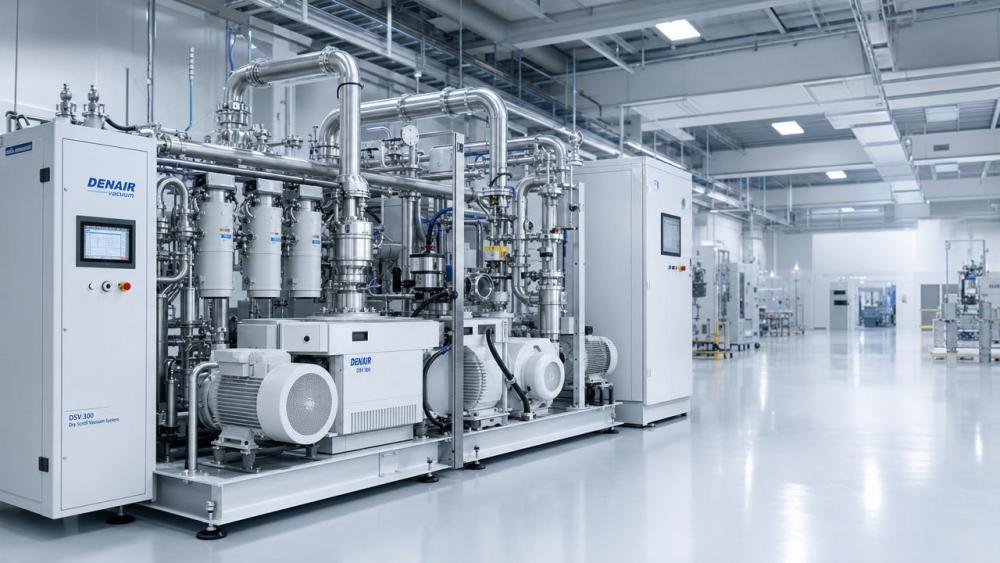
Selecting a reliable dry vacuum pump systems supplier is critical for maintaining process stability, product quality, and long-term operating efficiency.
A smart evaluation goes far beyond comparing brochures or asking for a lower quote.
In real production environments, vacuum consistency affects yield, cleanliness, cycle time, and equipment uptime.
That is why choosing the right dry vacuum pump systems supplier is really a process risk decision.
A capable supplier should understand applications, not just hardware specifications.
This matters in semiconductor processing, packaging, coating, degassing, freeze-drying, and chemical handling.
A weak match can cause unstable pressure curves, contamination, frequent maintenance, and hidden operating costs.
A strong match supports repeatable output and easier long-term control.
Start with Process Fit, Not Catalog Data
The first question is simple: can the dry vacuum pump systems supplier support your actual process conditions?
Many suppliers can share pumping speed, ultimate pressure, and motor power.
Fewer can explain how the system behaves with vapors, particles, corrosive gases, or fluctuating loads.
That difference is often where process stability is won or lost.
A strong supplier will ask detailed questions before recommending a model.
- What gas composition enters the system?
- Is the load continuous, cyclic, or highly variable?
- Are there condensable vapors or sticky by-products?
- What vacuum range must remain stable during production?
- What contamination limits apply to the product or chamber?
If a dry vacuum pump systems supplier skips these questions, that is an early warning sign.
It may indicate a product-first sales approach instead of application-driven engineering.
Check Vacuum Performance Stability Under Real Conditions
A dry vacuum pump system should not only reach target pressure in ideal lab conditions.
It should maintain stable performance during actual production shifts.
This includes startup, peak load, partial load, and repeated cycling.
Ask the dry vacuum pump systems supplier for application-specific performance data.
More importantly, ask how performance changes over time with your gas stream.
Recent market shifts show more buyers now focus on consistency, not just rated speed.
That change makes sense because production interruptions rarely start with dramatic failure.
They usually start with slow drift, unstable pressure control, or declining throughput.
Useful questions include the following.
- Can the supplier provide pump-down curves for similar processes?
- How does the system handle vapor loads or sudden gas bursts?
- What pressure stability can be maintained during long runs?
- Are there reference cases with measured field data?
Evaluate Contamination Control and Clean Operation
One major reason manufacturers choose dry systems is contamination control.
Oil-free pumping helps reduce backstreaming risks and supports cleaner processing environments.
Still, not every dry vacuum pump systems supplier delivers the same cleanliness standard.
Internal design, sealing method, purge strategy, and material choice all affect contamination behavior.
This is especially important in electronics, medical manufacturing, advanced coatings, and precision packaging.
A reliable dry vacuum pump systems supplier should explain how the system minimizes particles and process residues.
They should also discuss maintenance access and cleaning procedures in a practical way.
- Ask about internal coating resistance and corrosion handling.
- Ask whether purge gas is required for safe operation.
- Ask how condensates or deposits are prevented.
- Ask how the supplier validates clean performance in similar industries.
The clearer the answers, the easier it becomes to judge real process fit.
Look Beyond the Pump to the Full System Design
Process stability depends on more than the pump itself.
A good dry vacuum pump systems supplier should assess the full system architecture.
That includes piping layout, inlet filtration, condensers, valves, controls, and exhaust treatment.
In many projects, the pump is not the real weak point.
The weak point is a poorly matched support configuration.
This also means technical reviews should include system integration questions.
A dry vacuum pump systems supplier with system-level thinking usually reduces commissioning problems later.
Review Reliability, Service Access, and Lifecycle Cost
Purchase price matters, but it rarely reflects total operating cost.
A cheaper unit can become expensive if maintenance is frequent or downtime is hard to recover.
That is why reliability evidence is essential when screening a dry vacuum pump systems supplier.
Ask for maintenance intervals, wear-part schedules, and expected service tasks under your process conditions.
Also check whether local service support is available in the regions where production runs.
A supplier may look strong on paper but still be slow when urgent support is needed.
Useful evaluation points include:
- Field service response time
- Spare parts availability
- Training for operators and maintenance teams
- Remote diagnostics capability
- Energy consumption across real operating ranges
From a decision standpoint, lifecycle cost often separates a usable supplier from a strategic one.
Verify Technical Credibility and Industry Experience
Not every dry vacuum pump systems supplier has deep experience across process-intensive industries.
Some are strong in general industrial use but weaker in contamination-sensitive applications.
Others may be excellent at system customization yet limited in global support.
This is why reference depth matters.
Look for credible proof such as case studies, application notes, validation records, and installed base data.
The best suppliers can discuss both success cases and operating limits.
That kind of honesty usually signals engineering maturity.
It also helps procurement and technical teams align faster around realistic expectations.
Use a Practical Supplier Evaluation Framework
A structured review prevents decisions from being driven by price alone.
In practice, the most effective method is a weighted comparison across technical and operational factors.
This gives each dry vacuum pump systems supplier a more balanced score.
- Define the exact process duty, gas load, and stability target.
- List contamination, compliance, and maintenance constraints.
- Request comparable technical data from each supplier.
- Score system fit, support ability, reliability, and lifecycle cost.
- Validate claims through references, trials, or engineering review meetings.
This approach is useful because it turns qualitative impressions into clearer sourcing logic.
It also makes internal approval easier when capital decisions need stronger justification.
Final Decision: Choose Stability Over Short-Term Convenience
The right dry vacuum pump systems supplier should improve process control, not add uncertainty.
That means proven application fit, stable performance, clean operation, responsive service, and credible engineering support.
A decision made only on upfront cost may look efficient at first.
But in process-intensive manufacturing, hidden instability costs far more over time.
A more reliable path is to evaluate each dry vacuum pump systems supplier against real production risks.
When supplier selection is tied directly to process demands, sourcing decisions become more confident and more durable.
That is usually the clearest sign that process stability is being protected from the start.