
On June 14, 2026, the United States and Iran signed a ceasefire memorandum, followed by the full reopening of the Strait of Hormuz to navigation from June 18. For exporters of Dry Screw/Claw Pumps, Roots Vacuum Systems, and Cleanroom Ultrasonic equipment into the UAE, Saudi Arabia, and Iran, this is not just a geopolitical update but a trade execution signal: shipping conditions on a critical route are easing, transit times are expected to shorten, and insurance costs are moving lower. That matters because these product categories often rely on stable delivery windows and tightly controlled technical handover conditions, making logistics reliability part of commercial and compliance performance rather than a purely freight issue.
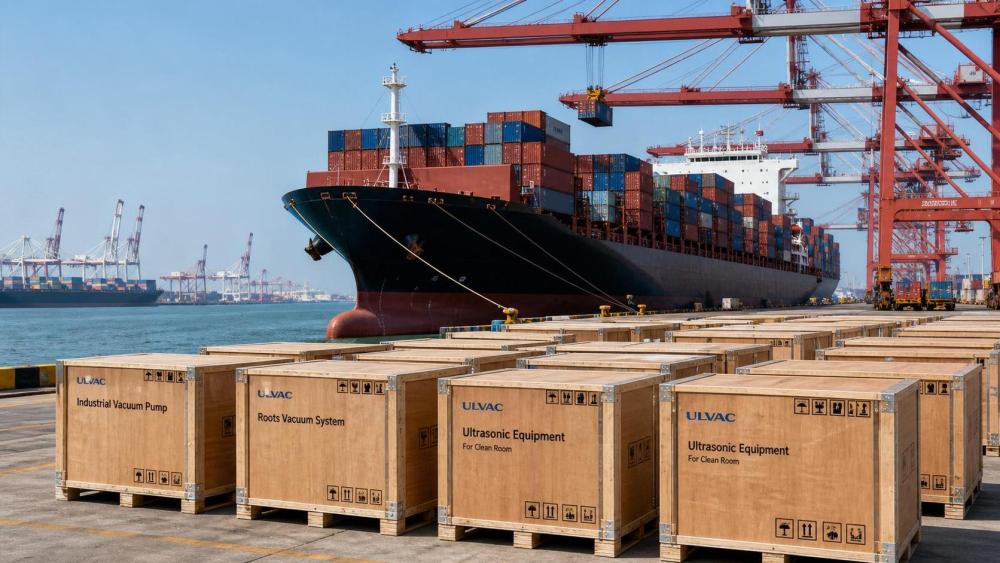
What Has Changed in the Shipping Environment
The confirmed facts are limited but commercially significant. The United States and Iran signed a ceasefire memorandum on June 14, 2026, and the Strait of Hormuz fully resumed navigation on June 18. According to the provided event summary, this development materially eases shipping tension on Middle East-bound routes. For exports of Dry Screw/Claw Pumps, Roots Vacuum Systems, and Cleanroom Ultrasonic equipment to the UAE, Saudi Arabia, and Iran, sea transit times are expected to be reduced by 7 to 10 days, while insurance rates are expected to decline by 12% to 18%.
The same summary indicates that this change is particularly relevant for orders whose fulfillment stability depends on the delivery of precise vacuum thermodynamic parameters. No further official implementation detail, regulatory text, or route-specific administrative measure was provided in the input.
Why This Matters Across the Export Chain
For equipment exporters, delivery risk becomes more manageable
Analysis shows that exporters of high-value vacuum and ultrasonic systems may be among the first to feel the operational impact. These products often involve tightly defined delivery schedules, technical documentation handover, and customer acceptance conditions linked to performance consistency. A shorter shipping cycle and lower insurance burden can affect quotation validity, shipment scheduling, and contract execution. What deserves closer attention is whether existing export paperwork, delivery commitments, and customer communication need to be updated to reflect improved route conditions without overstating certainty.
For buyers and procurement teams, timing assumptions may need revision
From an industry perspective, procurement teams in the destination markets may reassess lead-time assumptions that were built around recent shipping disruption. This can affect purchase order timing, installation sequencing, and tender-side delivery expectations. Buyers should pay attention to whether technical bid alignment, spare-parts readiness, and acceptance planning were previously structured around longer logistics windows, because improved transit conditions may change commercial expectations even before formal procurement templates are revised.
For logistics and supply chain service providers, documentation discipline still matters
Observably, freight forwarders, insurers, and other supply chain service providers may face immediate questions on routing, premium adjustments, shipment timing, and cargo handling arrangements for precision equipment. Even with improved navigation conditions, companies should continue to verify shipping terms, insurance clauses, cargo descriptions, and handover records carefully. Lower freight-related pressure does not eliminate the need for consistent export documentation, especially where delivery performance is closely tied to technical condition on arrival.
For after-sales and quality teams, fulfillment stability remains a practical issue
Analysis shows that after-sales teams and quality traceability functions are also affected indirectly. Where equipment performance verification depends on arrival condition and predictable commissioning windows, changes in shipping duration can alter service coordination and acceptance timing. Companies should therefore track whether internal records, inspection files, and customer-side technical confirmations remain aligned with the revised logistics outlook.
What Companies Should Watch Next
Review whether delivery commitments need recalibration
It is more appropriate to understand this development as a potential adjustment point for delivery planning rather than an automatic reset of all lead times. Exporters should review open orders, pending quotations, and shipment plans to determine whether revised transit assumptions should be reflected in contract language, customer notices, or internal planning documents.
Check how insurance and trade terms are being applied in practice
Although the input states that insurance rates are expected to fall by 12% to 18%, companies should still confirm how those changes are being applied in actual cargo arrangements. What deserves closer attention is the execution level: whether insurers, freight partners, and contracting parties are already using revised assumptions, and whether supporting documents need to be refreshed accordingly.
Keep technical and acceptance files consistent with logistics changes
For vacuum and cleanroom-related equipment, delivery is often linked to specification files, test records, and acceptance documentation. Analysis shows that companies should ensure that shipping updates do not create mismatches between promised handover timing and technical documentation packages, especially where customers evaluate fulfillment quality through both logistics punctuality and parameter consistency.
Monitor whether market-side requirements begin to shift
No detailed regulatory or tender-rule revision was provided in the input. For that reason, companies should watch for later changes in procurement documents, buyer instructions, service expectations, or execution language in destination markets. The commercial impact may emerge first through market practice rather than through a newly published formal rule.
How This Update Is Best Understood
Observably, this news is best read as an execution signal with immediate relevance for trade operations, not as a complete policy settlement with fully visible downstream rules. The confirmed change is the reopening of navigation and the expected easing of shipping and insurance pressure on relevant routes. Analysis shows that the industry value lies in improved order stability for products that are sensitive to delivery timing and technical consistency. At the same time, the absence of detailed official implementation language in the input means companies should avoid treating all routing, insurance, procurement, or acceptance conditions as fully normalized without further verification.
A Practical Reading for the Sector
For the vacuum pump and cleanroom ultrasonic export segment, the reopening of the Strait of Hormuz points to a more stable trade corridor and lower transaction friction on shipments to the UAE, Saudi Arabia, and Iran. That is commercially meaningful because reduced transit time and lower insurance pressure can improve delivery predictability for technically demanding equipment. Still, it is more appropriate to understand this as a concrete but still developing execution improvement: a change that has likely begun to affect logistics conditions, while the broader market response, documentation practices, and customer-side requirement adjustments still deserve close observation.
Basis of This Article and What Still Needs Verification
This article is based on the user-provided news title, event date, and event summary. The input did not provide a specific official source link, so any formal source text still requires further verification. For developments of this kind, commonly relevant source categories may include official announcements, regulatory releases, customs or trade authority information, industry association notices, standard-setting documents, and reporting by established media outlets.
Further observation is still needed on any follow-up policy detail, implementation language, certification-related interpretation, changes in tender documents, market feedback, and how companies are adjusting actual execution practices in response to the reopening of the route.