
On July 9, 2026, Vietnam’s Ministry of Industry and Trade (MOIT) introduced a new compliance requirement for imported Plastic Ultrasonic Welders, with enforcement set for October 1, 2026. The change matters most to importers, manufacturers, procurement teams, and supply chain operators serving high-reliability applications such as automotive electronics and medical consumables, because it links market entry to a third-party welding strength report issued by a Vietnam-recognized laboratory and is expected to affect both customs timing and local testing cost.
What the new rule requires
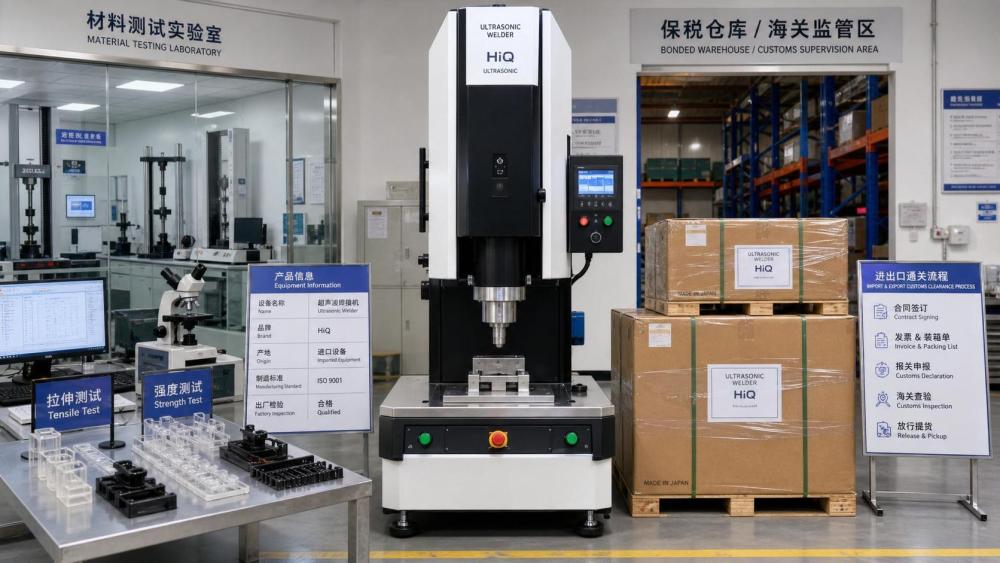
According to the information provided, MOIT issued Circular No. 22/2026/TT-BCT on July 9, 2026. Under this rule, from October 1, 2026, all imported Plastic Ultrasonic Welders must be accompanied by a welding strength test report under ISO 13988-2:2026. The report must be issued by a laboratory recognized in Vietnam, with QUATEST 3 cited as an example. The measure is described as targeting high-reliability application scenarios, including automotive electronics and medical consumables, and it is expected to lengthen customs clearance time while adding local testing costs.
Where the pressure is likely to appear first
Import procedures may become more document-dependent
From an industry perspective, direct trading companies and importers are likely to feel the impact first because the new requirement is tied to entry documentation. The main pressure point is whether the required ISO 13988-2:2026 welding strength report is ready in a form accepted by Vietnam-recognized laboratories and customs-related processes. What deserves closer attention is the risk of timing gaps between shipment schedules and document readiness.
Equipment buyers in high-reliability sectors may face planning adjustments
For procurement teams and end-use manufacturers in automotive electronics and medical consumables, the issue is not only compliance at the border but also delivery predictability. Analysis shows that any added clearance time may affect installation schedules, production planning, or equipment onboarding where imported Plastic Ultrasonic Welders are involved. These users will need to watch for changes in lead times and documentation expectations during purchasing.
Supply chain service providers may need to revise coordination steps
Logistics and supply chain service providers may also be affected because customs handling and pre-arrival document checks could become more sensitive to testing paperwork. Observably, the key business link here is coordination among exporter, importer, laboratory, and customs-facing teams. The practical concern is whether document preparation and local testing arrangements are aligned early enough to avoid avoidable delays.
What companies should watch now
Track the implementation date against live orders
The enforcement date of October 1, 2026 creates a clear dividing line for shipments and procurement planning. Companies involved in near-term imports should pay close attention to which orders may fall into the new compliance window and whether supporting reports can be prepared in time.
Confirm document pathways with Vietnam-recognized laboratories
Because the rule specifically refers to test reports issued by Vietnam-recognized laboratories, one immediate focus is the document pathway rather than the standard number alone. Businesses should closely review how testing, recognition, and report issuance connect in practice before shipment execution.
Reassess delivery commitments in sensitive application sectors
For businesses serving automotive electronics and medical consumables, customer communication may require earlier clarification. Analysis shows that when a rule is directly tied to testing documentation and customs handling, delivery commitments can be affected even if product demand itself does not change. The practical priority is to align compliance preparation with contract timing and customer expectations.
Separate the policy signal from actual operating impact
What deserves closer attention is the difference between the text of the rule and the way it will function in day-to-day trade. Companies should monitor whether the main burden comes from report preparation, local lab access, customs review time, or a combination of these factors once implementation begins.
How this should be read at this stage
Observably, this is more than a routine paperwork update because the requirement is tied to third-party verification under ISO 13988-2:2026 and specifically affects imported Plastic Ultrasonic Welders used in reliability-sensitive fields. At the same time, it is more appropriate to understand this as a concrete near-term compliance change with broader implications still unfolding, rather than as a fully settled long-term market outcome. The immediate fact is the rule and its effective date; the broader operational impact still needs to be watched through implementation.
Why the market should keep this on the radar
In practical terms, the news points to a compliance threshold that could reshape timelines and cost assumptions for affected imports into Vietnam. The most balanced reading is that this is an actionable short-term regulatory change and also a longer-term signal worth watching for companies involved in equipment trade, regulated manufacturing support, and delivery planning for high-reliability applications.
Basis of this article
This article is based on the user-provided news title, event date, and event summary. For this type of development, relevant source categories typically include official government notices, company disclosures, industry association updates, authoritative media reporting, and standard-related documents. A specific official source link was not provided in the input, so the underlying notice and any later implementation details still require continued verification. Follow-up attention should remain on official wording, enforcement practice after October 1, 2026, and any further clarification related to recognized laboratories and document acceptance.