
On June 30, 2026, Vietnam’s Ministry of Industry and Trade issued an urgent technical notice that changes the import conditions for Plastic Ultrasonic Welders. From July 15, imported units must arrive with a real-time energy monitoring module meeting TCVN 8922:2026, making this more than a technical specification update: it directly affects import clearance, supplier configuration, procurement review, and delivery planning for companies handling equipment shipments into Vietnam. For businesses already moving orders or preparing bids tied to this equipment category, the short implementation window is the part that deserves immediate attention.
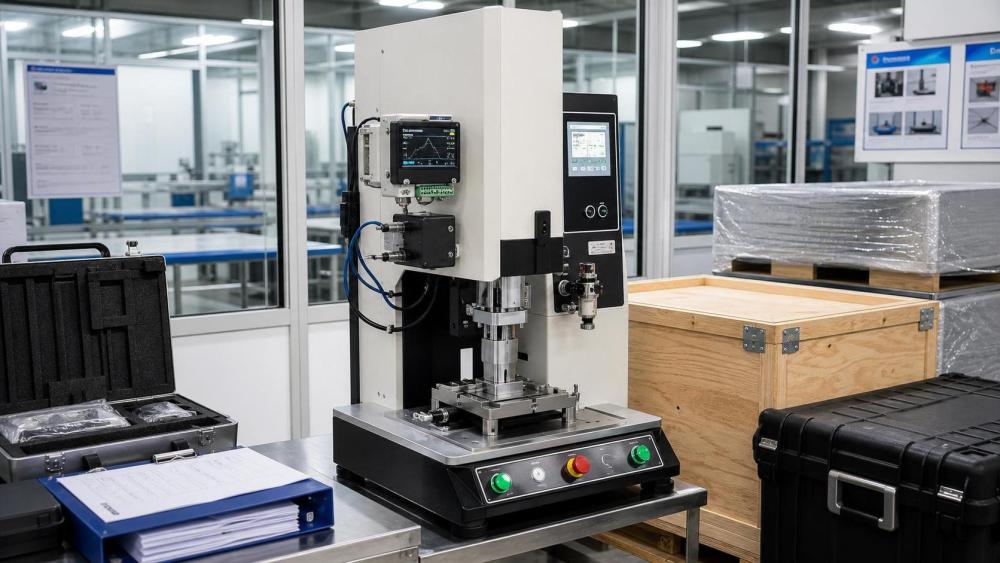
The New Import Condition Now Attached to Entry
According to the information provided, MOIT signed Technical Notice No. 127/TB-BCT on June 30, 2026. The notice requires all imported Plastic Ultrasonic Welders to be pre-installed with a real-time energy monitoring module compliant with TCVN 8922:2026.
The required module must support RS-485 Modbus output, deliver accuracy of ±1.5%, and provide local storage for 72 hours of data.
The new rule becomes mandatory on July 15, 2026. Equipment without the module will be denied customs clearance. The notice was also incorporated as an access condition in Vietnam’s 2026 Green Manufacturing Equipment Import Whitelist.
Where the Immediate Pressure Falls Across the Chain
Imported equipment orders face a configuration checkpoint
From an industry perspective, traders and importers are likely to feel the impact first because the rule is linked directly to customs clearance. The practical issue is no longer whether the monitoring function can be added later, but whether the machine is already configured with a compliant module before shipment. What deserves closer attention is the alignment between purchase orders, technical specifications, and pre-shipment equipment configuration.
Procurement teams need to review technical requirements earlier
For buyers sourcing Plastic Ultrasonic Welders for production use, the rule introduces a new front-end screening point in procurement. Analysis shows that supplier quotations, technical annexes, and acceptance criteria may now need to reflect the module’s required functions, including RS-485 Modbus output, ±1.5% accuracy, and 72-hour local data storage. If those points are absent from procurement documentation, the risk may surface late, at shipment or import stage.
Manufacturers and exporters may need tighter document control
Equipment manufacturers and exporters serving the Vietnam market may be affected through product configuration management and supporting technical documentation. Observably, the compliance question is not limited to the physical module itself; it also extends to whether the exporter can present clear technical evidence that the imported unit matches the stated standard requirement. This makes specification control, model configuration records, and shipment documentation more sensitive than before.
Service and compliance support functions may see follow-on demands
Certification-related service providers, testing bodies, and after-sales support teams may also need to track the rule closely. Analysis shows that once an import condition becomes tied to a named standard and a whitelist access condition, market participants often look for clearer technical proof, consistent descriptions in documents, and traceability after delivery. The current notice does not provide wider execution detail in the input, so this should be treated as an area to monitor rather than a confirmed procedural outcome.
What Companies Should Check Now
Confirm whether product specifications already match the module requirement
Companies with active orders should verify whether the imported Plastic Ultrasonic Welders are already equipped with a module that meets TCVN 8922:2026 as described in the notice. The key point is pre-installation before import, not a post-arrival retrofit assumption.
Recheck contract files and technical attachments
What deserves closer attention is whether contracts, purchase specifications, quotations, and technical sheets explicitly reflect the required module functions. Where documents remain generic, companies may need to tighten wording around interface output, accuracy, and local storage capability so compliance expectations are visible before shipment.
Watch for execution language in trade and clearance documents
Analysis shows that customs refusal for non-compliant equipment creates a direct delivery risk. Businesses involved in export and import coordination should therefore pay close attention to how product descriptions, model specifications, and technical support materials are presented in shipment-related documentation. The input does not provide a full operational checklist, so this remains a practical monitoring point rather than a confirmed formal requirement set.
Track how the whitelist condition is applied in practice
The notice was also added to the entry conditions for Vietnam’s 2026 Green Manufacturing Equipment Import Whitelist. It is more appropriate to understand this as a market-access signal with compliance implications, especially for companies that position equipment around green manufacturing eligibility. Further official clarification, if any, still needs to be watched closely.
How This Rule Change Should Be Read at This Stage
Observably, this is not simply a policy discussion or an early consultation signal. The combination of a dated technical notice, a fixed enforcement date, and a stated customs consequence indicates a rule that is framed for execution. At the same time, analysis shows that the market still needs to watch how technical proof, document expectations, and whitelist-related interpretation are handled in practice, because those details were not fully provided in the input.
It is more appropriate to understand this development as an implemented compliance threshold with short-term operational consequences, while still keeping room for further observation on enforcement language and market response.
A Practical Reading for the Market
The immediate significance of this notice lies in its effect on import readiness rather than in broader policy symbolism. For businesses trading, sourcing, or delivering Plastic Ultrasonic Welders into Vietnam, the change brings compliance forward into the ordering and configuration stage. That means the commercial risk now sits earlier in the chain, especially where contracts or shipments were prepared under older technical assumptions.
From an industry perspective, the most reasonable conclusion for now is that this should be treated as a landed rule with direct clearance impact, while the finer points of execution, document practice, and market adaptation still require close observation.
Basis of This Article
This article is based on the user-provided news title, event date, and event summary. The confirmed facts used here are limited to the stated MOIT notice, the TCVN 8922:2026 module requirements, the July 15, 2026 mandatory date, the customs consequence for non-compliant equipment, and the inclusion of this condition in Vietnam’s 2026 Green Manufacturing Equipment Import Whitelist.
For events of this type, relevant source categories typically include official government notices, regulator releases, customs or trade authority information, industry association updates, standard-setting documents, and reporting by authoritative trade media. No specific official source link was provided in the input, so the exact source document link still needs to be verified on an ongoing basis.
Further attention should remain on any later policy clarification, compliance interpretation, certification-related execution language, tender document changes, market feedback, and how affected companies implement the requirement in actual shipments and procurement workflows.