
Why does ABS crack so easily during plastic welding?
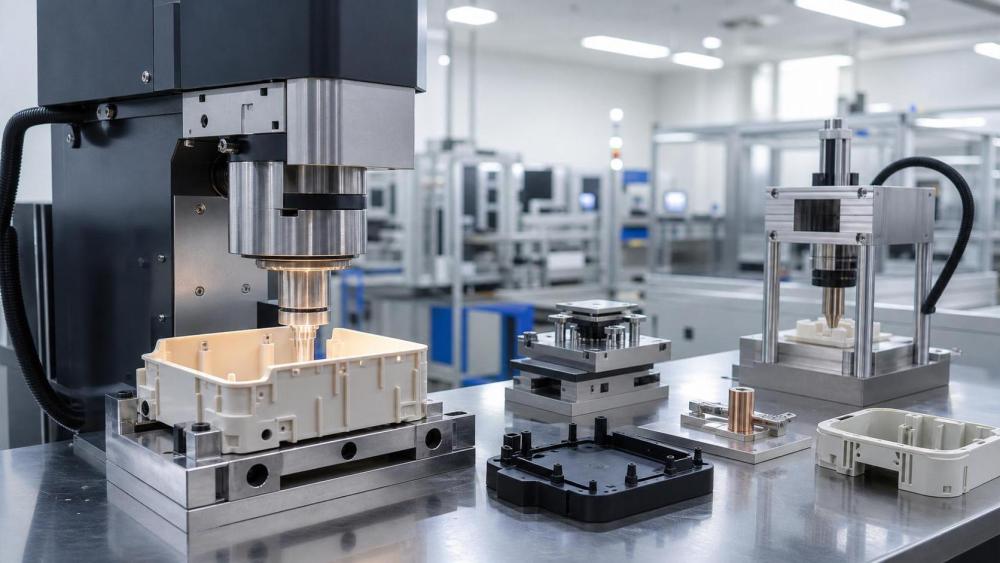
Plastic welding technology for ABS looks simple at first, yet the material is less forgiving than many expect.
ABS softens within a workable range, but it also stores internal stress from molding, trimming, and handling.
When heat rises too fast, or pressure is uneven, that stress often appears as edge cracks, whitening, or weak seams.
In real production, the seam may pass a quick visual check and still fail later during drop testing or assembly.
That is why plastic welding technology ABS decisions should never be based on speed alone.
A stable result depends on three linked factors: material condition, joint design, and process control.
This is also where industrial auxiliary systems become important.
Clean part surfaces, repeatable energy input, and traceable process settings often determine whether an ABS weld survives field use.
On platforms such as GIAS, these supporting technologies are treated as quality-critical, not secondary details.
Which plastic welding methods usually work best for ABS parts?
The short answer is that no single method fits every ABS part.
The better question is which method controls heat and force well enough for the geometry, wall thickness, and appearance target.
Ultrasonic welding is often the first choice
For small to medium ABS components, ultrasonic welding is usually the most efficient option.
It creates fast, localized heating, which helps limit broad thermal damage.
When the energy director is designed correctly, seam strength can be excellent.
However, excessive amplitude or poor fixture support may cause stress marks and corner cracking.
Hot plate welding suits larger or more demanding seams
Hot plate welding is slower, but it offers very uniform melting over broad contact areas.
It is useful when the joint is long, the part is larger, or a hermetic seal matters more than cycle time.
The main risk is overheating the surface, which can embrittle ABS and reduce appearance quality.
Vibration and spin welding have narrower use cases
Vibration welding can work for tougher, larger assemblies, but flash control and part rigidity become critical.
Spin welding fits round ABS parts well, especially when symmetry supports even frictional heat.
If the part shape is irregular, these methods become harder to stabilize.
Laser welding can be excellent, if the material stack allows it
Laser welding gives clean seams and minimal particulate generation.
Still, ABS must be adapted for laser transmission and absorption, so material compatibility comes first.
For that reason, laser welding is more selective than ultrasonic welding in plastic welding technology for ABS.
How do you choose the right method without guessing?
A practical selection process starts with failure risk, not machine preference.
If cracks and weak seams are the main concern, compare methods by heat profile, clamping stability, and joint tolerance.
In many ABS applications, the winning method is the one that creates a wide enough process window.
A slightly slower process with fewer rejects is usually better than a fast process with unstable seam quality.
That mindset aligns well with GIAS coverage of process-support systems, where repeatability and traceability often matter as much as raw output.
What actually causes weak seams in ABS, even when the machine seems fine?
Weak seams usually come from a combination of small errors rather than one dramatic failure.
That is why troubleshooting plastic welding technology ABS problems often requires looking beyond the welder itself.
- Molded-in stress remains inside the part and opens during welding.
- Dust, oil, or release agent blocks proper fusion at the interface.
- Joint geometry is too flat, too thin, or poorly supported.
- Clamping force is uneven, causing one side to melt earlier.
- Cooling is rushed, locking stress into the seam.
- Regrind ratio or material grade changes without parameter review.
Surface cleanliness deserves special attention.
ABS can weld poorly if fine contamination remains on molded parts, especially in precision housings.
This is one reason ultrasonic cleaning systems appear so often in advanced manufacturing support chains.
A cleaner interface can improve consistency before any weld parameter is changed.
Another overlooked issue is documentation.
If seam failures happen only in certain batches, traceable coding, weighing records, or process logs can reveal the real source much faster.
Can joint design do more than machine tuning?
Very often, yes.
Operators may spend days adjusting time, pressure, or amplitude when the root issue is an unfriendly joint design.
In plastic welding technology for ABS, the seam starts on the drawing board.
Features that usually improve weld reliability
- A defined energy director for ultrasonic welding.
- Uniform wall thickness near the seam.
- Adequate support ribs away from the weld path.
- Controlled flash traps where appearance matters.
- Radius transitions instead of sharp stress corners.
More common than expected is the mismatch between cosmetic demands and weld geometry.
A seam hidden inside a housing can use a more forgiving design.
A visible consumer-facing part may need tighter flash control, lower stress concentration, and gentler energy input.
When weld quality, marking, coating, and final appearance all matter, auxiliary process coordination becomes essential.
That broader view reflects how GIAS approaches industrial process quality across multiple linked technologies.
What is the safest way to reduce cracks before full-scale production?
The safest route is a structured trial, not a single sample that happened to look good.
A reliable ABS welding setup should be checked through material, process, and post-weld verification.
A practical pre-production checklist
- Confirm ABS grade, filler content, color, and regrind percentage.
- Inspect molded parts for residual stress, warp, and gate-related weakness.
- Clean weld interfaces consistently before testing.
- Run parameter windows, not just one nominal setting.
- Measure collapse, visual appearance, and seam strength together.
- Check performance after cooling, handling, and simple abuse testing.
If a weld only works under a narrow setting, it may not survive normal production variation.
A wider, more stable process window is usually the better indicator.
This matters even more when upstream weighing, drying, cleaning, or downstream marking must stay synchronized with weld quality records.
So, which plastic welding technology for ABS should you trust most?
If the part is compact, the joint is well designed, and cycle time matters, ultrasonic welding is often the most dependable choice.
If the seam is broad, structural, or needs more uniform heat, hot plate welding may prevent cracks more effectively.
Laser welding becomes attractive when seam appearance, cleanliness, or closed-part assembly justifies material preparation and tighter control.
The real answer, though, is that the best plastic welding technology ABS setup combines the right weld method with clean surfaces, sound joint design, stable fixtures, and traceable settings.
That is where many seam failures are either prevented early or allowed to grow unnoticed.
A sensible next step is to map the part geometry, defect pattern, and process window before changing equipment.
Then compare whether cleaning, fixture correction, joint redesign, or a different welding method will remove the highest risk first.
For ongoing improvement, it also helps to follow process-focused industrial resources that connect welding performance with cleaning, marking, traceability, and quality control across the full production flow.