
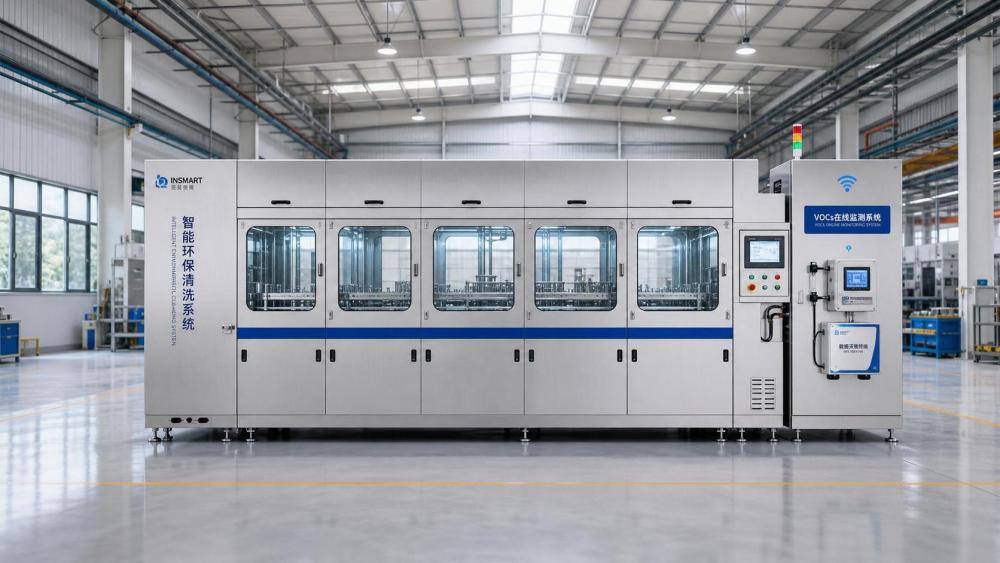
On June 28, 2026, Vietnam's Ministry of Industry and Trade issued Circular 18/2026/TT-BCT, introducing a new import compliance requirement for Multi-tank Wash Lines. From September 1, 2026, imported equipment in this category must carry a VEMC-certified real-time VOCs emission label on the side of the control panel, and that label must include a wireless transmission module connected to the national E-Monitoring platform. For equipment suppliers, importers, buyers, certification-related service providers, and delivery teams, this is worth close attention because the rule connects product entry, environmental compliance, and import continuity in one requirement.
What the circular now requires
The confirmed facts are limited but clear. Vietnam's Ministry of Industry and Trade released Circular 18/2026/TT-BCT on June 28, 2026. The circular requires all imported Multi-tank Wash Lines, starting from September 1, 2026, to carry a real-time VOCs emission label on the side of the control panel. The label must be certified by the Vietnam Environmental Monitoring Center (VEMC), must integrate a wireless transmission module, and must connect to the national E-Monitoring platform. The event summary also states that non-compliant equipment will be detained at Ho Chi Minh City port and will not be eligible for import license renewal.
Where the pressure is likely to appear first
Import transactions now depend on equipment-side compliance
From an industry perspective, direct trading companies and importers are the first group likely to feel the effect. The change is not limited to paperwork; it applies to a physical label, a certification condition, and a connectivity requirement tied to the imported machine itself. That means import preparation, shipment readiness, and customs-facing compliance checks may all need closer coordination. What deserves closer attention is whether procurement files, technical specifications, and pre-shipment checks fully reflect the new label and connectivity requirement before cargo is dispatched.
Equipment manufacturers and exporters may need earlier specification alignment
Analysis shows that manufacturers and export-side suppliers of Multi-tank Wash Lines may need to address compliance earlier in the production and delivery cycle. Because the rule specifies label placement, certification, and wireless connection to a national platform, the issue is likely to affect equipment configuration, documentation handover, and delivery acceptance criteria. Companies involved in export sales should pay attention to whether contract specifications, inspection records, and technical documents clearly address this requirement before shipment.
Buyers and project teams face a delivery and licensing risk
For purchasing parties and project execution teams, the practical concern is not only compliance but timing. The event summary explicitly links non-compliance to detention at Ho Chi Minh City port and to refusal of import license renewal. Observably, this raises a direct risk around handover schedules, installation planning, and import continuity for equipment that falls within the stated scope. Buyers should therefore pay close attention to the compliance status of incoming equipment rather than treating the issue as a downstream customs formality.
Certification and compliance support functions may become more involved
Certification-related service providers, testing support teams, and after-sales coordinators may also see a more active role. Analysis shows that where a rule combines certification, hardware integration, and platform connection, companies often need tighter coordination across technical, compliance, and service teams. In this case, the immediate point is not to assume a fully defined execution model, but to recognize that document review, technical confirmation, and post-delivery support may all be affected by how the requirement is applied in practice.
Practical points companies should track now
Check whether current shipments and orders already match the new requirement
What deserves closer attention is whether equipment scheduled for import on or after September 1, 2026 already includes the required VEMC-certified real-time VOCs label, the specified placement on the control panel side, and the wireless transmission function connected to the national E-Monitoring platform. If these points are not yet reflected in open orders, companies may need to review them promptly in commercial and technical documents.
Review compliance files, not only commercial documents
Analysis shows that affected companies should pay attention to the completeness and consistency of compliance-related materials, including technical descriptions, inspection documentation, certification-related records, and any delivery files that demonstrate the machine matches the import requirement. The event summary does not provide a detailed document checklist, so this should be treated as a monitoring point rather than a confirmed filing standard.
Watch for further official wording on execution and verification
Observably, the circular creates a concrete rule, but the event summary does not set out every operational detail on verification, submission sequence, or field-level enforcement. Companies should therefore continue tracking any later official wording, implementation clarification, or agency guidance that may define how the VEMC certification, wireless module, and E-Monitoring connection will be checked in practice.
Reassess delivery schedules and supplier commitments
From an industry perspective, this is also a supply chain timing issue. Because the consequence of non-compliance includes port detention and loss of import license renewal eligibility, affected businesses should review lead times, shipment release assumptions, and supplier commitments with this compliance step in mind. The prudent reading is that delivery planning should now include the labeling and connectivity requirement as a gating item.
Why this reads as more than a routine labeling update
Analysis shows that this development is better understood as a targeted execution signal rather than a symbolic regulatory notice. The requirement does not stop at a static environmental marking; it ties imported equipment to certified real-time VOCs labeling and connection to a national monitoring platform. At the same time, it is still appropriate to keep part of the picture under observation, because the provided information does not include detailed enforcement workflow, supporting document format, or market feedback from early implementation.
How the market should read this at this stage
At this stage, the most reasonable interpretation is that Vietnam has set a concrete import-access condition for Multi-tank Wash Lines, with direct consequences for clearance and license continuity if the requirement is missed. It is more appropriate to understand this as an already landed compliance change with immediate operational significance, while still recognizing that some execution details may need continued verification as the rule moves into practice.
Basis of this article and what still needs verification
This article is based on the user-provided news title, event date, and event summary. For developments of this type, relevant source categories commonly include official circulars or notices, releases from regulatory authorities, customs or trade administration information, industry association updates, standards-related documents, and reporting from authoritative media. No specific official source link was provided in the input, so the exact official publication link still needs to be verified on an ongoing basis. What also requires continued observation includes detailed implementation wording, certification application in practice, changes in tender or technical specification documents, industry feedback, and how affected companies execute the requirement in shipment and delivery workflows.