
On June 27, 2026, Vietnam's Ministry of Industry and Trade issued Circular No. 18/2026/TT-BCT, creating a near-term compliance change for imported Multi-tank Wash Lines. From July 15, 2026, affected equipment must arrive with an IoT real-time water quality monitoring module aligned with TCVN 9327:2026 and a Vietnamese-language operating interface. Because non-compliant equipment will be refused by Ho Chi Minh City port customs, this is a rule change that directly touches export readiness, localization work, import clearance, and delivery planning for manufacturers, buyers, and supply-chain participants.
What the new import requirement now says
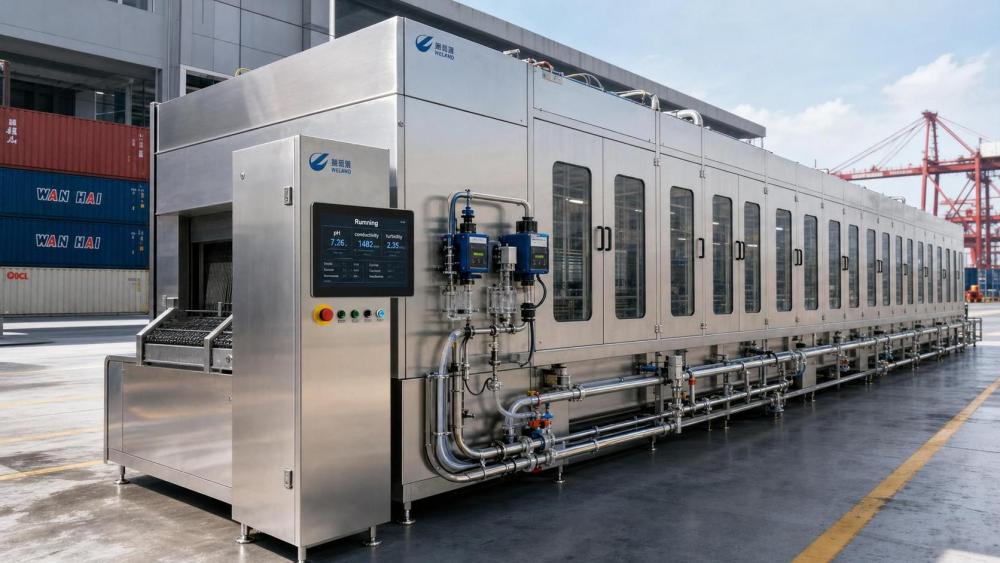
The confirmed information shows that the Ministry of Industry and Trade of Vietnam issued Circular No. 18/2026/TT-BCT on June 27, 2026. The circular requires all imported Multi-tank Wash Lines, effective July 15, 2026, to integrate an IoT water quality real-time monitoring module that complies with TCVN 9327:2026.
The required monitoring scope includes three parameters: pH, conductivity, and turbidity. The equipment must also come with a preloaded Vietnamese-language operating interface.
The event summary further states that equipment failing to meet these requirements will be rejected by Ho Chi Minh City port customs. It also confirms that the measure has already triggered urgent retrofit and localization adaptation demand among OEM manufacturers in South China.
Where the pressure is likely to appear first
Export manufacturers face a narrower pre-shipment compliance window
From an industry perspective, exporters of Multi-tank Wash Lines are the first group likely to feel the operational effect of this change. The reason is straightforward: the new requirement is tied directly to import acceptance, so compliance can no longer be treated as an optional after-sale upgrade if the shipment is intended for the Vietnam market.
The main pressure points are likely to sit in equipment configuration, technical documentation, interface localization, and shipment release timing. What deserves closer attention is whether product specifications, factory acceptance materials, and export documentation are all aligned with the required IoT module and Vietnamese-language interface before dispatch.
Buyers and project procurement teams may need to tighten bid and acceptance conditions
For procurement teams and import-side buyers, the rule change matters because equipment that does not meet the stated configuration may face refusal at the port stage. Analysis shows that purchasing decisions may need to move beyond price and mechanical performance alone and include explicit review of module integration and localization readiness.
The practical impact is likely to appear in technical bid alignment, purchase specifications, pre-delivery inspection points, and acceptance clauses. Buyers should pay closer attention to whether suppliers can clearly demonstrate conformity with the stated standard reference and the required three monitoring parameters.
Supply-chain and delivery service providers may need to reassess handover risk
Logistics coordinators, delivery managers, and related supply-chain service providers may also be affected because the rule introduces a compliance checkpoint tied to customs handling. Even without additional published execution detail in the input, the refusal risk described in the event summary means delivery scheduling and cargo handover assumptions may need review.
Observably, the most relevant business links are shipment planning, document completeness, and communication between exporter, buyer, and customs-facing service parties. For these participants, the issue is less about interpreting policy theory and more about reducing the chance that a shipment arrives with an incomplete technical or localization setup.
What companies should watch in the coming weeks
Check whether product configuration matches the rule before shipment
Analysis shows that the immediate question is whether the exported Multi-tank Wash Line already includes the required IoT water quality monitoring module and whether that module covers pH, conductivity, and turbidity as stated in the rule summary. Where products are still in production or awaiting dispatch, this becomes a pre-shipment verification point rather than a post-arrival correction item.
Review localization and technical file readiness together
The Vietnamese-language operating interface is not a peripheral detail in the input; it is part of the stated requirement. Companies should therefore review interface localization together with manuals, technical descriptions, and any supporting records used during delivery and acceptance. It is more appropriate to understand this as a combined compliance and usability requirement, not only a software translation task.
Prepare for closer scrutiny of compliance evidence
The input does not provide detailed enforcement procedures or documentary formats, so this cannot be treated as a settled checklist. Still, analysis suggests that exporters and buyers should pay attention to how they evidence conformity with TCVN 9327:2026, how the required parameters are described in technical materials, and whether bid files or contract appendices need updating to reflect the new import condition.
Track execution language beyond the headline rule
Because the effective date is close to the issuance date, companies should continue watching for clearer execution language, customs practice, and any market-side adjustment in specification sheets or tender documents. The current information supports heightened compliance attention, but it does not yet provide a full picture of how every shipment scenario will be handled in practice.
Why this looks like an execution signal, not just a policy headline
Observably, this development is more than a general policy direction because the input contains a named circular, a defined effective date, concrete technical elements, and a stated customs consequence for non-compliant equipment. That combination makes the change more suitable to read as an execution-level market signal for affected equipment entering Vietnam.
At the same time, analysis shows there is still a second layer that requires continued observation: how conformity will be evidenced, how consistently port-level enforcement will be applied, and how quickly suppliers and buyers update procurement and delivery practice. For that reason, the event should not be overstated as a fully settled operating framework across every business scenario based on the current input alone.
How this update is best understood right now
The immediate significance of the June 27 development is that a technical feature, a standard reference, and a language-localization requirement have been tied directly to import acceptance for Multi-tank Wash Lines entering Vietnam from July 15, 2026. For the market, that shifts part of compliance responsibility upstream into design, configuration, and pre-shipment preparation.
It is more appropriate to understand this event as a confirmed rule change with direct trade and delivery implications, while also recognizing that the detailed enforcement approach still needs close monitoring. The most rational near-term reading is not broad market forecasting, but focused attention on compliance readiness, documentation alignment, and execution feedback from actual transactions.
Basis of this article and what still needs verification
This article is generated based on the user-provided news title, event date, and event summary. For events of this type, commonly relevant source categories may include official circulars, regulatory notices, customs or trade authority releases, industry association updates, standards documents, and reporting by established trade media.
No specific official source link was provided in the input, so the original publication path and related official documentation still require ongoing verification. Further observation is also needed on policy detail, certification or conformity interpretation, tender document changes, market feedback, and how companies ultimately implement the requirement in export, procurement, and delivery workflows.