
From June 1, 2026, Vietnam’s Ministry of Industry and Trade will enforce mandatory product traceability for high-risk goods, a change that directly matters to suppliers, importers, and end users of Multi-tank Wash Lines used with chemical cleaning agents, surface treatment auxiliaries, or in pharmaceutical and precision electronics cleaning. The update deserves industry attention because market access will depend not only on equipment classification, but also on whether batch-level process records, water quality monitoring data, and consumables compliance documents can be uploaded into the ministry’s system before customs clearance and sale.
What the new requirement covers
The confirmed information is clear on three points. First, the requirement takes effect on June 1, 2026. Second, Vietnam’s Ministry of Industry and Trade is applying mandatory product traceability to high-risk goods, and this scope includes industrial cleaning equipment involving chemicals. Third, Multi-tank Wash Lines will be treated as high-risk goods if they contain cleaning agents, use surface treatment auxiliaries, or are intended for pharmaceutical or precision electronics cleaning scenarios.
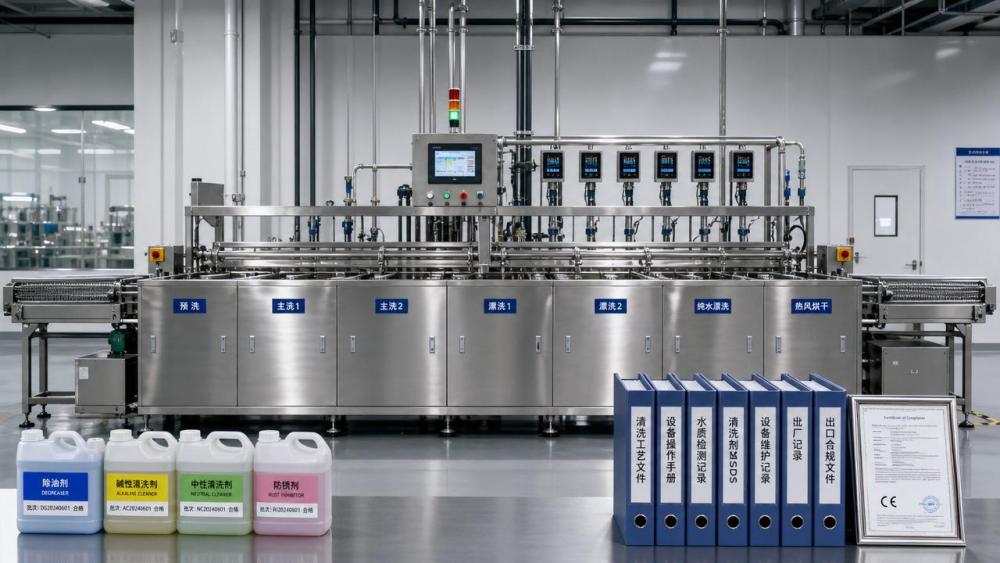
For products falling into that category, system registration is required. The information to be uploaded includes batch-level cleaning process parameters, water quality monitoring data, and proof of compliance for consumables. If these requirements are not completed, the products cannot pass customs clearance for sale.
Where the pressure is likely to appear first
Imported equipment transactions may face earlier screening
From an industry perspective, direct trading companies and import-focused distributors are likely to feel the impact first because customs clearance is explicitly tied to traceability completion. Their immediate exposure is not only in product filing, but also in whether supporting technical and compliance documents are ready at shipment and entry stages.
Equipment manufacturers and integrators will need stronger documentation control
Analysis shows that manufacturers and system integrators serving Vietnam-bound projects may be affected at the product definition and delivery stages. If a Multi-tank Wash Line involves chemical agents, auxiliary surface treatment materials, or sensitive cleaning applications, the business issue is no longer limited to equipment performance; document readiness around process batches, water quality records, and consumables compliance becomes part of deliverability.
Pharma and precision electronics users may need closer supplier coordination
End-use companies in pharmaceutical and precision electronics cleaning scenarios deserve close attention because the summary explicitly names these application settings. Their practical concern is supplier readiness: whether the equipment they procure can be registered properly and whether supporting traceability records can be maintained without delaying import, installation, or commercial use.
Supply chain service providers may see a documentation bottleneck
Observably, service providers involved in shipping, customs coordination, and compliance support may need to watch for a shift from product movement management to record completeness management. The likely pressure point is not a new logistics step by itself, but the risk that incomplete traceability materials could interrupt normal clearance and sales timelines.
What companies should watch now
Confirm whether a product falls into the high-risk category
What deserves closer attention is product classification in actual business practice. Companies dealing with Multi-tank Wash Lines should check whether the equipment includes cleaning agents, uses surface treatment auxiliaries, or is designated for pharmaceutical or precision electronics cleaning, because those conditions are directly tied to high-risk treatment in the provided information.
Prepare batch-level records before shipment or registration
The compliance focus is not limited to a one-time registration step. The required uploads include batch-level cleaning process parameters, which means companies should pay attention to whether those records already exist in a usable and consistent format before goods move into customs or sales channels.
Review water quality and consumables documentation together
The summary places water quality monitoring data and consumables compliance proof alongside process records. In practice, this means related teams should not treat equipment files, water monitoring records, and consumables certificates as separate issues, because the business consequence described in the input is the same: failure to complete the requirement prevents customs clearance and sale.
Keep watching for clarifications in official wording
Analysis shows that companies should distinguish between the confirmed core rule and any future operational detail that may still need clarification. The confirmed point is the mandatory nature of registration and upload requirements from June 1, 2026; the part that still deserves ongoing attention is how official system use and category interpretation may be expressed in subsequent notices or supporting guidance.
Why this reads as more than a filing change
Observably, this development is better understood as a market-access control signal rather than a narrow paperwork adjustment. The reason is that the requirement connects product traceability directly with customs clearance and sale, and it does so for equipment categories tied to chemicals and sensitive cleaning applications.
At the same time, it is more appropriate to understand this as a confirmed compliance change with continuing implementation questions, not as a fully settled industry outcome. The rule direction is explicit in the provided information, but how different companies operationalize classification, data preparation, and system submission will remain an active area to watch.
How the industry may frame this development
In practical terms, this update signals that traceability expectations for certain industrial cleaning equipment in Vietnam are moving closer to transaction-critical compliance requirements. A neutral reading is that the immediate effect centers on documentation readiness and system connection, while the broader industry meaning lies in how equipment suppliers, importers, and end users adapt their workflows around batch records and compliance evidence.
For now, it is more appropriate to understand the news as both a short-term operational requirement and a longer-term regulatory signal. The obligation itself is already defined in the provided information, while its wider impact on procurement, supply coordination, and delivery timing still warrants continued observation.
Basis of this article
This article is based on the user-provided news title, event date, and event summary concerning Vietnam’s mandatory traceability requirement for high-risk goods and its application to certain Multi-tank Wash Lines. Specific official source links were not provided in the input, so the exact official publication path still requires follow-up verification.
For this type of industry update, the source categories that are typically relevant include official government notices, company disclosures, industry association updates, authoritative media coverage, and standard-related documents. The next point to monitor is whether additional official wording, implementation guidance, or operational clarification is released regarding registration scope, submission details, and practical enforcement.