
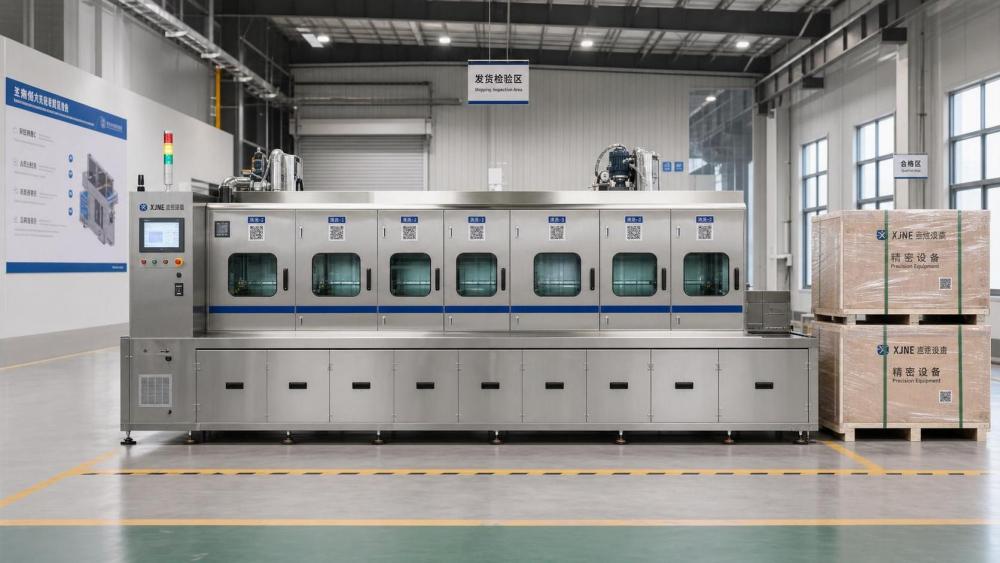
Starting July 15, 2026, Vietnam will enforce a new import requirement for Multi-tank Wash Lines: equipment shipped into the market must arrive with a QR traceability module that meets the VN-Trace standard, with data integration and unique equipment code binding completed before shipment. For exporters, equipment manufacturers, integrators, and buyers serving Vietnam, this is not just a documentation issue. It shifts compliance further upstream into product configuration, factory processes, and delivery preparation.
What the new rule clearly requires
According to the information provided, Vietnam's Ministry of Industry and Trade (MOIT) issued Circular No. 12/2026/TT-BCT on July 2, 2026. The rule applies to all Multi-tank Wash Lines imported into Vietnam and takes effect on July 15, 2026.
The requirement is that imported equipment must integrate a QR code traceability module compliant with VN-Trace. In addition, the relevant data connection and the binding of a unique equipment code must be completed before the equipment leaves the factory. The measure applies to products from all countries of origin.
The same information also indicates that China is a major supplying country in this segment, which makes the rule especially relevant for Chinese exporters serving the Vietnamese market.
Where the immediate pressure is likely to appear
Export-side equipment preparation
From an industry perspective, exporters of Multi-tank Wash Lines are likely to feel the first operational impact because the requirement must be addressed before shipment. The main pressure point is no longer limited to customs-facing paperwork; it now reaches into factory readiness, module installation, and pre-delivery data handling.
Manufacturing and system integration work
For manufacturers and technical integrators, the requirement may affect how equipment is configured for Vietnam-bound orders. Analysis shows that soft-hardware compatibility will become a practical issue, because the traceability module, the data connection process, and the unique code binding all need to be completed before export.
Buyers and project-side procurement checks
Procurement teams and buyers connected to Vietnam-bound projects may need to pay closer attention to whether suppliers can deliver equipment already prepared for VN-Trace-related compliance. The likely impact is on order confirmation, technical specifications, acceptance conditions, and delivery coordination.
Supply chain and delivery coordination
Supply chain service providers and export operations teams may also be affected at the execution stage. What deserves closer attention is whether shipment schedules, technical handover timing, and supporting compliance records remain aligned once traceability preparation becomes part of the pre-factory process.
What companies should watch now
The difference between a rule announcement and execution details
Analysis shows that companies should distinguish between the confirmed rule itself and the practical details that may emerge in implementation. The confirmed facts are the effective date, the product scope, the QR traceability requirement, and the need for pre-shipment data connection and code binding. Businesses should continue monitoring whether any further official clarification affects workflow, validation, or documentation expectations.
Whether Vietnam-bound models need built-in compatibility
For exporters and manufacturers, a core issue is whether products intended for Vietnam already include the necessary soft-hardware compatibility in standard configuration or whether this must be handled case by case. That question directly affects quotation discipline, engineering preparation, and delivery planning.
Supplier coordination and customer communication
Companies involved in cross-border supply should review how they communicate readiness to customers and channel partners. Observably, this rule makes supplier capability more visible at the front end of the transaction, especially where buyers need confirmation that traceability functions and unique equipment coding have been completed before shipment.
Timing risk around orders and delivery commitments
Because the rule takes effect on July 15, 2026, firms handling near-term deliveries should pay attention to timing exposure. The practical issue is not only whether the equipment can be shipped, but whether all required integration and binding steps are completed within the promised delivery window.
Why this matters beyond a single shipment requirement
This should not be read only as a narrow packaging or labeling adjustment. It is more appropriate to understand this as a compliance signal that pushes traceability expectations closer to the manufacturing stage of industrial equipment exports. Analysis shows that the policy matters because it links market access to equipment-level identification and pre-departure data preparation.
At the same time, it is too early to treat this as evidence of a broader market outcome beyond what has been explicitly stated. The confirmed change is clear, but the wider operational effect on procurement patterns, supplier selection, and delivery models still needs to be observed through implementation.
How the industry may best interpret the update
At this stage, the development is best understood as an immediate compliance change with broader strategic implications. In the short term, the key issue is execution: exporters and suppliers serving Vietnam need to ensure that Multi-tank Wash Lines are prepared with the required QR traceability capability before shipment. In the longer view, the more important signal is that equipment traceability is becoming part of market-entry readiness rather than a downstream administrative step.
A cautious reading is still necessary. The rule is already defined in its basic requirements and effective date, but the full business impact should be assessed through actual implementation and any subsequent official clarification.
Basis of this article and points for continued verification
This article is based on the user-provided news title, event date, and summary describing Vietnam's new requirement for QR traceability modules on imported Multi-tank Wash Lines. For developments of this kind, commonly relevant source types include official government notices, company announcements, industry association updates, authoritative media reporting, and standards-related documents.
No specific official source link was provided in the input. That means the exact official publication path should still be continuously verified. Follow-up attention should focus on any further MOIT wording, implementation clarification around VN-Trace compliance, and practical interpretation affecting export preparation and delivery execution.