
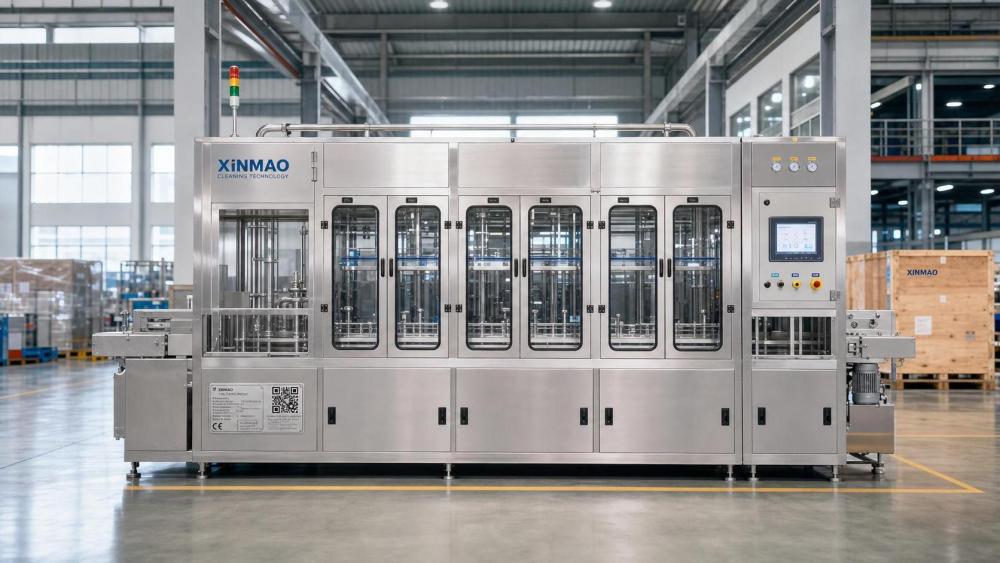
Effective July 15, 2026, Vietnam has moved to tighten traceability requirements for imported Multi-tank Wash Lines. According to the information provided, the Ministry of Industry and Trade (MOIT) issued Circular No. 88/2026/TT-BCT on July 2, requiring a dynamic QR trace code containing VIN information to be placed next to the equipment nameplate, with data connected to Vietnam’s National Industrial Product Traceability Platform (NIP-Trace). This is immediately relevant to equipment exporters, factory labeling teams, compliance functions, and supply chain partners handling new orders into Vietnam, because the rule applies to newly signed contracts and directly affects shipment readiness and data submission workflows.
What the Circular Requires
The confirmed facts provided show that MOIT signed Circular No. 88/2026/TT-BCT on July 2, 2026. The measure requires all imported Multi-tank Wash Lines to carry a dynamic QR trace code next to the equipment nameplate. The QR code must include VIN-related information, and the corresponding data must be connected to NIP-Trace, Vietnam’s national industrial product traceability platform.
The requirement applies to all newly signed contract orders. Enforcement starts at 00:00 on July 15, 2026. The provided information also indicates that Chinese exporters need to upgrade factory labeling systems and data-connection capabilities in parallel with this rule.
Where the Operational Pressure Will Appear
Exporters face a packaging and compliance adjustment
From an industry perspective, direct exporters of Multi-tank Wash Lines are likely to feel the impact first because the new requirement is tied to the physical equipment label and to platform-based data submission. The main pressure point is no longer only product delivery, but also whether outbound equipment can meet labeling and traceability conditions before shipment under newly signed contracts.
Manufacturing sites will need to connect labeling with data output
For manufacturing and assembly operations, the issue is not limited to printing one more code. Analysis shows the change may affect the point where equipment identification, nameplate preparation, and final inspection intersect. What deserves closer attention is whether internal labeling processes can produce dynamic QR codes with the required VIN information and keep that data consistent with what is uploaded to NIP-Trace.
Supply chain and delivery teams may need tighter coordination
Supply chain service providers and delivery coordinators may also be affected because compliance now appears linked to both documentation and physical marking. Observably, any mismatch between nameplate content, QR trace data, and order execution timing could become a practical issue in handover and shipment preparation. For companies serving Vietnam-bound orders, this raises the need for closer coordination across export documentation, factory release, and customer communication.
Buyers and project teams will likely watch contract execution more closely
Procurement teams and end users in Vietnam may pay more attention to whether newly ordered equipment is delivered with the required traceability setup from the outset. The business impact here is less about product function and more about whether imported equipment can move through delivery and acceptance without avoidable compliance gaps under the new rule.
What Companies Should Check Now
Review which orders fall under the effective date
The rule is stated to apply to newly signed contracts, with mandatory enforcement beginning on July 15, 2026. Companies should therefore focus on how they identify affected orders in practice and whether any Vietnam-bound contracts signed around the implementation window require immediate process adjustments.
Confirm label format and data consistency
Because the requirement specifically mentions a dynamic QR code placed beside the equipment nameplate and containing VIN information, firms should pay attention to label generation, placement, and data consistency. The practical issue is whether the QR output, nameplate information, and internal product records remain aligned at shipment stage.
Prepare for platform-side data connection work
The provided information makes clear that data must connect to NIP-Trace. Analysis shows this is where many companies will need to distinguish between a policy requirement on paper and actual execution capability. A printed code alone may not be enough if the associated data cannot be connected in the required way, so internal system readiness deserves close review.
Keep customer and supplier communication specific
For exporters and related service providers, customer communication should stay focused on implementation details tied to new contracts, shipment preparation, and traceability data handling. In parallel, supplier-side coordination matters where nameplates, labeling systems, or export preparation are handled by different teams or external partners.
Why This Looks Like More Than a One-off Label Change
Observably, this development should not be read only as a minor marking update. The confirmed requirement combines physical labeling with platform-based traceability, which suggests a stronger compliance link between the equipment itself and official product data records. That does not by itself prove a broader regulatory shift beyond the scope of the provided information, but it does indicate that companies should treat traceability capability as part of export execution rather than as a final packaging detail.
It is more appropriate to understand this as an immediate operational change with a longer-term signal value. The immediate change is clear: new Vietnam-bound contracts for Multi-tank Wash Lines must meet the QR and data-connection requirement from July 15. The longer-term signal, based on observation rather than confirmed fact, is that digital traceability may become a more visible part of industrial equipment market access and compliance management.
How the Market Should Read This Update
At this stage, the most balanced reading is that Vietnam’s new requirement creates a concrete compliance checkpoint for exporters of Multi-tank Wash Lines, especially those serving new contracts after the enforcement date. The issue is practical rather than theoretical: equipment labeling, VIN-linked QR generation, and data connection now sit closer to delivery execution.
For the industry, this is better understood as a short-term operational requirement that may also carry a longer-term regulatory signal. It does not yet support broad conclusions beyond the product scope and facts provided, but it is significant enough that affected companies should follow implementation details closely and avoid treating it as a routine documentation update.
Basis of This Article
This article is based on the user-provided news title, event date, and summary concerning Vietnam’s QR traceability requirement for imported Multi-tank Wash Lines. The specific official source link was not provided in the input, so further verification remains necessary. For this type of development, relevant source categories typically include official government circulars or notices, company compliance updates, industry association releases, authoritative media reporting, and standard-related documents.
What deserves continued attention is whether there are later clarifications on implementation details, order scope, labeling practice, or data-connection procedures tied to NIP-Trace. Those points were not supplied in the input and should be monitored through subsequent official or market disclosures.