
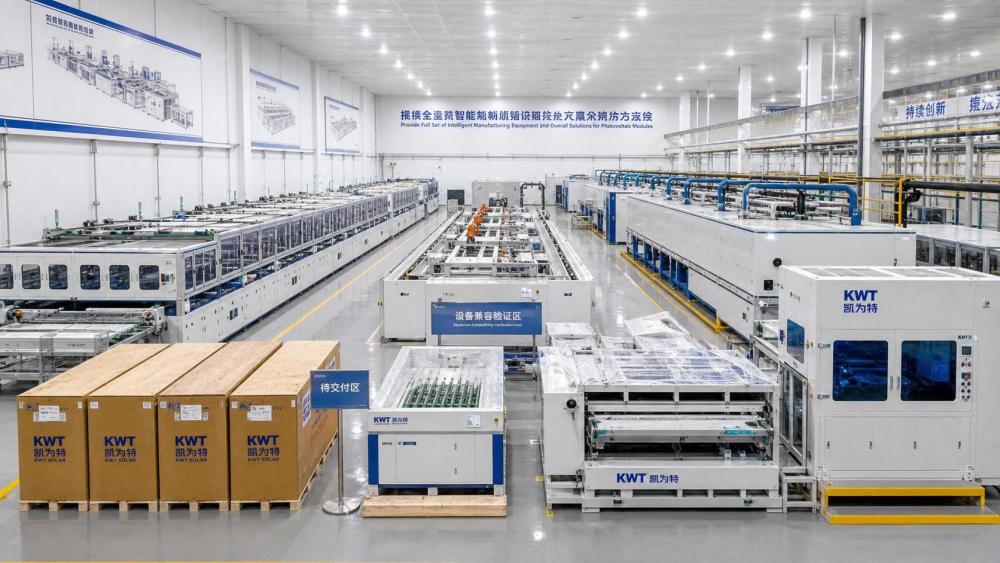
Effective June 1, 2026, India has begun enforcing the ALMM-II requirement that subsidized photovoltaic projects use only domestically manufactured cells, and that shift now extends beyond cell sourcing into equipment access. For exporters of Multi-tank Wash Lines, Plasma Surface Treatment systems, and Powder Coating Lines, the immediate issue is no longer only product supply, but whether they can provide compatibility validation showing their equipment fits local cell packaging processes. This matters because the rule change can affect bidding access, procurement timing, technical document preparation, and delivery planning across the supporting equipment chain.
What the rule change now requires in practice
As of 2026-06-01, India is mandating that all subsidized solar projects use 100% domestically manufactured cells under the ALMM-II rule. The impact is not limited to cell procurement itself. The rule is also affecting related equipment used in supporting process lines, including Multi-tank Wash Lines, Plasma Surface Treatment equipment, and Powder Coating Lines.
For overseas suppliers of these systems, buyers in India now require compatibility validation reports showing that the equipment can work with domestic cell packaging processes. Without that validation, suppliers may face project entry barriers. At the same time, the currently compliant domestic cell capacity in India is 30 GW, covering only 20% of demand, a situation already linked to longer downstream equipment delivery cycles and a surge in requests for technical adaptation support.
Why the impact reaches beyond cell makers
Export equipment suppliers face a new pre-bid compliance layer
From an industry perspective, the most direct effect falls on overseas equipment exporters serving subsidized photovoltaic projects or suppliers linked to those projects. Their exposure is not limited to shipment readiness; it now includes whether technical files, validation materials, and process compatibility evidence can satisfy Indian buyers before project entry. What deserves closer attention is that equipment qualification may increasingly depend on proof of fit with domestic cell packaging workflows rather than on generic equipment specifications alone.
Procurement teams must reassess timelines and supplier screening
Buyers and procurement teams are also affected because sourcing decisions may now need to account for both ALMM-II cell requirements and the availability of equipment vendors able to support compatibility validation. Analysis shows that this can shift procurement work toward earlier technical review, document checks, and supplier pre-screening. Where compliant domestic cell supply remains limited relative to demand, delivery planning may become more sensitive to sequencing between cell availability and supporting equipment readiness.
Technical service and verification work gains importance
Service providers involved in testing, process alignment, commissioning support, or technical documentation may see a heavier role in project execution. Observably, the rise in technical adaptation inquiries suggests that compatibility is becoming a practical commercial issue, not just a specification issue. For these participants, the key change is the growing need to translate process requirements into validation materials that can be used in tenders, buyer reviews, or project qualification discussions.
What companies should watch next
Prepare compatibility evidence early
Companies supplying affected equipment categories should closely review whether their current technical dossiers can demonstrate compatibility with domestic cell packaging processes. If such materials are incomplete, the risk may appear not only at contract execution but earlier at buyer evaluation or project access stages.
Track tender language and buyer documentation requests
Because the summary provided does not include detailed enforcement documentation, it is more appropriate to understand current requirements as a clear compliance signal with execution details still needing close review. Businesses should therefore pay attention to how buyers describe validation expectations in bid documents, technical appendices, and vendor qualification requests.
Recheck delivery commitments against supply constraints
Analysis shows that the gap between compliant domestic cell capacity and demand may influence downstream scheduling. Companies involved in export sales, project procurement, or supply coordination should reassess whether quoted lead times, installation windows, and acceptance milestones remain realistic under tighter technical matching requirements.
Strengthen after-sales and traceability readiness
Where equipment approval increasingly depends on process compatibility, after-sales support and technical traceability may become more important in practice. Firms should pay attention to how validation records, process adjustment history, and service documentation are retained in case buyers request additional confirmation during project execution.
How this development is best understood now
Observably, this is more than a narrow sourcing rule for solar cells. It signals that localization requirements in subsidized photovoltaic projects can extend into adjacent equipment qualification and market access conditions. At the same time, based on the information provided, it would be premature to treat all implementation details as fully settled. What deserves closer attention is how compatibility validation will be interpreted in procurement practice, how consistently buyers apply the requirement, and whether supporting documents evolve further as the rule is executed.
A compliance signal with practical trade effects
For the industry, this development is best read as an implemented rule change with immediate compliance implications for related equipment suppliers, while some execution details still warrant continued observation. The core issue is not only policy direction but the conversion of that direction into procurement barriers, document requirements, and delivery adjustments. A rational reading at this stage is that companies tied to subsidized solar projects in India should treat compatibility verification as a current market-entry requirement and continue monitoring how the rule is applied in tenders and project workflows.
Basis of this article and what still needs verification
This article is generated based on the user-provided news title, event date, and event summary. For developments of this type, commonly relevant source categories may include official government notices, regulator publications, trade or customs authority information, industry association updates, standard-setting documents, and reporting by established industry media. No specific official source link was provided in the input, so the exact official publication path still requires ongoing verification. Further monitoring should focus on detailed implementation language, certification or validation interpretation, tender document changes, market feedback, and how companies are executing against the new requirement.