
On June 4, 2026, the Canada Border Services Agency (CBSA) issued a final anti-dumping decision on truck bodies from China, applying a uniform 257.1% punitive rate to non-cooperative companies. While the ruling is specific to truck body products, the reasoning cited in the case has already drawn attention across adjacent industrial equipment categories, including high-precision cleaning systems such as Multi-tank Wash Lines and Cleanroom Ultrasonic equipment. For exporters, importers, and procurement teams serving the Canadian market, the immediate relevance is not only tariff exposure but also the rapid tightening of document-based compliance expectations.
What the June 4 decision clearly established
The confirmed event is that CBSA made a final anti-dumping determination on Chinese truck bodies on June 4, 2026. Non-cooperative enterprises are subject to a 257.1% punitive rate under that decision.
The case itself focuses on truck body products, but the basis for the ruling explicitly referenced a framework centered on systemic overcapacity in China, low-price exports, and insufficient transparency in cost structures.
According to the information provided, that framework has already triggered compliance pre-screening by the Canadian side for multiple categories of industrial auxiliary equipment. The categories specifically mentioned include Multi-tank Wash Lines and Cleanroom Ultrasonic high-precision cleaning systems.
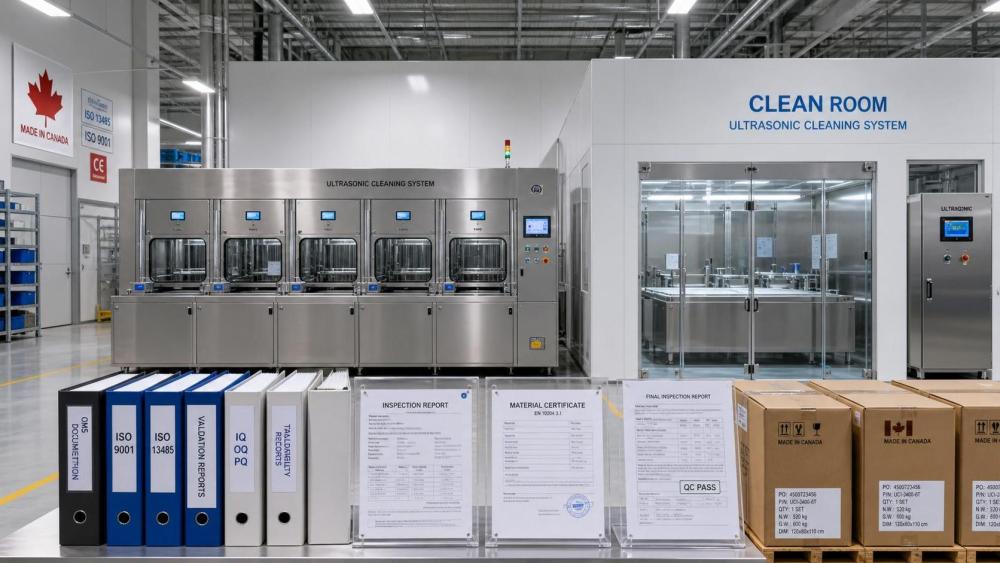
The same information also indicates that Canadian importers are urgently asking suppliers to provide EN ISO 14644 cleanliness verification reports, along with traceability documents covering full-process energy consumption and chemical use.
Where pressure may emerge across the supply chain
Exporters face a wider documentation threshold
From an industry perspective, Chinese exporters of precision cleaning systems may be affected because the immediate issue is no longer limited to product pricing alone. What deserves closer attention is the growing emphasis on whether suppliers can present a transparent and verifiable cost and process record when serving Canadian customers.
The operational impact is likely to appear first in quotation support, pre-shipment document preparation, and customer due diligence responses. Suppliers active in Cleanroom Ultrasonic and Multi-tank Wash Lines should pay close attention to whether their existing compliance files can satisfy requests tied to cleanliness verification and process traceability.
Canadian importers and buyers are shifting risk upstream
Observably, Canadian importers are already transferring part of the compliance burden back to suppliers by urgently requesting technical and process documentation. For buyers, the main concern is not only customs treatment of goods already under direct scrutiny, but also whether related equipment categories could face deeper review before or during import transactions.
This may affect supplier onboarding, bid evaluation, contract review, and delivery planning. Buyers and sourcing teams will need to watch whether documentation gaps slow procurement or create hesitation around certain equipment categories.
Manufacturing and delivery teams may feel indirect disruption
For manufacturers and supply chain service providers, the risk may show up in longer internal preparation cycles rather than in a confirmed policy expansion. If customers request EN ISO 14644 verification records and full-process energy and chemical traceability on short notice, engineering, quality, and logistics teams may need to coordinate more closely before shipments move.
The practical issue to monitor is whether compliance review begins to affect lead times, document handover, and customer acceptance milestones for equipment exports into Canada.
What companies should watch now
Separate confirmed scope from expanding scrutiny
Analysis shows that the confirmed action is the anti-dumping ruling on truck bodies, while the broader compliance pressure on precision cleaning equipment is described as pre-screening and urgent document requests. Companies should avoid treating these two points as identical, but they should also avoid assuming the second point is too limited to matter.
Check whether technical files match importer requests
Suppliers should review whether they can promptly provide EN ISO 14644 cleanliness verification reports and traceability materials covering energy consumption and chemical use across the process. The issue is not only whether such records exist, but whether they are organized in a form customers can use during compliance review.
Prepare customer communication around cost transparency
Because the reasoning cited in the case includes concern over low-price exports and opaque cost structures, exporters should pay attention to how commercial explanations, production records, and supporting materials are presented to Canadian counterparties. Clearer documentation may become part of routine commercial communication, not just a reactive customs exercise.
Follow official wording and importer behavior together
What deserves closer attention is the difference between formal trade measures and commercial risk controls adopted by importers. Even before any broader confirmed action is announced for auxiliary equipment, importer behavior can already reshape transaction conditions, document demands, and delivery timing.
Why this matters beyond the named product category
This section is an observation rather than a statement of fact. Observably, the development matters because it suggests that a trade case in one product area can influence compliance scrutiny in adjacent equipment categories when the official reasoning highlights pricing and cost-transparency concerns.
It is more appropriate to understand this as a live compliance signal rather than as proof of a fully expanded enforcement outcome across all industrial cleaning equipment. The direct ruling is clear; the broader effect is still developing through importer requests and pre-screening activity. That is precisely why the market needs continued attention.
How to read the signal at this stage
At this point, the industry significance lies in the combination of a confirmed punitive anti-dumping outcome and a documented rise in compliance requests affecting related equipment exports. The immediate takeaway is not that every precision cleaning system faces the same trade treatment, but that supporting documentation has become a more important part of market access into Canada.
From an analytical standpoint, this is best understood as a short-term compliance escalation with possible longer-term implications if scrutiny broadens or formalizes. Companies involved in exports, sourcing, quality assurance, and delivery should treat it as a development that requires active monitoring rather than a one-off customs story.
About the basis of this article
This article is based on the user-provided news title, event date, and event summary. The information available for writing consists of the June 4, 2026 CBSA final anti-dumping decision on Chinese truck bodies, the 257.1% rate applied to non-cooperative companies, the cited reasoning framework, the reported compliance pre-screening of certain industrial auxiliary equipment categories, and the urgent documentation requests from Canadian importers.
For this type of development, relevant source categories typically include official agency announcements, company disclosures, industry association updates, authoritative media reporting, and standards-related documents. A specific official source link was not provided in the input, so further verification remains necessary. Continued attention should focus on any subsequent official wording, importer compliance practices, and whether document requests for EN ISO 14644 verification and process traceability become more standardized in actual transactions.