
What should be understood before comparing industrial auxiliary equipment for semiconductor lines?
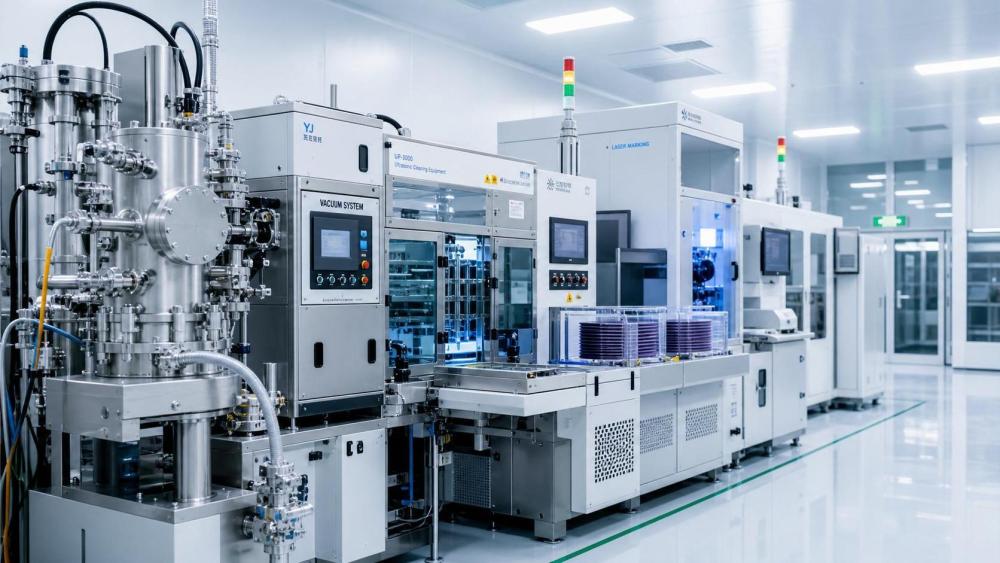
Industrial auxiliary equipment semiconductor production depends on is rarely a side issue. It shapes yield, contamination risk, traceability, uptime, and long-term process stability.
That is why a low purchase price can become expensive later. A vacuum pump with unstable pressure or a weak cleaning system can quietly raise scrap rates.
In practical terms, this category includes vacuum systems, ultrasonic cleaning units, laser marking tools, inkjet coding, weighing controls, and surface treatment support.
Each system supports a different step, but the buying logic is similar. Compare process fit, measurable specifications, compliance needs, maintenance burden, and supplier support.
A useful starting point is to define the process problem first. Is the main concern particle removal, stable vacuum, batch accuracy, permanent marking, or coating consistency?
Platforms such as GIAS are valuable because they organize these support technologies by application, not only by product category. That makes technical comparison more realistic.
Which specifications usually matter most when costs and reliability are both under review?
The answer depends on the equipment type, yet some buying criteria appear again and again in industrial auxiliary equipment semiconductor projects.
Look first at measurable process performance. Marketing language is easy to compare badly. Numeric tolerances are harder to hide and easier to verify.
- Vacuum systems: ultimate pressure, pumping speed, leak rate, vibration level, and gas compatibility.
- Ultrasonic cleaning: frequency range, cavitation uniformity, bath chemistry compatibility, and particle removal threshold.
- Laser marking: wavelength, line speed, mark contrast, heat-affected zone, and code readability after downstream processing.
- Inkjet coding: adhesion, solvent resistance, print resolution, cycle stability, and consumable cost.
- Weighing and batching: repeatability, calibration drift, throughput, recipe control, and data logging.
- Surface treatment: coating thickness consistency, surface energy effect, corrosion resistance, and environmental compliance.
After that, check interface compatibility. Many buying problems come from integration gaps rather than weak core equipment performance.
Common checks include PLC communication, cleanroom suitability, footprint, utility demand, exhaust handling, and traceability data export.
The table below helps narrow the comparison before requesting final quotations.
How do you judge whether a system really fits semiconductor applications?
This is where many comparisons become more disciplined. Not every industrial auxiliary system suits semiconductor environments, even if the brochure looks impressive.
Start with contamination control. Materials, seals, lubricants, tubing, and exhaust design all matter when particulate and outgassing limits are tight.
Then review process sensitivity. A system used near wafers, packages, chambers, or precision assemblies must avoid vibration, residue, and unstable thermal behavior.
A practical method is to ask for application evidence instead of generic references. Similar substrate, chemistry, cleanliness level, and duty cycle are more meaningful than broad industry claims.
Need-to-check items often include cleanroom compatibility, chemical resistance, service interval, and documented performance under continuous operation.
GIAS-style application analysis is useful here because it connects equipment categories with process-support functions such as traceability, coating quality, and microscopic cleanliness.
What proof is more useful than a basic datasheet?
A datasheet is only the first filter. Better proof comes from validation records, stability curves, contamination testing, maintenance logs, and user cases with comparable production conditions.
Factory acceptance criteria should also be discussed early. If the success standard is vague, price comparisons become misleading.
Where do buyers usually underestimate risk?
The most common mistake is focusing on capital cost while ignoring process-side losses. Auxiliary equipment failures rarely look dramatic at first.
More often, they create subtle instability. That can mean drifting vacuum, inconsistent cleaning, unreadable marks, or coating defects that only appear later in inspection.
Another weak point is service planning. Spare parts lead time, local technical support, and preventive maintenance windows can matter more than small differences in unit price.
It is also easy to overlook compliance documentation. Depending on the site and export route, environmental, safety, and traceability records may be mandatory.
- Do not assume all “semiconductor-ready” claims mean the same contamination standard.
- Do not compare throughput without checking uptime assumptions and maintenance frequency.
- Do not accept traceability features without confirming data format and system compatibility.
- Do not treat consumables as minor costs in coding, cleaning, or vacuum applications.
In short, the real risk in industrial auxiliary equipment semiconductor sourcing is hidden variability, not only obvious equipment failure.
How should total cost be calculated beyond the quotation?
A practical total-cost view combines purchase price with operating cost, process impact, maintenance burden, and implementation time.
For vacuum systems, energy use and seal replacement may become major cost drivers. For cleaning systems, chemistry control and bath maintenance can dominate operating spend.
Laser and inkjet systems often look simple to compare, yet consumables, software support, code verification, and rework exposure change the economics quickly.
The better approach is to model cost by production year, not by delivery month. That makes yield impact visible.
Useful cost questions include cycle-time effect, planned downtime, critical spare inventory, calibration frequency, and expected operator intervention.
What does a realistic comparison checklist look like?
- Target process specification and acceptable tolerance window.
- Utilities required, including power, gas, exhaust, water, and floor space.
- Qualification plan, including sample testing and acceptance metrics.
- Service response time and spare parts availability by region.
- Data connectivity, traceability output, and compliance documentation.
- Operating cost over twelve to thirty-six months.
What is the best next step before making a final decision?
Reduce the decision to a short technical-commercial scorecard. That keeps discussions grounded in process evidence rather than brand familiarity.
A strong scorecard usually weighs process fit, contamination control, traceability capability, maintenance demand, compliance readiness, and total ownership cost.
It also helps to separate must-have requirements from negotiable features. That prevents a polished interface from distracting attention from core process risk.
When comparing industrial auxiliary equipment semiconductor operations rely on, the safest decision usually comes from verified specifications, application evidence, and lifecycle cost visibility.
The next move is simple. Clarify the production condition, define the acceptance standard, compare similar-use cases, and check which support system protects yield over time.
That approach makes supplier evaluation more objective and turns auxiliary equipment from a hidden cost center into a controlled manufacturing advantage.