
On July 12, 2026, the U.S. Food and Drug Administration released a final supplementary guide under 21 CFR Part 112 that sets new electronic audit trail requirements for Cleanroom Ultrasonic equipment used in GMP environments. For manufacturers exporting this equipment to the United States, the change is not simply a technical update: it affects product configuration, compliance review, export readiness, and delivery planning ahead of the October 1, 2026 effective date. The issue deserves attention because non-compliant equipment may face failed FDA on-site inspections and import refusal.
What the final guide now requires
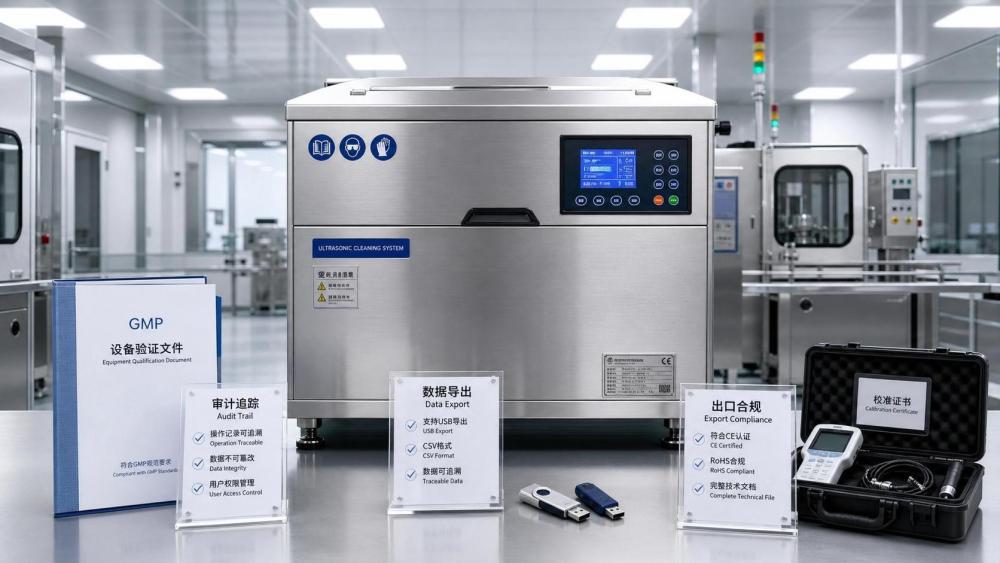
The confirmed facts are limited but clear. The FDA issued the final version of the supplementary guide titled 21 CFR Part 112 Supplementary Guidance: Implementation Requirements for Electronic Audit Trails in Cleanroom Ultrasonic Cleaning Equipment on July 12, 2026. The guide states that all Cleanroom Ultrasonic equipment used in GMP environments must support tamper-evident electronic operation logs, graded user permissions, and data export functions. The guide will take effect on October 1, 2026, and applies to all equipment manufacturers exporting to the U.S. market. Equipment that does not meet the stated requirements may face FDA inspection failure and risk of import refusal.
Where the pressure will show up across the business chain
Export manufacturers will face a product-readiness checkpoint
From an industry perspective, the most direct impact falls on companies shipping Cleanroom Ultrasonic equipment to the United States. The reason is straightforward: the final guide ties market access risk to specific digital control and recordkeeping functions. In practical terms, affected manufacturers need to pay closer attention to whether shipped configurations, technical descriptions, and product functions align with the new FDA expectations before export and delivery.
Procurement teams may need tighter specification alignment
Buyers and procurement teams dealing with GMP-related equipment may also be affected because purchasing decisions can no longer focus only on cleaning performance or hardware design. Analysis shows that document review, bid specifications, and acceptance conditions may need to reflect whether the equipment supports immutable audit logs, user access hierarchy, and data export capability. That makes compliance-related specification alignment a more visible part of procurement and supplier selection.
Compliance, documentation, and service functions become more exposed
What deserves closer attention is the effect on functions surrounding the equipment itself, including compliance review, technical documentation, delivery preparation, and after-sales support. If exporters or service providers cannot clearly demonstrate how the required logging, permission control, and data export functions are implemented, the pressure may emerge during inspection preparation, customer review, or import clearance-related checks. Observably, this raises the importance of traceability-oriented records and product documentation in cross-border transactions involving GMP-use equipment.
Operational points companies should watch before the effective date
Check whether current models match the stated functional baseline
Analysis shows that companies should first verify whether the Cleanroom Ultrasonic models intended for U.S. export already support the three functions named in the guide: tamper-evident electronic operation logs, graded user permissions, and data export. Where product variants differ by market or customer, the gap between standard configuration and export configuration deserves close review.
Prepare technical and compliance files with the new review focus in mind
Because the summary provided does not include detailed enforcement procedures, it is more appropriate to treat documentation readiness as a watch point rather than a settled checklist. Even so, exporters should closely track whether technical files, product descriptions, and compliance materials clearly reflect the required functions, especially where customers, auditors, or trade counterparties may ask for evidence before shipment or acceptance.
Revisit delivery schedules and order commitments
The guide has a stated effective date of October 1, 2026, which creates a defined timing issue for production and shipment planning. Observably, companies with orders linked to the U.S. market may need to review whether delivery commitments, factory release timing, and customer acceptance conditions remain aligned with the compliance status of the equipment being shipped.
Monitor how execution language appears in market documents
The current information confirms the rule change and effective date, but it does not provide detailed downstream wording for tenders, customer qualification files, or inspection practice. For that reason, companies should keep watching how the FDA language is reflected in procurement specifications, qualification reviews, and market-facing compliance requests rather than assuming a fully settled execution standard today.
Why this looks more like an execution signal than a distant policy trend
Analysis shows that this update is better understood as a concrete compliance signal rather than a general policy discussion. The guide is final, it contains explicit functional requirements, it sets an effective date, and it connects non-compliance with inspection and import risk. At the same time, it would be premature to present all downstream commercial and operational consequences as fixed outcomes, because the provided information does not include detailed enforcement scenarios, supporting document formats, or market-specific implementation practices. That is why ongoing observation still matters.
How to read this development now
At this stage, the most balanced reading is that exporters of Cleanroom Ultrasonic equipment for GMP environments are facing a defined compliance adjustment with a clear deadline. The immediate significance lies in product functionality, export readiness, and documentary support, not in broad claims about market transformation. It is more appropriate to understand this development as a rule now entering practical execution, while the exact market response and implementation details still require continued observation.
Basis of this article and what still needs verification
This article is based on the user-provided news title, event date, and event summary. For developments of this kind, relevant source types usually include official regulatory releases, notices from supervisory authorities, trade or customs-related information, industry association updates, standards documents, and reporting by authoritative media. The specific official source link was not provided in the input, so it still requires follow-up verification. Observably, the points that need continued monitoring include detailed implementation language, compliance interpretation, changes in tender or procurement documents, market feedback, and how affected companies carry out the required adjustments.