
What Buyers Should Check in Semiconductor Process Equipment Suppliers in Japan
Choosing the right semiconductor process equipment Japan supplier requires more than comparing product catalogs or prices.
For procurement teams, supplier capability affects yield stability, compliance, maintenance efficiency, and long-term production reliability.
This article explains what to review before selecting a Japanese partner.
The goal is simple: reduce sourcing risk and improve lifecycle value.
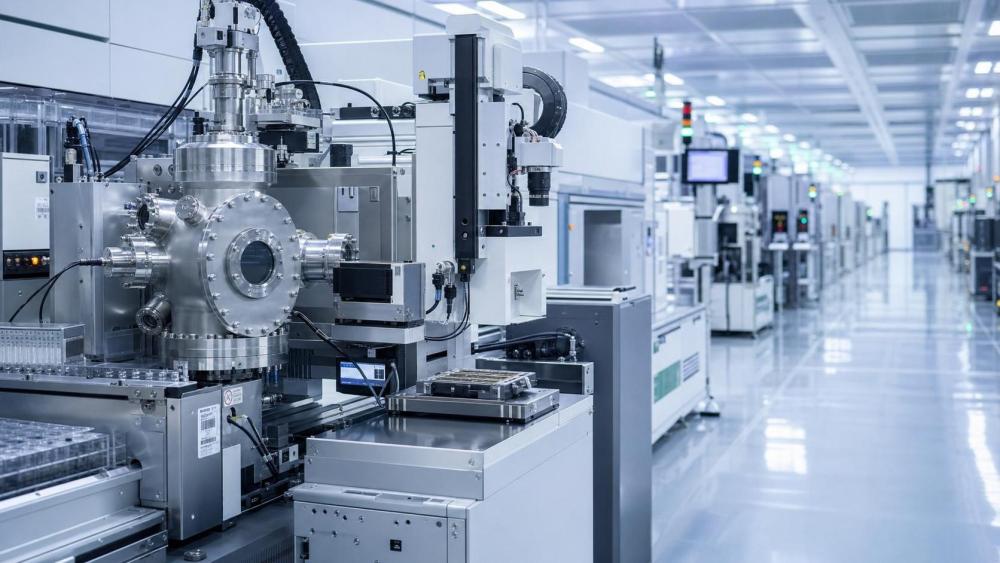
That matters even more when semiconductor process equipment Japan decisions involve vacuum systems, surface treatment tools, marking systems, or contamination-sensitive support equipment.
Start with process fit, not supplier reputation
Japanese suppliers often have strong engineering reputations.
Still, reputation alone does not guarantee process fit.
Buyers should first map the real application environment.
That includes substrate type, contamination thresholds, throughput targets, cleanroom class, chemical compatibility, and maintenance windows.
A supplier may be excellent in one wafer process and weak in another.
In semiconductor process equipment Japan sourcing, technical match should come before brand comfort.
Questions worth asking early
- Which exact process step is the equipment designed to support?
- What contamination or precision tolerance has been proven in production?
- Can the system integrate with existing MES, traceability, or factory automation tools?
- What site utilities are required for stable operation?
- Has the supplier supported similar fabs outside Japan?
Check engineering depth behind the quotation
A detailed quotation tells you a lot about supplier maturity.
A weak quotation usually hides future cost and schedule risk.
For semiconductor process equipment Japan sourcing, review what sits behind the numbers.
Look for process assumptions, performance limits, utility conditions, installation boundaries, and validation scope.
Ask whether the quoted configuration is standard, customized, or partially modified.
That distinction affects lead time, spare parts planning, and field service complexity.
What solid engineering support looks like
- P&ID or utility diagrams during pre-sales discussion
- Defined acceptance criteria for FAT and SAT
- Material compatibility data for chemicals and gases
- Cycle time and uptime assumptions explained clearly
- A named engineering contact, not only a sales desk
Evaluate quality systems and traceability discipline
In advanced manufacturing, supplier quality is operational risk management.
This is especially true for semiconductor process equipment Japan procurement.
Buyers should review quality systems beyond basic certification lists.
Ask how incoming parts are controlled, how assemblies are tested, and how design changes are documented.
Traceability is another key checkpoint.
For vacuum systems, coating support tools, cleaning equipment, and marking systems, traceability protects both yield and compliance.
A capable supplier should explain serial tracking, revision control, and nonconformance handling without hesitation.
Documents that deserve attention
- ISO-based quality certificates and current audit status
- Inspection records for critical subassemblies
- Calibration records for testing tools
- Change control procedures and deviation reports
- Equipment manuals with revision history
Look past unit price and calculate total cost
Cost-focused decisions often fail when buyers compare only purchase price.
Semiconductor process equipment Japan sourcing should be evaluated on total cost of ownership.
That means installation, utilities, training, spare parts, maintenance labor, consumables, software licenses, downtime exposure, and upgrade cost.
A lower-priced system may become expensive if seals fail early, calibration drifts, or overseas support is slow.
This is where procurement and engineering need shared assumptions.
A practical cost review table
Review service readiness outside Japan
Many Japanese manufacturers build excellent systems.
The real question is whether support stays strong after export.
For semiconductor process equipment Japan purchases, post-sale execution often separates reliable suppliers from attractive quotations.
Ask about local agents, remote diagnostics, training language, parts warehousing, and escalation paths.
This is even more important when equipment supports contamination control, vacuum stability, or production traceability.
Small delays in these areas can create outsized production losses.
Service checkpoints before award
- Confirm average response time for your region.
- Request a spare parts list with lead times.
- Review training content for operators and maintenance staff.
- Check whether software support follows your cybersecurity rules.
- Ask for references from similar international installations.
Confirm compliance, documentation, and export reliability
Compliance review should never be left until the final contract stage.
Semiconductor process equipment Japan suppliers may face different export, documentation, and destination approval requirements.
Buyers should verify manuals, safety labeling, regulatory declarations, packing standards, and customs support early.
This reduces delays during installation and import clearance.
In practice, documentation quality is also a signal of supplier discipline.
Clear documents usually reflect clearer internal process control.
Use supplier evaluation to compare real business risk
A useful sourcing decision balances technical performance, service capability, and commercial reliability.
That is the smartest way to assess semiconductor process equipment Japan options.
Scoring models can help, but only if criteria reflect actual operating risk.
Weight process compatibility, quality control, service response, documentation strength, and total cost.
Then compare suppliers using evidence, not assumptions.
For GIAS readers, this matters across vacuum systems, cleaning solutions, laser identification, batching control, and surface treatment support technologies.
These systems often sit beside the main line, but they directly influence yield, consistency, compliance, and traceability.
A capable supplier understands that connection and can explain it clearly.
Before final selection, review one last checklist.
- The equipment matches the real process, not a generic specification.
- Quality and traceability systems are documented and current.
- Lifecycle cost is understood beyond the quoted price.
- Global service support is practical for your site.
- Compliance and export documentation are ready early.
When those boxes are checked, semiconductor process equipment Japan sourcing becomes a more controlled decision.
The best supplier is rarely the one with the shortest catalog pitch. It is the one that can support stable production over time.