
Vacuum Degassing Equipment Selection Guide: Key Parameters for Resin, Oil, and Chemical Processing
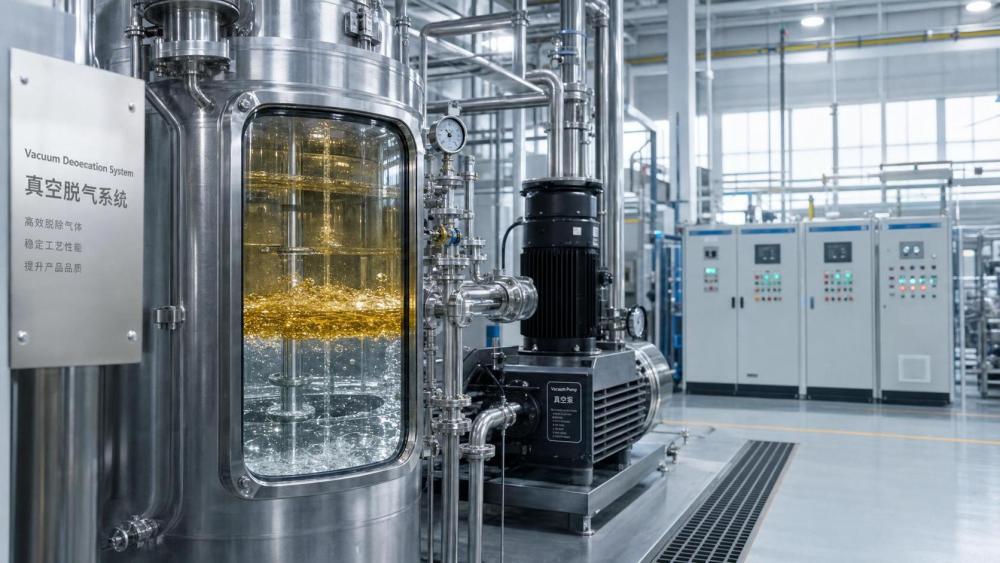
Choosing the right vacuum degassing equipment can shape product quality more than many teams expect.
In resin, oil, and chemical processing, trapped air causes foam, voids, oxidation, unstable viscosity, and poor downstream consistency.
That is why vacuum degassing equipment selection should never start with price alone.
A useful evaluation begins with material behavior, target quality, batch profile, and plant integration limits.
For technical comparison, the most important parameters are vacuum level, degassing rate, throughput, temperature control, wetted material compatibility, and control stability.
In practical projects, the best vacuum degassing equipment is the system that removes gas reliably without damaging the product.
This guide explains how to compare options in a more grounded and decision-ready way.
Why Vacuum Degassing Equipment Matters in Real Processing Conditions
Air and dissolved gases behave differently across resin, oil, and chemical applications.
In epoxy or polyurethane systems, bubbles may create internal voids, weak bonding, and surface defects.
In hot oils, residual gas can accelerate oxidation and reduce storage stability.
In specialty chemicals, foaming during mixing or transfer may disrupt dosing accuracy and process safety.
A mismatch in vacuum degassing equipment often shows up later as rework, scrap, unstable curing, or filter loading issues.
More importantly, poor gas removal can distort lab-to-production scale-up results.
That makes early equipment selection a process risk decision, not only a utility purchase.
Start with the Material Profile Before Comparing Equipment
Before reviewing supplier data, define how the material behaves under vacuum.
This step quickly separates suitable vacuum degassing equipment from systems that only look strong on paper.
Check these material-side inputs first
- Viscosity range at operating temperature
- Foaming tendency during pressure drop
- Sensitivity to heat, shear, and residence time
- Solvent content or volatile component loss risk
- Corrosiveness, contamination sensitivity, and cleaning demands
- Required final bubble level or dissolved gas target
For example, a low-viscosity oil may degas fast but may also flash volatiles if vacuum drops too deep.
A filled resin may need stronger exposure area management rather than simply deeper vacuum.
This is where process knowledge becomes more valuable than catalog comparison alone.
Core Selection Parameters for Vacuum Degassing Equipment
When teams evaluate vacuum degassing equipment, several parameters should be reviewed together.
Looking at only one number, such as ultimate vacuum, usually leads to the wrong decision.
1. Vacuum level and pressure stability
Required vacuum level depends on gas load, material viscosity, and allowable volatile loss.
Pressure stability matters just as much as the minimum value.
A system that hunts or overshoots may trigger foaming, boil-over, or inconsistent results between batches.
2. Throughput and residence time
Batch size and hourly output should align with actual production rhythm.
Undersized vacuum degassing equipment creates bottlenecks.
Oversized systems often waste energy and make control less responsive at partial loads.
3. Temperature control
Heating can reduce viscosity and improve bubble release.
However, excess heat may accelerate reaction, discoloration, or additive loss.
Good vacuum degassing equipment keeps temperature uniform and easy to tune.
4. Mass transfer design
Degassing speed depends on exposed surface area and product movement.
Thin-film, stirred-tank, falling-film, and chamber designs each fit different materials.
This parameter often matters more than pump size alone.
5. Wetted materials and sealing compatibility
Chemical resistance should be checked for vessels, gaskets, valves, sight glasses, and pump internals.
Seal swelling or corrosion can quickly reduce vacuum performance and create contamination risk.
6. Cleaning and maintenance access
Fast cleaning matters where color changes, reactive systems, or regulated materials are involved.
If maintenance access is poor, uptime assumptions usually look better in proposals than in production.
Batch or Continuous Vacuum Degassing Equipment: Which Fits Better?
This choice affects footprint, control philosophy, and labor demand.
Batch vacuum degassing equipment is often preferred for multi-product plants and variable formulations.
It offers easier changeover and closer operator supervision.
Continuous systems fit higher volumes and tighter line balancing.
They can deliver more consistent output if feed conditions stay stable.
From a selection standpoint, ask whether process variability comes from the material or the production schedule.
That answer usually points to the better architecture.
Application Differences Across Resin, Oil, and Chemical Processing
Not all vacuum degassing equipment performs equally across these three groups.
Resin processing
Resins often combine high viscosity with strong bubble retention.
Selection should focus on mixing pattern, heat control, and void reduction before casting, coating, or encapsulation.
Oil processing
Oils may need dissolved gas removal without stripping useful light fractions.
Temperature and vacuum balance become especially important here.
Chemical processing
Chemical products vary widely in reactivity, corrosion profile, and foaming behavior.
Vacuum degassing equipment for this segment should be reviewed with EHS, materials engineering, and operations together.
A Practical Comparison Table for Equipment Evaluation
A simple comparison matrix helps turn technical discussion into a defensible decision.
Common Selection Mistakes That Increase Operational Risk
Several mistakes appear again and again during vacuum degassing equipment sourcing.
- Selecting by ultimate vacuum only, without reviewing control behavior
- Ignoring viscosity changes across seasonal temperatures
- Assuming pilot results will scale without mass transfer changes
- Missing gasket, seal, or pump fluid compatibility details
- Underestimating cleaning time between formulations
- Failing to ask for performance data using similar materials
These issues rarely look dramatic during quotation review.
They usually surface after installation, when changes become expensive.
What to Ask Suppliers Before Finalizing Vacuum Degassing Equipment
A stronger supplier discussion leads to a stronger shortlist.
- What materials and viscosities has this vacuum degassing equipment already handled?
- What pressure control method prevents foam surges?
- What is the guaranteed throughput at real operating temperature?
- Which wetted materials and seals are standard, and which are optional?
- How are cleaning, draining, and maintenance performed?
- Can the system integrate with existing batching, mixing, or traceability controls?
- What references or test data support the proposed design?
In many cases, supplier quality becomes clearer from these answers than from the brochure itself.
Final Decision Framework
The right vacuum degassing equipment should match process reality, not just specification headlines.
A good decision balances vacuum performance, material safety, throughput, controllability, cleaning efficiency, and lifecycle reliability.
For resin, oil, and chemical processing, the best results usually come from comparing equipment with actual product behavior in mind.
If the evaluation process stays disciplined, vacuum degassing equipment becomes easier to shortlist, justify, and scale into production.
Start with the material, verify the operating window, and push suppliers for application-specific proof.
That approach reduces risk and leads to a more reliable investment decision.