
In semiconductor fabrication, vacuum is not just a utility. It shapes process cleanliness, chamber stability, and production continuity. That is why industrial vacuum technology semiconductor decisions often start with one practical question: which pump type supports the cleanest process without creating avoidable downtime?
The answer is rarely simple. Etching, deposition, load lock transfer, and packaging all place different demands on pumping systems. A pump that performs well in one step may introduce risk in another, especially when particles, condensable byproducts, or oil backstreaming become part of the evaluation.
This makes pump selection a process-control issue rather than a catalog exercise. Across advanced manufacturing, GIAS has highlighted how auxiliary systems influence yield and traceability. In semiconductor lines, vacuum performance belongs in that same category because microscopic instability can become measurable scrap.
Why pump type matters inside semiconductor vacuum environments
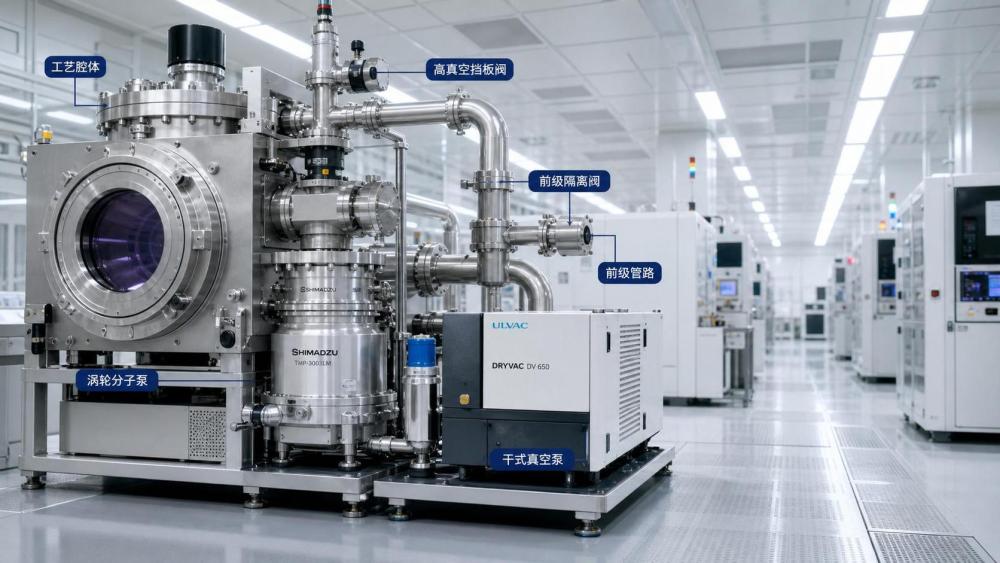
Different pump technologies create vacuum in different ways. That affects achievable pressure, pumping speed across gas loads, contamination behavior, heat generation, and service intervals. In industrial vacuum technology semiconductor applications, those differences show up directly in process results.
For example, a dry pump can reduce oil-related contamination concerns. A liquid ring pump may tolerate wet streams better, but it brings another set of utility and cleanliness questions. Turbomolecular pumps support high and ultra-high vacuum stages, yet they depend on stable backing arrangements.
What matters is not the label alone. The real issue is how the pump behaves under actual chamber conditions, including reactive gases, particulate load, purge strategy, and maintenance access.
Cleanliness is built into pump architecture
Semiconductor processes are sensitive to trace contamination. Molecular backstreaming, seal wear debris, and unstable exhaust handling can all influence wafer quality. Even when contamination is not immediately visible, it may appear later as yield drift or shortened chamber cleaning cycles.
That is why industrial vacuum technology semiconductor assessments usually focus on more than base pressure. Clean pumping behavior, purge effectiveness, materials compatibility, and exhaust treatment deserve equal attention.
The main pump categories and where they fit
Most semiconductor vacuum systems combine more than one pump stage. The comparison below is useful because it connects pump design with common process concerns rather than generic performance claims.
Dry pumps are often preferred for process steps where hydrocarbon contamination cannot be tolerated. That preference has strengthened as device structures become smaller and contamination budgets become tighter.
Still, dry does not automatically mean trouble-free. Corrosive etch byproducts, powder formation, and improper purge design can shorten service life. In industrial vacuum technology semiconductor planning, the pump type must be reviewed together with the chemistry it will face.
Cleanliness risks are usually system risks
Pump selection is important, but contamination rarely comes from the pump alone. The full vacuum path matters, including valves, foreline traps, seals, exhaust abatement, and chamber conditioning routines.
A technically strong pump can still perform poorly if conductance is restricted or byproducts condense in the foreline. That shifts the discussion from isolated components to integrated vacuum design.
Common contamination pathways
- Oil vapor migration from sealed pump designs
- Particle release caused by internal wear or deposits
- Condensation of process byproducts in cooler line sections
- Pressure instability during transfer or pump-down steps
- Inadequate exhaust handling that feeds residue back into maintenance areas
These issues explain why industrial vacuum technology semiconductor evaluations often include residue mapping, pressure recovery trends, and preventive maintenance history. Cleanliness is best confirmed through operating evidence, not assumptions.
Uptime depends on more than service interval claims
Downtime in semiconductor production is expensive because it extends beyond one machine stop. Lost chamber availability, unstable qualification runs, and additional cleaning steps can all multiply the impact of a vacuum failure.
For that reason, the best pump choice is often the one that maintains stable performance under expected contamination load, not simply the one with the highest nameplate specifications.
What usually drives uptime in practice
Thermal control is one factor. Many dry pump issues begin when byproducts condense because internal temperatures are not managed correctly. Another factor is purge gas design, which affects corrosion control and deposit transport.
Maintenance accessibility also matters. A pump that is difficult to isolate, inspect, or rebuild can extend downtime even if failures are infrequent. In industrial vacuum technology semiconductor projects, service logistics deserve the same scrutiny as vacuum performance data.
Spare strategy is another practical concern. Facilities running high-throughput etch or CVD tools often reduce risk by standardizing pump families where possible. That can simplify parts stocking, technician training, and failure analysis.
How process stage changes the right answer
Not every chamber asks for the same vacuum behavior. Load locks need rapid cycling and dependable pump-down. Etch tools may challenge pumps with corrosive gases and solid byproducts. Deposition systems may prioritize stable low-pressure control and minimal contamination transfer.
That variation is why industrial vacuum technology semiconductor comparisons should be tied to process stage. A good selection framework starts with the gas mix, expected reaction products, target pressure band, cycle frequency, and maintenance window.
A practical evaluation lens
- Match pump chemistry resistance to actual process gases
- Review particle and backstreaming controls, not just pressure ratings
- Check conductance limits in forelines and valve assemblies
- Assess abatement compatibility and exhaust residue handling
- Model maintenance timing against production schedules
- Use field data from similar process conditions where available
This approach aligns with the broader GIAS view of auxiliary equipment. The most useful comparison is rarely based on one isolated parameter. It comes from understanding how process-support systems affect consistency, traceability, and final product quality over time.
What to examine before narrowing supplier options
Early discussions often center on pumping speed and ultimate pressure. Those are necessary, but they do not reveal the full operating picture. In industrial vacuum technology semiconductor buying decisions, several deeper checks can prevent expensive mismatch.
When those checks are documented early, supplier comparisons become more objective. That is especially useful in cross-border sourcing, where nominal specifications may appear similar while lifecycle performance differs sharply.
A grounded next step for vacuum selection
Industrial vacuum technology semiconductor performance should be judged where cleanliness, chemistry, and uptime intersect. Pump type matters because it changes contamination pathways, service behavior, and process resilience.
A useful next step is to build a short comparison matrix around the actual process stage, gas load, target pressure range, maintenance window, and contamination tolerance. That makes it easier to separate acceptable options from technically risky ones.
From there, field references, residue history, and service support become more valuable than broad marketing claims. In semiconductor vacuum planning, the strongest decision is usually the one backed by process evidence and a realistic view of uptime.