
Industrial Process Control Software Selection: 7 Features That Matter on the Plant Floor
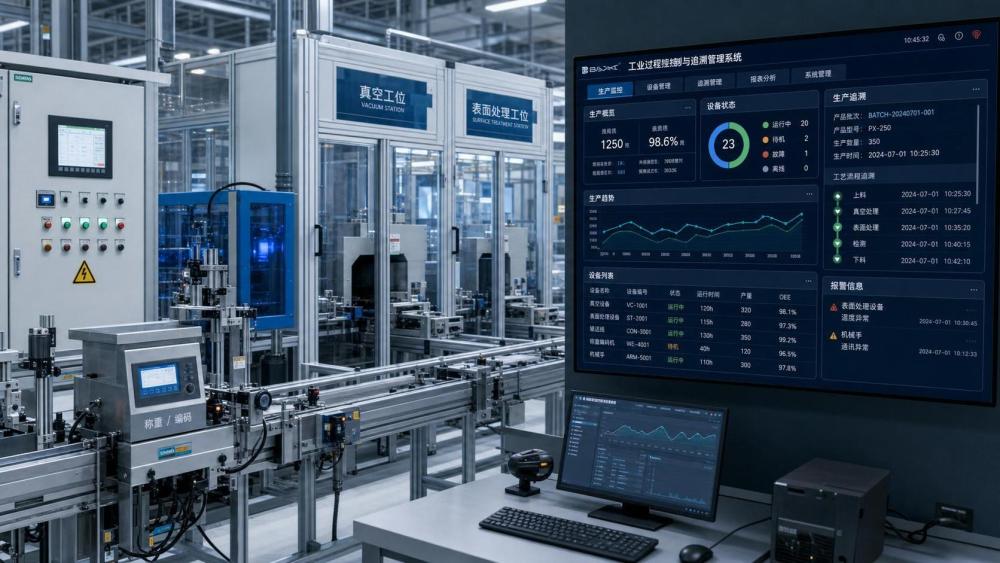
Choosing the right industrial process control software can decide whether a plant runs steadily or drifts into avoidable variation.
The choice is rarely about a nicer dashboard alone.
It shapes production visibility, traceability, quality control, alarm response, and daily execution across connected equipment.
That becomes more important in plants using auxiliary systems such as weighing, coding, vacuum, ultrasonic, coating, and surface treatment technologies.
In those environments, weak software creates blind spots between process steps.
Strong industrial process control software turns those gaps into measurable control.
Why software selection now has higher operational impact
Recent manufacturing changes have raised the stakes for software selection.
Plants face tighter compliance rules, more batch variation pressure, and stronger customer expectations around documented process consistency.
At the same time, many lines combine legacy machines with newer digital equipment.
That mix makes industrial process control software a practical coordination layer, not just an IT purchase.
A sound decision should reduce risk on the floor, support expansion, and simplify root-cause analysis when performance slips.
1. Real-time visibility that operators can actually use
Real-time data is only useful when people can act on it quickly.
The best industrial process control software shows live process status, deviations, trends, and machine states in a clear, low-friction way.
This matters on mixing, batching, marking, vacuum, and cleaning lines where minor shifts can become quality problems.
Look for screens that show actionable context, not clutter.
- Live process values with acceptable ranges
- Status by line, machine, batch, and work order
- Fast drill-down from alarm to cause
- Mobile or remote access for response teams
When evaluating industrial process control software, ask how quickly a supervisor can identify a drift and assign corrective action.
2. Flexible integration with existing plant equipment
Integration often decides whether implementation succeeds or stalls.
Many plants do not replace all machines at once.
They need industrial process control software that connects with PLCs, SCADA layers, sensors, MES platforms, ERP tools, and specialized auxiliary equipment.
This is especially relevant for factories running coded packaging, industrial weighing, vacuum systems, ultrasonic cleaning, or electrostatic coating lines.
A narrow integration model creates manual workarounds and inconsistent records.
A stronger platform supports standard protocols, open APIs, and practical onboarding for older assets.
During selection, request proof of integration in environments similar to your own process architecture.
3. Traceability and data history for quality and compliance
Traceability is no longer optional in many sectors.
Food, pharmaceuticals, chemicals, electronics, and export manufacturing all need defendable process records.
Good industrial process control software links process data to batch numbers, operator actions, machine states, recipe changes, and product identity.
That connection matters when investigating coating performance, weighing accuracy, vacuum stability, or code verification issues.
It also shortens response time during audits or customer complaints.
If traceability is weak, even a stable process becomes harder to defend.
4. Alarm management that reduces noise instead of adding it
Too many alerts create the same risk as too few.
Industrial process control software should prioritize abnormal conditions, escalate based on severity, and prevent teams from ignoring repeated nuisance alarms.
This becomes critical in continuous production, high-mix operations, and regulated manufacturing.
A useful alarm framework should answer three questions fast.
- What happened?
- How serious is it?
- What action should come next?
During vendor evaluation, review alarm logic, acknowledgment tracking, and event history instead of focusing only on screen appearance.
5. Recipe, parameter, and change control
In many plants, consistency depends on controlled settings more than machine capacity.
That is why industrial process control software should manage recipes, setpoints, tolerances, revisions, and approval workflows.
This is highly relevant for batching, dosing, ultrasonic welding, coating thickness control, and surface treatment sequences.
Without change control, small unauthorized edits can quietly damage yield for days.
A stronger system keeps approved parameters locked, documents revisions, and confirms deployment across all affected equipment.
That also makes startup, product switching, and multi-site replication more predictable.
6. Analytics that support decisions, not just reporting
Many software demos look strong because charts look polished.
The better question is whether analytics help improve process stability, throughput, quality, and maintenance planning.
Useful industrial process control software should reveal trend shifts before they become downtime or scrap.
For example, it may show rising variability in a batching step, recurring pressure loss in a vacuum system, or drift in code readability.
That kind of analysis supports faster intervention and better capital planning.
- Trend analysis by lot, shift, line, or supplier
- OEE-related views tied to process causes
- SPC support for critical quality variables
- Exportable reports for internal reviews and audits
In practice, decision-ready analytics make industrial process control software far more valuable than a static reporting layer.
7. Scalability, cybersecurity, and vendor support
The final feature set is broader but no less important.
Industrial process control software should scale from one line to multiple sites without losing governance or performance.
It should also support role-based access, secure updates, backup strategies, and practical recovery planning.
Cybersecurity is now part of operational reliability, especially when remote access and supplier connectivity are involved.
Vendor support also matters more than many teams expect.
A capable supplier should offer implementation guidance, training, upgrade clarity, and evidence of long-term product maintenance.
When comparing options, include service responsiveness and lifecycle support in the scoring model.
A practical evaluation checklist for software selection
A structured review process usually leads to better software decisions.
Before choosing industrial process control software, verify these points in real operating scenarios.
- Map critical process risks by line and product family.
- List required integrations with machines and business systems.
- Define traceability, alarm, and recipe control requirements.
- Request a demo using realistic plant data.
- Score vendors on usability, security, support, and total deployment effort.
- Run a pilot where process variability is already measurable.
This approach keeps software selection tied to production outcomes rather than generic feature claims.
It also helps expose hidden costs, training gaps, and integration delays before rollout begins.
The right industrial process control software should make the plant easier to run, easier to improve, and easier to trust under pressure.