
How to Evaluate Industrial Process Auxiliary Technology for Stable Throughput and Lower Downtime
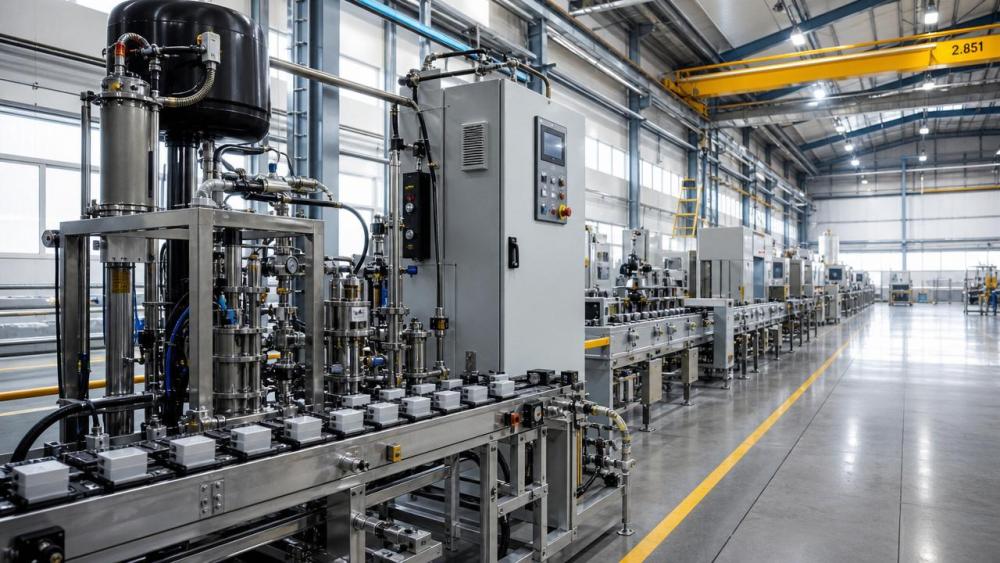
Evaluating industrial process auxiliary technology is no longer a side task. It often decides whether a line stays stable under pressure or slips into recurring downtime.
In many factories, auxiliary systems look secondary. In reality, they shape cleaning quality, coding accuracy, batching consistency, vacuum stability, and coating performance.
That matters because unstable support systems usually create hidden losses first. Yield drops, rework rises, traceability weakens, and operators spend more time firefighting.
A better evaluation process looks beyond brochure claims. It checks process fit, maintenance burden, control logic, compliance needs, and total operating risk.
For industrial process auxiliary technology, the smartest decision is usually the one that protects throughput over years, not just during equipment acceptance.
Start With the Real Production Constraint
Before comparing suppliers, define what is actually limiting the line. Is the problem contamination, unreadable codes, recipe drift, vacuum fluctuation, or poor coating adhesion?
This step sounds basic, yet it is where many selection projects go wrong. Teams buy advanced equipment without linking it to a measurable production bottleneck.
A practical review should map each issue to a process outcome. That includes throughput, defect rate, line stoppage frequency, cleaning cycle time, and traceability accuracy.
When evaluating industrial process auxiliary technology, start with three baseline questions:
- Which process loss is costing the most each month?
- Which support system has the highest effect on that loss?
- Which performance gap can be verified with plant data?
Once the constraint is clear, evaluation becomes sharper. Specifications become easier to challenge, and vendor claims become easier to test.
Define Performance Criteria That Affect Throughput
The next step is turning production risk into measurable criteria. Good selection decisions depend on numbers that matter on the shop floor.
For cleaning systems, look at particle removal consistency, cycle repeatability, fluid control, and compatibility with part geometry.
For coding and marking, focus on readability, permanence, speed matching, substrate compatibility, and failure detection.
For weighing and batching, check dosing accuracy, response time, calibration stability, and recipe traceability.
For vacuum systems, measure pressure stability, recovery time, leak resistance, and energy efficiency under real load.
For surface treatment and electrostatic coating, assess thickness control, transfer efficiency, cure consistency, and environmental compliance.
A useful evaluation table keeps teams aligned:
This kind of structure keeps industrial process auxiliary technology decisions tied to plant performance, not just feature lists.
Check Process Compatibility, Not Just Equipment Capability
A common mistake is buying a technically strong unit that does not fit the production environment. Compatibility issues often show up only after installation.
In actual operations, process compatibility is often more important than peak performance. The equipment must work with materials, line speed, utilities, and operator routines.
Review the following points early:
- Part size variation and fixture requirements
- Substrate sensitivity to heat, chemicals, or pressure
- Existing PLC, MES, and traceability interfaces
- Compressed air, power quality, water, and exhaust needs
- Operator skill level across different shifts
This is where industrial process auxiliary technology often succeeds or fails. A high-end system that needs perfect conditions may underperform in a plant with variable input quality.
From a decision standpoint, robust tolerance is usually worth more than laboratory-level precision that is difficult to sustain in production.
Look Closely at Downtime Risk and Maintenance Burden
Lower downtime rarely comes from one strong specification. It usually comes from easier maintenance, faster fault isolation, and fewer unstable components.
Ask suppliers how the system behaves after months of use, not just during factory acceptance. Wear patterns often reveal more than demo results.
A solid industrial process auxiliary technology review should include:
- Mean time between failures under comparable production loads
- Mean time to repair for common faults
- Spare parts lead time and local availability
- Cleaning, calibration, and preventive maintenance frequency
- Alarm history, remote diagnostics, and root cause visibility
This also means checking human factors. If maintenance requires rare skills or long shutdown windows, the total risk rises quickly.
In many plants, the best auxiliary technology is the one operators can understand, maintain, and recover without waiting for outside support.
Evaluate Data Quality, Control Integration, and Compliance Support
Modern industrial process auxiliary technology should support more than mechanical performance. It should also strengthen process data, audit readiness, and control transparency.
That is especially important in food, pharmaceuticals, electronics, automotive, chemicals, and battery manufacturing, where traceability and process proof matter every day.
Check whether the system can log key events automatically. Manual records often fail when production gets busy.
Useful questions include:
- Can it export process data in usable formats?
- Does it support alarms, trend history, and parameter lockouts?
- Can quality teams verify changes by batch, shift, or product code?
- Does it help with GMP, ISO, or customer-specific documentation needs?
More clearly now, buyers are not only choosing machines. They are choosing how easily the process can be monitored, explained, and defended during audits.
That shift makes digital visibility a core selection factor, especially when production consistency affects export readiness and customer trust.
Use Trials and Supplier Reviews to Reduce Selection Risk
Even a strong paper comparison is not enough. Industrial process auxiliary technology should be validated through realistic trials whenever the process risk is high.
Trial design should reflect production reality. Use actual materials, target cycle times, expected contamination levels, and normal operator conditions.
During supplier evaluation, pay attention to how technical questions are handled. Fast answers matter, but clear engineering logic matters more.
A practical shortlist review should include:
- Relevant application references in similar industries
- Documented performance under comparable throughput levels
- Installation, training, and service response capability
- Transparency on limitations, consumables, and operating cost
- Willingness to support trial-based parameter optimization
This is where reliable suppliers stand out. They do not oversimplify process risk, and they do not hide the conditions required for stable results.
Build a Decision Framework Around Total Process Value
The final decision should combine technical fit, downtime exposure, operating cost, compliance support, and long-term scalability.
Price still matters, of course. But low purchase cost can become expensive when it brings unstable output, weak service, or frequent process interruption.
A simple weighted model often works best. Score each industrial process auxiliary technology option against the same plant priorities.
Typical decision categories include process performance, reliability, integration, maintainability, compliance readiness, and supplier support.
If two options score closely, choose the one with lower operational uncertainty. In complex manufacturing, stable performance usually creates more value than theoretical maximum output.
That is the bigger point behind evaluating industrial process auxiliary technology well. These systems quietly shape yield, compliance, uptime, and product reputation.
A disciplined evaluation process makes selection more defensible and outcomes more predictable. Start with the production constraint, test real compatibility, and verify lifecycle support before final approval.
When that approach becomes standard, throughput is easier to protect, downtime is easier to control, and every auxiliary investment works harder for the whole manufacturing system.