
Why does the choice of a food processing equipment manufacturer matter more than many teams expect?
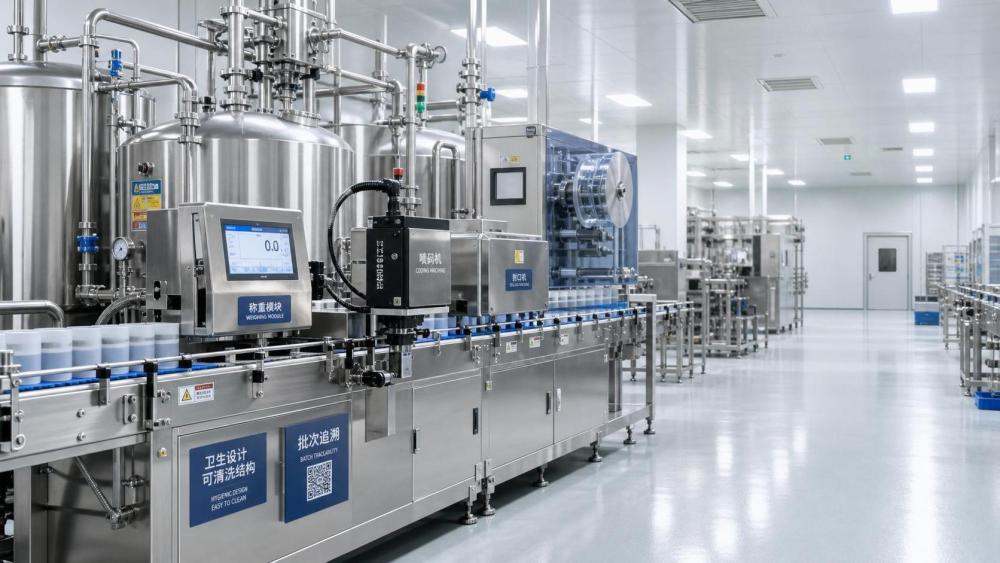
Choosing a food processing equipment manufacturer is not only a purchasing decision. It shapes hygiene performance, production consistency, audit readiness, and future expansion options.
In food plants, small design details often create big downstream effects. Surface finish, weld quality, drainage angles, sealing structure, and cleanability all influence contamination risk.
That is why the best manufacturer is rarely the one with the lowest quote alone. A cheaper machine can become expensive through rework, downtime, product loss, and compliance pressure.
A strong food processing equipment manufacturer should understand not only primary processing machines, but also the auxiliary systems surrounding them.
In practice, traceability depends on more than mixers, fillers, or conveyors. It also depends on coding systems, weighing accuracy, hygienic cleaning, and stable packaging support.
This broader view matters because food production is becoming more data-driven. Batch control, product identification, and sanitation verification now affect both operational risk and brand credibility.
Platforms such as GIAS reflect this reality by focusing on auxiliary equipment that supports quality at the process level, not only at the final inspection stage.
So when evaluating a food processing equipment manufacturer, the useful question is not simply, “Can they build the machine?” It is, “Can they support hygienic and traceable production as a system?”
What should you check first when comparing food processing equipment manufacturers?
Start with technical fit, not brochure language. A capable food processing equipment manufacturer should explain how the equipment behaves in your actual product environment.
That includes viscosity, temperature range, allergen changeovers, cleaning method, moisture level, and packaging speed. Generic claims are not enough.
It also helps to review a short decision table before moving into quotations. This keeps the comparison factual and reduces bias toward appearance or presentation style.
A reliable food processing equipment manufacturer should answer these points with documents, not just verbal assurance. Drawings, test records, and validation references usually reveal the real capability level.
More importantly, the manufacturer should discuss process-support equipment naturally. If they ignore coding, weighing, vacuum, or cleaning links, the proposal may be too narrow.
How do hygiene design and traceability work together in real production?
These two issues are often reviewed separately, but they are operationally connected. Hygienic design prevents contamination, while traceability helps isolate and verify what happened if something goes wrong.
A food processing equipment manufacturer should be able to support both at the same time. If only one side is considered, the production line remains exposed.
For example, an excellent batching system loses value if batch numbers cannot be marked reliably on packaging. A well-coded product also creates risk if residue remains in hidden dead zones.
In actual applications, traceable production usually depends on several linked elements:
- Accurate weighing and dosing for recipe control.
- Stable coding or laser marking for batch identity.
- Cleanable contact surfaces and validated sanitation routines.
- Data capture from filling, sealing, inspection, and packaging steps.
- Vacuum or packaging integrity where shelf life depends on sealing conditions.
This is where the GIAS perspective becomes useful. It highlights that auxiliary systems, although less visible, often determine whether quality controls are practical or merely theoretical.
When a food processing equipment manufacturer understands these links, line design becomes more resilient. Audits are easier, recalls are narrower, and troubleshooting becomes faster.
Is a specialist manufacturer always better than a broad-line supplier?
Not always. The better choice depends on process complexity, internal engineering resources, and how much integration work is required.
A specialist food processing equipment manufacturer may offer deeper expertise in one application, such as high-hygiene mixing, aseptic filling, or delicate product handling.
That can be a major advantage when product sensitivity is high. It is also useful when cleaning validation or texture control is difficult.
A broad-line supplier, however, may coordinate mechanical, electrical, coding, weighing, and packaging interfaces more smoothly. This reduces handoff gaps between vendors.
A practical way to judge the difference is to ask who owns final performance. If a line problem appears, can one party diagnose the root cause across systems?
The answer matters because many failures are interface failures. A depositor may work, but not at the real line speed. A coder may print, but not with washdown-safe mounting. A vacuum packer may seal, but not consistently with upstream product variation.
So the right food processing equipment manufacturer is often the one with enough specialization to protect product integrity, and enough integration ability to protect overall line performance.
Where do buyers misjudge cost, lead time, and implementation risk?
The most common mistake is comparing purchase prices without comparing operating conditions. Low upfront cost can hide expensive sanitation labor, poor yield, or unstable coding quality.
Another mistake is underestimating factory acceptance and site integration work. A food processing equipment manufacturer may deliver the machine on time, yet commissioning still slips.
That usually happens when utility requirements, layout limits, software interface points, or traceability data formats were not clarified early.
The more useful cost view includes direct and indirect factors:
- Cleaning time per shift and chemical consumption.
- Product giveaway caused by inaccurate dosing or filling.
- Downtime linked to wear parts or hard-to-source components.
- Revalidation effort after design changes.
- Recall exposure if coding or batch linkage is weak.
Need a quick screen before final review? The table below helps identify whether a proposal is operationally mature or still too conceptual.
A mature food processing equipment manufacturer welcomes these questions. Evasive answers usually signal future implementation friction.
What is a practical final checklist before you select a food processing equipment manufacturer?
At the final stage, the decision should become narrower and more evidence-based. This is the moment to test assumptions, not repeat sales presentations.
A useful shortlist review often includes these questions:
- Has the manufacturer handled similar products, not just similar machine sizes?
- Do hygiene details support your cleaning method and validation expectations?
- Can the line connect with coding, weighing, vacuum, or inspection systems already planned?
- Are spare parts, service response, and technical documents clearly defined?
- Is total cost modeled across uptime, waste, cleaning, and compliance exposure?
If two suppliers look similar on price, the stronger choice is usually the one with clearer process logic and fewer hidden assumptions.
That is also why research sources matter. A platform such as GIAS is useful not because it pushes one machine, but because it helps connect primary equipment decisions with auxiliary process realities.
In food operations, reliable output depends on the whole chain. Cleaning precision, coding quality, weighing accuracy, vacuum stability, and surface durability all influence the final result.
The best next step is to map your hygiene requirements, traceability points, utility limits, and support expectations before requesting a final quote.
Once those criteria are written down, comparing a food processing equipment manufacturer becomes far more objective, and the risk of costly mismatch drops sharply.