
In modern manufacturing, product identification systems packaging strategies play a critical role in traceability, compliance, and recall control. For technical evaluators, understanding how coding, marking, and data integration support package-level visibility is essential when assessing process reliability and risk reduction. This article explains how identification systems strengthen packaging traceability, improve response speed during recalls, and support consistent quality across complex production environments.
For most technical evaluators, the real question is not whether identification is possible, but whether it remains readable, durable, and data-accurate throughout the product’s life cycle. A weak identification system creates blind spots in packaging traceability, while a well-designed one shortens recall scope, improves audit readiness, and reduces the cost of quality failures.
That is why product identification systems packaging decisions should be treated as part of risk control, not just print quality. The best systems connect code generation, inspection, database linkage, and line performance into one traceable workflow that supports production, logistics, and compliance teams at the same time.
What technical evaluators really need to know
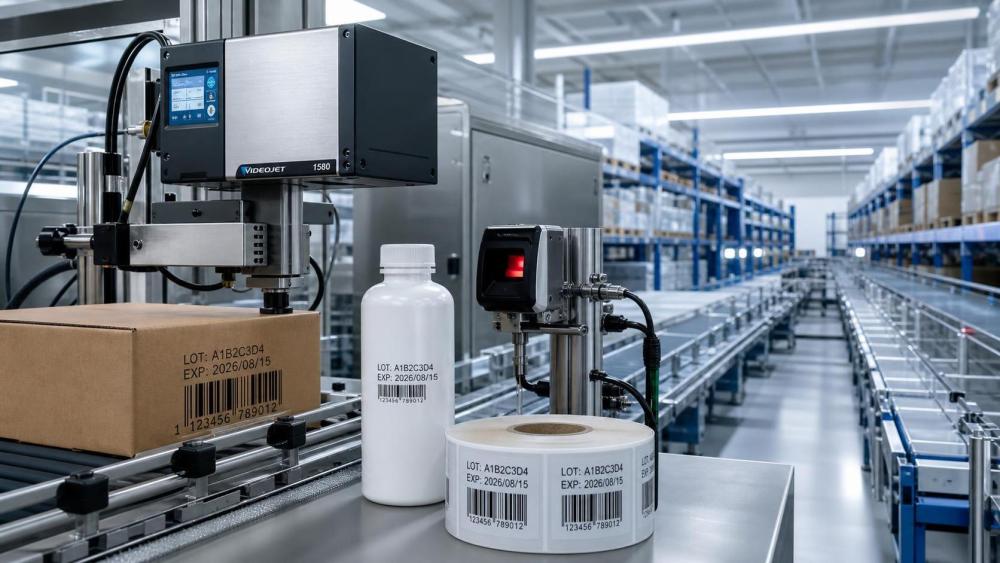
Technical evaluators usually look for more than visible codes. They need proof that identification survives handling, distribution, storage, and environmental stress without losing readability or database integrity.
That means the evaluation must cover code permanence, substrate compatibility, print contrast, scan reliability, and the ability to tie each package to a unique record. If any of those links fail, traceability breaks down exactly when it is needed most.
In practice, this is where product identification systems packaging programs differ from basic printing setups. The goal is not simply to mark a carton, label, or pouch, but to create a dependable identity for each sellable unit, case, and pallet.
For industries with compliance pressure, such as food, pharmaceuticals, chemicals, and industrial components, that identity must be legible to humans, readable by machines, and consistent across every production run.
How identification improves traceability at package level
Packaging traceability starts with assigning a unique code to the right level of packaging. That code may contain batch data, shift data, expiration details, serial numbers, or production line identifiers.
When this information is linked to a database in real time, manufacturers can track product movement from filling or packing through warehousing, distribution, and retail. That visibility reduces uncertainty and makes later investigations more efficient.
Product identification systems packaging architecture is strongest when coding is integrated with ERP, MES, or quality management systems. Integration prevents manual transcription errors and ensures that the printed code matches the record created at the source.
For evaluators, the important point is traceability depth. A system should be able to identify whether an issue affects one unit, one batch, one pallet, or one production window. The narrower the traceable zone, the lower the cost of intervention.
That is especially valuable when customer complaints are intermittent or geographically scattered. Clear identification lets teams isolate affected products quickly instead of broadening the recall unnecessarily.
Why recall control depends on code quality and data linkage
Recalls become expensive when companies cannot prove where affected product went. A strong identification system reduces that risk by making every package queryable through a reliable code and a trusted data trail.
Good recall control depends on two things: accurate marking and accurate recordkeeping. If either one is weak, the recall team spends time validating data instead of removing risk.
For this reason, technical evaluators should test not only the mark itself, but also verification logic. Vision inspection, barcode grading, and automated rejection all matter because a code that cannot be scanned is operationally useless.
High-quality product identification systems packaging lines also support recall segmentation. They help teams identify specific SKUs, lot numbers, shifts, and packaging stations, which narrows the response and protects unaffected inventory.
That precision has direct financial value. It reduces waste, limits production downtime, and protects brand trust by keeping the corrective action proportionate to the actual problem.
Which technologies work best for different packaging needs
The right identification method depends on substrate, speed, environment, and regulatory demands. Inkjet coding is often used for high-speed, variable-data applications on cartons, pouches, and bottles.
Laser marking is preferred when permanence matters and the packaging material can support it. It performs well where smudge resistance, anti-counterfeiting, or harsh handling are concerns.
Labels remain useful where more data must be displayed, but they require attention to adhesion, abrasion, and moisture resistance. In many plants, a hybrid approach delivers the best result across different package formats.
Technical evaluators should ask whether the system can maintain readability at line speed, under normal plant contamination, and during downstream logistics stress. A system that works in a clean demo but fails on a real line has little value.
They should also check consumable stability, maintenance burden, and changeover speed. These factors often determine whether a packaging traceability program remains reliable after deployment.
How to evaluate return on investment
The return on identification systems is usually strongest in avoided loss rather than direct output gain. Faster recalls, fewer miscodes, lower rework, and reduced compliance exposure all contribute to measurable savings.
For management teams, the key is to compare system cost against the likely cost of one traceability failure. That includes scrap, customer claims, regulatory response, logistics disruption, and reputational damage.
Product identification systems packaging investments also improve operational discipline. When packaging data is standardized and visible, teams make fewer assumptions and detect process drift earlier.
That creates value beyond recall control. It supports better inventory accuracy, stronger export readiness, and more credible quality documentation during audits or customer reviews.
For technical evaluators, the best justification is often a risk-adjusted one. If a system can reduce the size and duration of a potential recall, it is paying for itself even before a major incident occurs.
Common failure points to watch before buying
Most failures are not caused by the printer alone. They come from poor system design, weak integration, inconsistent substrate performance, or a lack of verification at the point of print.
One common issue is unreadable codes caused by speed mismatch, ink spread, poor contrast, or surface curvature. Another is data mismatch between the code printed and the lot record stored in the system.
Technical evaluators should also look for gaps in operator workflow. If line staff can override alerts too easily, or if rework is not logged correctly, traceability loses credibility.
Environmental conditions matter as well. Dust, moisture, vibration, and temperature change can affect both mark quality and scanner performance, especially in industrial packaging environments.
The most reliable systems reduce these risks with automated checks, simple interfaces, and clear rejection logic. Complexity should sit in the backend, not in operator actions.
What a strong implementation should include
A practical implementation should include durable mark creation, real-time data capture, code verification, and direct linkage to production records. These functions should work as one system, not separate tools.
It should also support packaging hierarchy, so item, case, and pallet identities can be related without manual reconciliation. That structure becomes critical during shipping investigations and recall containment.
Training and maintenance are part of the system, too. A technically sound line can still fail if operators do not understand verification steps or if consumable replacement is inconsistent.
The most effective programs include clear ownership between production, quality, IT, and compliance teams. Traceability is only as strong as the process that supports it.
In mature operations, product identification systems packaging capability becomes a shared control point that links quality assurance with logistics accuracy and regulatory confidence.
Conclusion
Product identification systems improve packaging traceability by making every package uniquely visible, searchable, and auditable across the supply chain. They improve recall control by narrowing the affected scope, speeding containment, and reducing avoidable business loss.
For technical evaluators, the main task is to judge whether the system can deliver durable marks, accurate data linkage, and reliable verification under real production conditions. That is the difference between a printing function and a traceability control system.
When evaluated properly, product identification systems packaging strategies are not a secondary upgrade. They are a core part of manufacturing risk management, compliance readiness, and long-term production reliability.