
Common Packaging Failures Caused by Poor Vacuum Level Control and How to Fix Them
In packaging operations, poor industrial vacuum level control packaging practices can trigger weak seals, trapped air, product stress, and faster spoilage.
When line performance drops, vacuum instability is often the hidden reason rather than the obvious one.
That matters because even a small vacuum deviation can affect seal integrity, oxygen level, appearance, and product consistency.
This article reviews common failures linked to industrial vacuum level control packaging and shows practical ways to restore stable operation.
Why Vacuum Level Control Fails in Real Packaging Lines
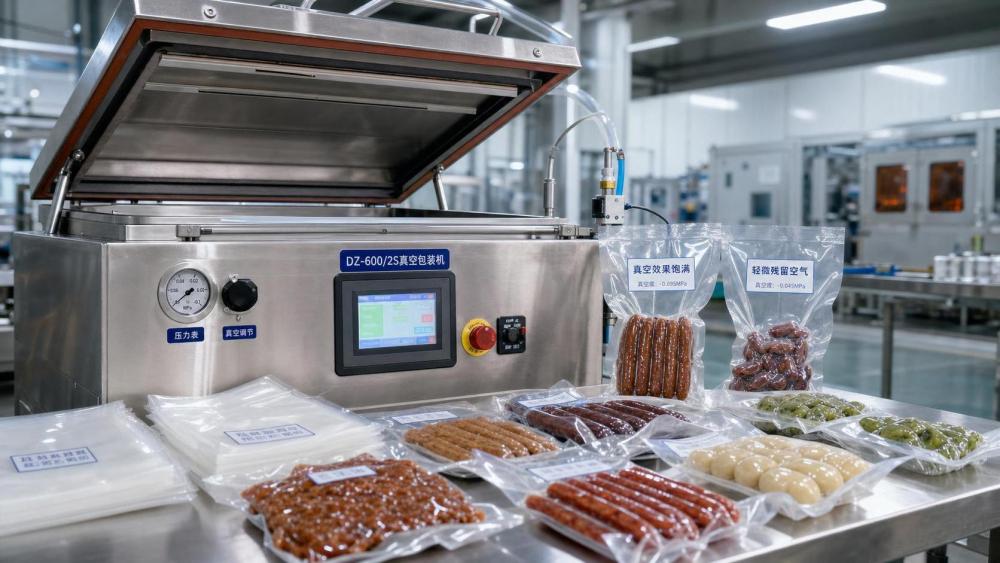
Vacuum packaging looks simple on the surface, yet the process depends on tightly controlled pressure, timing, heat, and material behavior.
If one variable drifts, industrial vacuum level control packaging quickly becomes inconsistent across shifts or product batches.
In many plants, the root cause is not pump failure alone.
It may involve leaking chambers, contaminated valves, unstable sensors, poor maintenance intervals, or packaging films outside specification.
From a service perspective, the first step is separating vacuum system problems from sealing or material problems.
That makes troubleshooting faster and prevents unnecessary part replacement.
Failure 1: Weak Seals and Early Package Leaks
Weak seals are among the most common results of poor industrial vacuum level control packaging.
The package may leave the line looking acceptable, then fail during storage, transport, or shelf display.
A frequent cause is incomplete air removal before the seal cycle begins.
Residual air changes bag tension and interferes with even seal formation.
Another issue is vacuum timing that ends too early because the setpoint is incorrect or the sensor drifts.
In actual service cases, contamination on sealing bars can make the problem look like a heater fault.
The better approach is to check the full sequence, not only the seal assembly.
How to fix it
- Verify actual chamber vacuum against the machine display.
- Check for leaks at door gaskets, fittings, hoses, and valves.
- Clean seal bars and confirm heat and dwell settings.
- Review film thickness, sealant layer, and product contamination near the seal area.
- Calibrate the vacuum sensor if readings do not match a reference gauge.
Failure 2: Trapped Air and Poor Pack Appearance
Visible air pockets are a clear warning sign that industrial vacuum level control packaging is not stable.
Sometimes the issue appears only on larger packs or products with irregular shapes.
That usually points to flow restrictions, poor chamber distribution, or product placement that blocks evacuation paths.
A worn pump can also slow evacuation enough to leave trapped air before the cycle moves forward.
More importantly, trapped air is not only a cosmetic problem.
It can accelerate oxidation, increase microbial risk, and reduce transport stability.
How to fix it
- Measure pump-down time and compare it with the machine standard.
- Inspect pump oil, filters, exhaust lines, and vane wear.
- Check whether product loading blocks air removal channels.
- Adjust bag position so the opening remains fully exposed during evacuation.
- Use test packs across different sizes to confirm uniform industrial vacuum level control packaging.
Failure 3: Product Deformation, Crushing, or Liquid Boil-Up
Not every packaging failure comes from too little vacuum.
In some cases, industrial vacuum level control packaging is too aggressive for the product inside.
Soft foods, delicate components, and moisture-rich items may collapse, crack, or release liquid during deep vacuum cycles.
This is especially common after recipe changes, seasonal product variation, or faster cycle targets.
The stronger signal is when appearance complaints rise even though leak tests still pass.
That means the package is technically sealed, but process control no longer matches product tolerance.
How to fix it
- Reduce the vacuum setpoint for fragile products.
- Use staged evacuation if the machine supports multi-step control.
- Shorten vacuum hold time when boil-up or moisture release appears.
- Validate settings for each SKU instead of sharing one recipe across all products.
- Coordinate packaging parameters with product temperature and fill condition.
Failure 4: Inconsistent Results Between Shifts or Machines
One machine produces stable packs, while another creates rejects using the same film and product.
This pattern often signals a control issue rather than an operator issue.
Industrial vacuum level control packaging depends on repeatable sensor feedback, valve response, and programmed timing.
If one machine drifts, similar settings can produce very different vacuum outcomes.
This also happens when preventive maintenance is uneven across a packaging line.
How to fix it
- Benchmark all machines using the same calibrated reference gauge.
- Compare vacuum curves, pump-down time, and seal initiation timing.
- Standardize maintenance intervals for oil, filters, seals, and calibration.
- Record actual values, not only displayed settings.
- Replace sticky solenoid valves or slow actuators that delay cycle transitions.
A Practical Troubleshooting Sequence
When downtime pressure is high, structured troubleshooting saves more time than fast guessing.
A simple sequence can narrow the fault quickly and improve industrial vacuum level control packaging recovery.
- Confirm the defect type through leak rate, appearance, and product condition.
- Check actual vacuum level with an external gauge.
- Inspect chamber seals, hoses, valves, and connections for leakage.
- Evaluate pump condition, oil quality, filter blockage, and evacuation time.
- Review recipe parameters, including vacuum setpoint, hold time, and seal timing.
- Verify film suitability and product placement inside the package.
- Run repeat tests and document the corrected baseline.
This process also creates useful evidence for future service calls and recurring failure analysis.
Key Root Causes and Corrective Actions
How Better Process Support Prevents Repeat Failures
Stable industrial vacuum level control packaging is rarely achieved by one repair alone.
It usually improves when maintenance data, equipment condition, and packaging settings are reviewed together.
That is where process-support knowledge becomes valuable across modern manufacturing environments.
Platforms such as GIAS highlight how auxiliary systems influence quality, traceability, consistency, and compliance behind the main production equipment.
For vacuum packaging, this means looking beyond the pump itself and managing the full control chain.
When the vacuum system, packaging material, and machine settings stay aligned, failures drop and line confidence improves.
Final Takeaway
Most packaging defects linked to vacuum are measurable, repeatable, and fixable.
The key is to treat industrial vacuum level control packaging as a process issue, not only a machine issue.
Start with actual vacuum performance, then move through leaks, pump health, recipe settings, and material fit.
That approach reduces repeat breakdowns, improves package quality, and restores reliable production faster.
If recurring failures continue, document the vacuum trend, compare machines, and reset the baseline before the next production run.