
When Robotic Automation Integration Fails: Common Bottlenecks in Line Upgrades
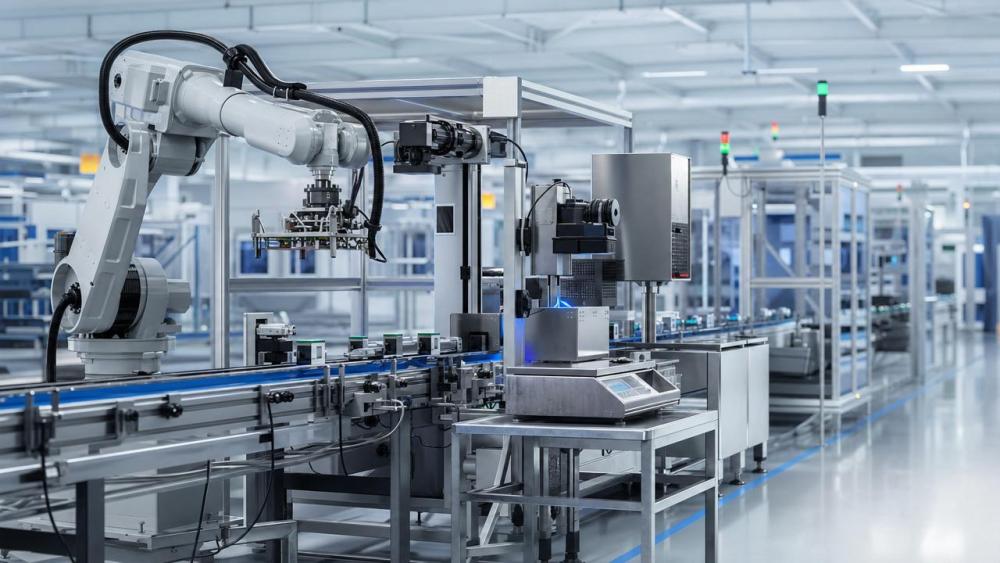
Robotic automation integration often looks simple on paper. In practice, line upgrades fail when hidden constraints stay invisible until commissioning begins.
The promise is attractive: faster throughput, steadier quality, and lower dependence on manual labor. The reality becomes harder when mechanical, digital, and human systems must work together.
Most failures do not come from the robot alone. They come from timing gaps, poor data flow, incompatible auxiliary equipment, and weak process design.
That is why robotic automation integration should be treated as a full line engineering project, not a stand-alone machine purchase.
From recent projects across advanced manufacturing, a clearer signal is emerging. Auxiliary systems often decide whether an upgrade succeeds or stalls.
Cleaning precision, vacuum stability, coding accuracy, weighing consistency, and surface treatment quality all affect robot performance in real production.
If those supporting steps are unstable, robotic automation integration becomes an expensive way to automate inconsistency.
Why line upgrades fail more often than expected
A line upgrade usually starts with a target. Increase capacity, reduce defects, improve traceability, or solve labor shortages. Those goals are valid, but they can hide operational friction.
Robotic automation integration fails when planning assumes ideal inputs. Real factories rarely operate under ideal conditions for long.
Parts may arrive with variable cleanliness. Fixtures may drift. Upstream batching may fluctuate. Marking systems may slow the cycle during data changes.
These are not side issues. They shape motion paths, sensor confidence, error recovery, and final throughput.
In many projects, the robot is specified first. The surrounding process is reviewed later. That sequence creates risk from day one.
The most common planning mistake
Teams often design around nominal cycle time. They do not model changeovers, micro-stops, material variation, cleaning delays, or code verification steps.
As a result, robotic automation integration passes the concept review but struggles during factory acceptance and live ramp-up.
Bottleneck 1: system compatibility across the line
Compatibility problems are one of the biggest robotic automation integration risks. They appear in controls, mechanics, communications, and process interfaces.
A robot may be fast enough. The feeder may not be. A laser marker may support data exchange, but not at the response speed your recipe changes require.
An ultrasonic cleaning system may deliver excellent cleanliness, yet fail to match the line takt because basket loading was not redesigned.
Vacuum systems can create another hidden issue. If pump-down time is unstable, the robot waits. Once that happens, upstream buffering becomes unreliable.
- Check PLC, robot controller, and MES communication before mechanical installation.
- Map every handshake, alarm, interlock, and recipe transfer point.
- Review auxiliary equipment response times, not only nameplate capacity.
- Validate fixture tolerances against robot vision and pick accuracy.
In short, robotic automation integration succeeds when every subsystem can perform under the same production rhythm.
Bottleneck 2: cycle time is balanced on paper, not in reality
Many line upgrades fail because the cycle time model is too clean. It measures average motion but ignores waiting time, quality holds, and data confirmation.
This matters even more when robotic automation integration includes marking, inspection, weighing, or curing steps.
For example, an inkjet coding unit may run fast during stable production. During product changeovers, message loading and verification can add several seconds.
In food, pharmaceuticals, chemicals, and battery production, weighing and batching precision may also slow release timing if recipe confirmation is manual.
A robot cell does not need every station to be equally fast. It needs the full process to be predictably balanced.
What to measure before launch
- Actual cycle variance by station, not average cycle only.
- Buffer depletion and accumulation patterns.
- Recipe download and traceability confirmation time.
- Recovery time after faults, rejects, and restarts.
This is where robotic automation integration becomes a process discipline, not only an automation exercise.
Bottleneck 3: poor traceability design blocks performance
Traceability is often treated as an IT requirement. In real production, it directly affects motion, release logic, quality decisions, and compliance confidence.
Robotic automation integration often includes laser marking, inkjet coding, scanning, and verification. If those steps are not synchronized, throughput suffers quickly.
One common issue is data mismatch. The robot moves the part, but the code record belongs to the previous cycle or wrong batch.
Another issue is unreadable marking after coating, cleaning, or surface treatment. The code exists, but downstream systems cannot trust it.
That breaks audit readiness and adds manual inspection, which defeats the point of automation.
Better robotic automation integration starts with traceability architecture, not with label placement alone.
Bottleneck 4: unstable upstream process quality
A robot repeats exactly what the process allows. If upstream quality fluctuates, automation will repeat defects with impressive consistency.
This is especially true in lines that depend on auxiliary systems. Precision cleaning, dosing accuracy, vacuum stability, and surface preparation all matter.
If parts retain microscopic contamination, robotic welding or coating results may become unstable. If batching drifts, product behavior changes before the robot even starts.
In semiconductor, medical, packaging, and electronics applications, small process deviations create large downstream consequences.
That is why robotic automation integration should include process capability checks for auxiliary equipment, not only acceptance tests for motion accuracy.
Questions worth asking early
- Does cleaning consistency match the robot’s tolerance window?
- Can weighing and batching data feed directly into release logic?
- Is vacuum performance stable across daily production variation?
- Will surface treatment change vision, marking, or gripping behavior?
Bottleneck 5: operators are included too late
Another reason robotic automation integration fails is human, not technical. Operators and maintenance teams often join late, after major design choices are fixed.
That creates friction during startup. Alarm messages are unclear. Changeover steps feel awkward. Manual recovery takes too long.
In actual business conditions, a line survives because people can keep it running through variation, not because the demo cycle looked perfect.
When robotic automation integration ignores operator workflow, small faults become long stops. Confidence falls, and workarounds return.
The stronger approach is simple: involve end users during risk review, HMI design, and recovery scenario testing.
How to de-risk robotic automation integration before spending more
If a project already feels exposed, the answer is not always a bigger robot or more software. Often, it is a better integration sequence.
- Map the full process, including cleaning, marking, weighing, vacuum, coating, and inspection dependencies.
- Measure actual variation from the current line before finalizing automation assumptions.
- Run interface tests early between controllers, scanners, databases, and auxiliary systems.
- Simulate fault recovery, changeovers, and partial stoppages, not only normal production.
- Tie acceptance criteria to traceability, quality stability, and recovery speed, not throughput alone.
This approach makes robotic automation integration more predictable and much easier to defend internally.
A practical way to think about successful upgrades
Successful robotic automation integration is rarely about one machine performing brilliantly. It is about the entire line behaving reliably under normal pressure.
That includes stable auxiliary systems, clean data flow, realistic cycle design, and people who understand how to recover quickly.
For manufacturers evaluating line upgrades, the smarter question is not, “Can this robot run fast?” It is, “Can this integrated process stay stable every day?”
That shift in thinking changes procurement, engineering review, supplier selection, and startup planning in useful ways.
When robotic automation integration is built around process discipline and supporting equipment performance, upgrades deliver stronger quality, traceability, and return on investment.
Start with the bottlenecks that seem small. In most line upgrades, that is exactly where the biggest delays begin.