
Powder Coating Lines India: What to Compare Before Choosing a Plant Layout
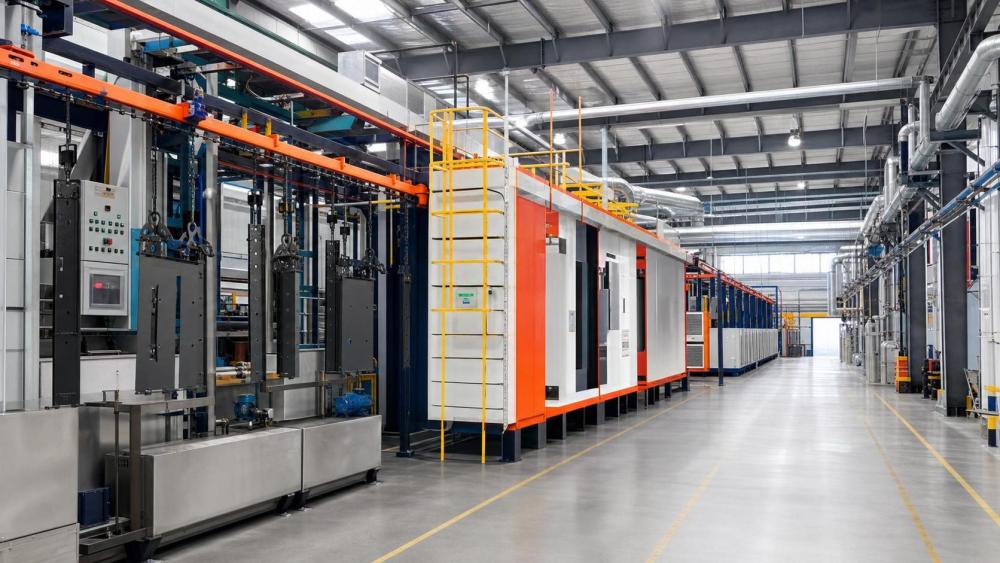
When reviewing powder coating lines India options, layout should come before price negotiation. A low-cost system can become expensive if movement paths, curing flow, or utility routing are poorly planned.
That matters even more in facilities with mixed product sizes, export quality demands, and rising energy costs. In practice, plant layout shapes output, coating consistency, maintenance time, and future expansion.
For many buyers, the real question is simple. Which powder coating lines India configuration will keep production stable for years, not just pass commissioning?
A strong comparison should cover part flow, pretreatment, oven sizing, booth recovery, conveyor logic, operator access, emissions control, and space for new capacity. Looking at only machine specifications is rarely enough.
Start With Part Flow, Not Equipment Count
The best powder coating lines India layouts usually begin with the product journey. How parts enter, hang, move, cure, cool, unload, and pack will determine line efficiency.
Some suppliers present long equipment lists. That can look impressive, but it does not show whether operators will face bottlenecks at loading points or inspection zones.
A practical review should ask:
- Are parts moving in one direction, or crossing paths?
- Can loading and unloading happen without congestion?
- Does the layout fit current SKU mix and part dimensions?
- Is there enough buffer space before curing and after cooling?
In many powder coating lines India projects, poor flow creates hidden cost. Extra handling increases rejects, damages coated surfaces, and slows cycle time.
A supplier that studies actual part movement often delivers more value than one offering the cheapest standard line.
Compare Pretreatment Layout in Detail
Pretreatment is often where powder coating lines India performance is won or lost. If cleaning and surface preparation are weak, coating quality will not stay stable.
The layout should match substrate type, production speed, and local water conditions. Steel furniture, auto components, aluminum profiles, and fabricated parts need different process control.
Key points to compare include stage count, tank access, drain design, sludge removal, and chemical dosing space. These details affect uptime more than brochure claims.
Ask whether the line uses spray pretreatment, dip pretreatment, or a hybrid arrangement. The right answer depends on geometry, contamination level, and throughput targets.
It is also worth checking whether the pretreatment area allows easy testing and correction. A layout that makes pH checks, concentration control, and nozzle cleaning difficult will raise operating risk.
Questions That Reveal Layout Quality
- Is chemical storage close enough for safe handling, but isolated from heat?
- Can maintenance teams reach pumps, filters, and spray headers quickly?
- Is wastewater routing planned for compliance and future treatment upgrades?
- Does the layout prevent contamination between stages?
Review Booth and Recovery Design for Real Production Conditions
Many powder coating lines India proposals focus heavily on gun count or booth appearance. A better comparison looks at powder recovery, color change time, airflow balance, and cleaning access.
If the factory runs frequent shade changes, booth layout becomes critical. A compact design with difficult corners can increase contamination and extend downtime.
For single-color, high-volume output, the priority may shift toward recovery efficiency and powder utilization. In that case, cyclone design, reclaim logic, and operator reach should be reviewed carefully.
Good powder coating lines India suppliers usually explain the booth around the production mix, not as a generic module. That is a strong signal.
Check Oven Position, Heat Logic, and Cooling Space
Oven layout directly affects cure quality in powder coating lines India facilities. Temperature uniformity is important, but so is the relationship between flash-off, curing, and part spacing.
A common mistake is choosing oven size from conveyor speed alone. That misses part mass, coating thickness, metal type, and shift variation.
The better approach is to compare cure window against the actual product mix. Heavy fabricated parts and thin sheet components do not behave the same.
Also review burner access, insulation quality, duct routing, and safety clearance. These items shape energy use and maintenance effort over the system life.
Cooling space after the oven should not be ignored. If coated parts are handled too early, surface marks and rework can rise quickly.
Utility Questions Worth Asking
- What is the expected gas or electric consumption at target throughput?
- How is temperature uniformity verified during acceptance?
- Can the oven support future product size changes?
- Is heat loss controlled around openings and transfer points?
Assess Conveyor Logic and Maintenance Access
Conveyor choice is central in powder coating lines India selection. Yet the bigger issue is how the conveyor fits production rhythm, plant geometry, and maintenance routines.
An overhead chain may save floor space, but only if loading height, turning radius, and service platforms are practical. Floor conveyors may simplify some tasks but reduce flexibility elsewhere.
Look closely at lubrication points, tension adjustment, spare parts access, and emergency stop placement. These are daily realities, not secondary details.
Reliable powder coating lines India layouts make maintenance possible without shutting down half the process area. That usually reflects better engineering discipline.
Measure Expansion Potential Before Signing
A layout that works today may become restrictive within two years. This is a common issue when powder coating lines India installations are planned only for current demand.
Capacity growth does not always mean a longer line. It may require a second booth, extra curing zone, more pretreatment storage, or automated loading support.
Ask suppliers to show expansion paths on the original layout. Blank floor area alone is not enough. Utility routing, structural clearance, and traffic flow also matter.
This is where powder coating lines India comparisons often separate strategic suppliers from transactional ones. Forward planning saves expensive relocation later.
Use a Decision Framework Instead of a Price Sheet
To compare powder coating lines India proposals fairly, score layout decisions against business impact. That creates a more reliable basis than line price alone.
A useful evaluation model can include:
- Part flow efficiency and handling risk.
- Pretreatment suitability for substrate and finish life.
- Booth recovery performance and color change practicality.
- Oven energy use, cure reliability, and cooling logic.
- Maintenance accessibility and spare support.
- Compliance readiness and wastewater or emission planning.
- Expansion flexibility over the next production cycle.
When this framework is applied consistently, powder coating lines India decisions become clearer. The strongest option is usually the one that lowers operational friction across the full plant.
Before final approval, request a layout walk-through using your own parts, your output targets, and your utility constraints. That final step often reveals issues hidden in standard proposals.
In the end, choosing among powder coating lines India suppliers is really about choosing a production logic. The right layout supports coating quality, cost control, compliance, and room to grow.