
Why are industrial eco-coating systems drawing more attention than conventional lines?
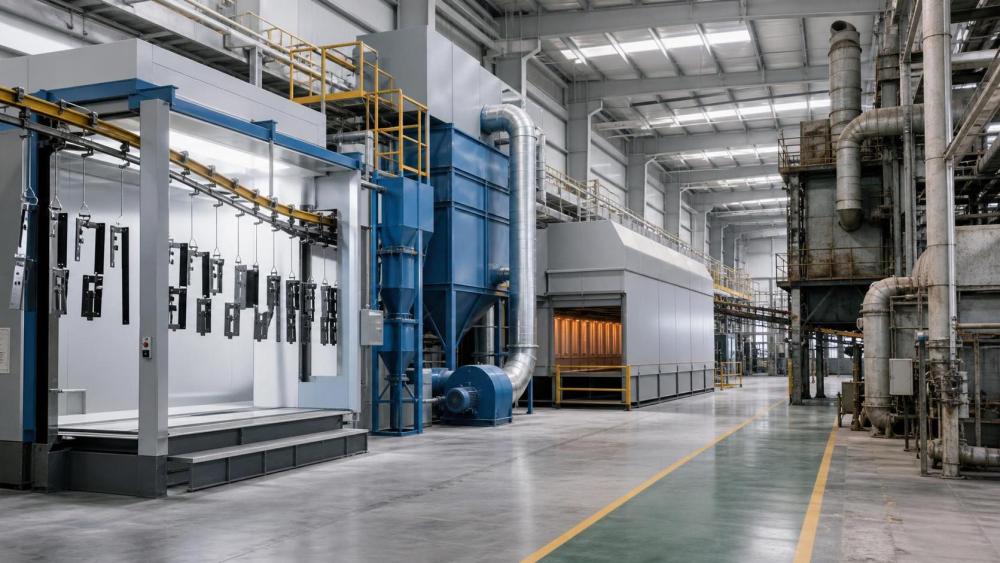
Finishing costs no longer sit only inside paint consumption and labor hours.
Energy prices, VOC limits, waste handling, rework rates, and audit exposure now shape the real economics of a coating line.
That is why industrial eco-coating systems have moved from a sustainability topic to a sourcing decision with direct financial impact.
In simple terms, these systems are designed to reduce overspray, emissions, water use, cure energy, or hazardous inputs.
They may include advanced electrostatic coating, powder recovery, low-temperature curing, improved pretreatment, and tighter process controls.
Conventional lines can still be viable, especially when products are simple and regulatory pressure is limited.
The difference is that industrial eco-coating systems often shift cost from recurring environmental burden toward better transfer efficiency and cleaner process stability.
Across advanced manufacturing, that shift also connects with adjacent process-support systems.
Surface treatment, vacuum support, weighing accuracy, product coding, and cleaning quality all influence coating yield and traceability.
This broader view is increasingly common on industrial intelligence platforms such as GIAS, where auxiliary systems are evaluated by their effect on final product reliability.
Is the higher upfront price really offset over time?
Usually, the answer depends less on nameplate price and more on what the line wastes every day.
Industrial eco-coating systems often require more capital because they include better booths, controls, reclaim units, curing optimization, or emissions treatment integration.
That does not automatically make them cheaper over the lifecycle.
The savings become visible when the plant has meaningful material loss, high utility consumption, compliance paperwork, or frequent touch-up work.
A useful comparison starts with five cost buckets rather than one purchase quote:
- Coating consumption per accepted part
- Energy demand for ovens, air handling, and recovery
- Filter, sludge, powder waste, and hazardous disposal
- Labor tied to masking, rework, and line cleaning
- Compliance monitoring, permits, and potential retrofit costs
In practical sourcing work, a low-price conventional line can become expensive if transfer efficiency is poor or future emissions upgrades are likely.
By contrast, industrial eco-coating systems often create steadier unit economics once utilization rises.
The break-even point tends to arrive faster in multi-shift production, export-oriented operations, or plants facing stricter environmental review.
A quick decision table helps separate price from value
Do eco-coating lines slow throughput, or can they improve it?
This is one of the most common concerns, and it deserves a careful answer.
Some industrial eco-coating systems add process steps, especially where pretreatment, powder recovery, or emissions control are tightly managed.
On paper, that can look slower than a basic conventional line.
In actual production, throughput is not only line speed.
It also includes uptime, first-pass yield, changeover time, and how many finished parts leave without rework.
A conventional line may run fast while silently losing capacity through rejects, booth cleaning, unstable film thickness, or uneven cure performance.
Industrial eco-coating systems can outperform that model when they deliver more stable coating windows.
That is especially true for mixed-product batches, corrosion-sensitive parts, and export goods requiring traceable finish quality.
A better question is not “Which line is faster?”
It is “Which line produces more accepted parts per shift with fewer interruptions?”
When evaluating suppliers, ask for data on transfer efficiency, rework ratio, color change time, and average downtime cause codes.
Those indicators reveal more than nominal conveyor speed.
Where do compliance and audit risks actually show up?
Compliance is often treated as a side issue until expansion, export review, or customer audits expose the weak points.
For coating operations, those weak points usually involve VOC emissions, hazardous waste handling, wastewater control, worker exposure, and process documentation.
Industrial eco-coating systems usually reduce risk because environmental performance is built into line design rather than patched on later.
That matters in sectors where the coating line supports export packaging, branded components, electronics housings, tools, appliances, fabricated metal parts, or industrial assemblies.
Need to prove consistent quality?
Then coating cannot be isolated from traceability and process control.
GIAS often frames this correctly across auxiliary technologies: cleaning quality affects adhesion, weighing accuracy affects pretreatment chemistry, and marking systems support batch traceability after coating.
That systems view is useful because audits rarely stop at one machine.
They examine whether the whole process can hold quality and compliance together.
Before signing off on a line, confirm these points:
- Expected local emissions limits and reporting duties
- Waste stream type, volume, and disposal route
- Film thickness control and cure verification method
- Cleaning and pretreatment compatibility with target substrates
- Availability of logged process data for customer or regulator review
How can you tell which option fits the application instead of following a trend?
Not every factory needs the most advanced industrial eco-coating systems.
The right fit depends on product mix, finish specification, annual volume, substrate sensitivity, and target markets.
For example, high-volume metal components with strict corrosion targets often justify eco-focused electrostatic or powder solutions quickly.
Low-volume operations with infrequent color changes may see slower returns unless compliance pressure is rising.
A practical evaluation usually looks like this:
- Map the coated part families by size, geometry, and finish class.
- Calculate cost per accepted part, not cost per liter or kilogram alone.
- Check whether future customer requirements may force cleaner chemistry or tighter traceability.
- Review utility constraints, floor space, exhaust treatment, and oven capacity.
- Ask suppliers for application-specific references, not generic brochures.
This is where many comparisons go wrong.
A line selected for broad environmental claims may underperform if substrate cleaning, chemistry control, or maintenance discipline are weak.
Industrial eco-coating systems work best when upstream and downstream support systems are also aligned.
What mistakes increase cost even after choosing the right technology?
The biggest mistake is assuming technology selection alone guarantees savings.
In reality, industrial eco-coating systems lose their advantage when the implementation scope is too narrow.
Common failures include undersized pretreatment, poor operator training, unrealistic cure assumptions, and weak spare parts planning.
Another frequent issue is ignoring data discipline.
Without clear records for reject causes, coating thickness, line stoppages, and emissions checks, the payback case becomes hard to verify.
A short internal checklist helps keep the decision grounded:
A well-bought line still needs disciplined commissioning and performance tracking.
So what is the smartest next step before comparing suppliers?
Start with a line-level fact set, not a vendor list.
Document current coating usage, accepted output, rework rate, energy profile, environmental controls, and expected market requirements over the next three to five years.
That baseline makes industrial eco-coating systems much easier to judge fairly against conventional lines.
Then compare proposals by total process effect.
Look at surface preparation, coating delivery, cure stability, emissions handling, data logging, and service capability as one package.
The most useful sourcing decisions usually come from this broader manufacturing view, which is also how GIAS organizes auxiliary equipment insight across cleaning, coding, weighing, vacuum, and surface treatment topics.
In the end, industrial eco-coating systems are not automatically the cheaper answer.
They are often the more resilient answer when quality consistency, compliance exposure, and long-term operating cost matter at the same time.
The next move is straightforward: define the real cost drivers, test assumptions with application data, and compare line options against future operating conditions, not only today’s budget line.