
Why Supplier Evaluation Matters Before You Source
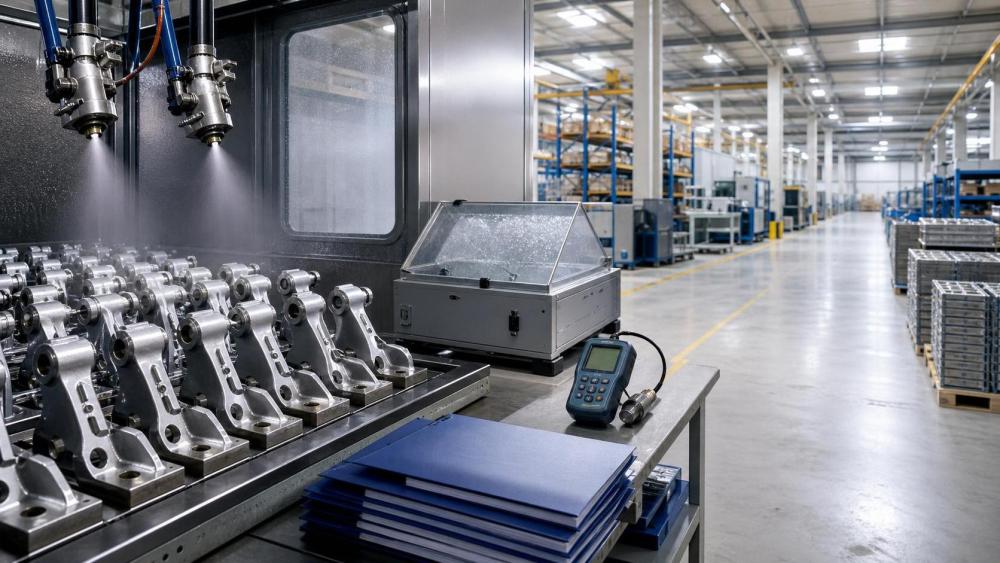
Choosing the right anti-corrosion coating technology manufacturer is not just about unit price.
It affects field life, warranty exposure, maintenance cycles, and downstream customer trust.
In practical sourcing, a low quote can become expensive after rework, coating failure, or claims.
That is why evaluating an anti-corrosion coating technology manufacturer needs a structured method.
The best suppliers do more than apply a coating.
They control substrate preparation, process stability, testing discipline, and compliance documentation.
A capable anti-corrosion coating technology manufacturer also understands the end-use environment.
Marine exposure, chemicals, humidity, abrasion, and UV all change the correct coating strategy.
From a procurement and cost view, early technical screening reduces supplier risk before trials begin.
It also shortens comparison time when several anti-corrosion coating technology manufacturer candidates look similar on paper.
Start With Application Fit, Not Generic Claims
The first question is simple.
Can the anti-corrosion coating technology manufacturer match your actual operating conditions?
Many suppliers present broad claims like high durability or excellent corrosion resistance.
Those claims mean little without a clear connection to your substrate, geometry, and service environment.
Ask for project examples that match your parts and failure risks.
A reliable supplier should discuss:
- Base material, including steel, aluminum, galvanized metal, or mixed assemblies
- Expected exposure, such as salt spray, solvents, high humidity, or outdoor weathering
- Required coating life and appearance retention
- Adhesion needs after forming, assembly, or transport
- Regulatory or customer specifications tied to the coated part
This stage reveals whether the anti-corrosion coating technology manufacturer is solving a real engineering problem.
It also exposes suppliers that rely on standard brochures instead of process expertise.
Review Process Capability in Detail
Corrosion performance starts long before the final coating layer.
The anti-corrosion coating technology manufacturer should explain each process step with confidence.
Pay close attention to pretreatment.
Poor cleaning, incomplete degreasing, or unstable surface conversion often causes early coating failure.
Ask how the supplier controls contamination, bath chemistry, drying conditions, and line parameters.
A mature anti-corrosion coating technology manufacturer should provide measurable controls, not vague descriptions.
Useful evaluation points include:
- Surface preparation method and cleanliness standards
- Coating thickness range and uniformity control
- Curing temperature, dwell time, and validation method
- Traceability for batches, operators, and inspection records
- Handling controls that prevent scratches before shipment
If the coating process depends heavily on manual work, ask how consistency is protected.
In actual business, repeatability matters more than one strong sample result.
Check Test Data, Standards, and Certifications
A serious anti-corrosion coating technology manufacturer should have evidence behind every performance promise.
Request recent test reports, not only a general quality certificate.
Look for recognized methods such as salt spray testing, adhesion testing, hardness, impact resistance, and chemical resistance.
Standards may include ASTM, ISO, or customer-specific protocols.
What matters is relevance, recency, and sample traceability.
Do not stop at passing results.
Check the test conditions, panel material, film thickness, and failure criteria.
This is where weak comparisons often appear.
For compliance, review whether the anti-corrosion coating technology manufacturer can support required documentation.
That may include ISO 9001, environmental controls, RoHS, REACH, or industry-specific declarations.
A useful way to compare suppliers is with a simple score table:
Assess Production Capacity and Supply Reliability
A strong sample run does not guarantee stable mass supply.
The anti-corrosion coating technology manufacturer must show production discipline at your required volume.
Ask about line capacity, bottlenecks, maintenance schedules, and backup plans.
This becomes more important when coating is a final-stage process.
Any delay can hold finished goods, shipments, and revenue.
Also review raw material sourcing.
If the anti-corrosion coating technology manufacturer relies on one resin, pigment, or pretreatment supplier, supply risk rises fast.
Useful questions include:
- What is the normal lead time for sampling and mass production?
- How do you manage rush orders without changing quality controls?
- What is your on-time delivery rate over the last 12 months?
- Which materials have dual-source coverage?
- How are nonconforming lots isolated and reported?
Clear answers usually indicate a more dependable anti-corrosion coating technology manufacturer.
Look Beyond Price to Total Cost
Price still matters, but isolated unit cost is a poor decision tool.
The right anti-corrosion coating technology manufacturer should lower total ownership cost over time.
Compare the full cost picture:
- Sampling and validation cost
- Expected scrap or rework rate
- Warranty and field replacement exposure
- Packaging and transport damage risk
- Documentation and compliance support effort
- Maintenance interval or coating life extension
A cheaper coating can fail sooner, need thicker application, or create inconsistent appearance.
That often raises hidden costs across production, service, and customer returns.
When comparing bids, ask each anti-corrosion coating technology manufacturer to explain the cost drivers openly.
Validate Through Audits, Trials, and Communication Quality
Before final award, move from paperwork to validation.
A site audit often reveals more than a polished presentation.
Look for line cleanliness, storage discipline, inspection flow, and how operators follow procedures.
Then run a pilot order with agreed acceptance criteria.
That should cover appearance, thickness, adhesion, corrosion testing, packaging, and delivery consistency.
Also judge responsiveness.
A capable anti-corrosion coating technology manufacturer answers technical questions clearly and documents changes carefully.
That matters when specifications evolve or quality issues need fast containment.
A practical sourcing checklist should include:
- Technical capability matched to your use case
- Verified test reports and certifications
- Stable production controls and capacity
- Transparent cost structure
- Successful pilot performance and communication quality
In the end, the best anti-corrosion coating technology manufacturer is rarely the one with the shortest quote sheet.
It is the supplier that proves performance, controls variation, and supports long-term business reliability.
Use this framework to narrow options, compare with confidence, and source with fewer surprises later.