
Why Manufacturer Evaluation Matters in Corrosion Control
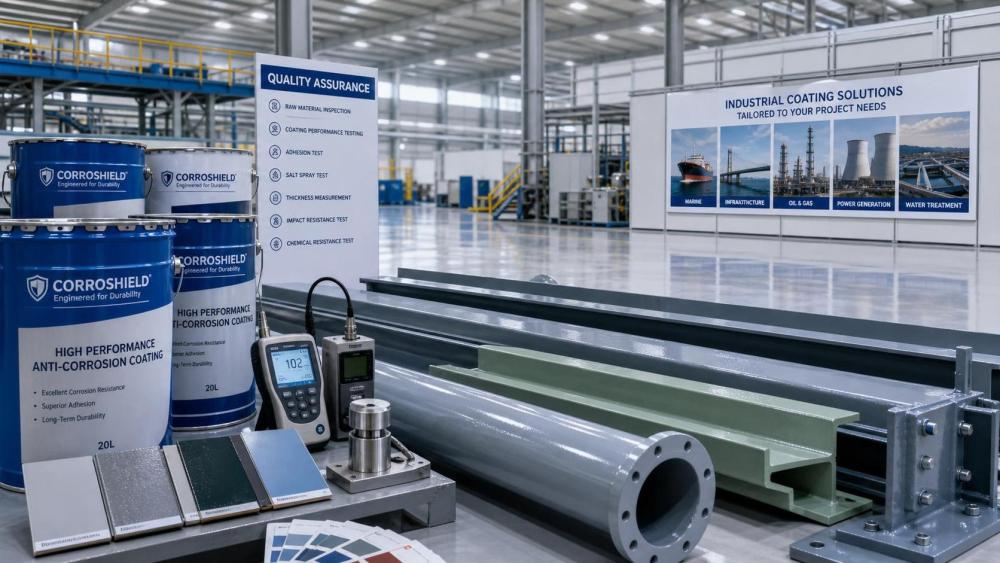
Choosing an anti corrosion coating manufacturer affects more than coating appearance. It shapes asset life, shutdown frequency, repair budgets, and project risk across the full operating cycle.
In industrial projects, a coating failure can trigger corrosion under insulation, premature steel loss, contamination, or non-compliance. That is why supplier evaluation should go far beyond a price sheet.
A reliable anti corrosion coating manufacturer should demonstrate technical depth, stable production, traceable quality control, and practical support before and after delivery.
From recent market shifts, the clearer signal is this: buyers now need proof of performance in specific service environments, not just broad product claims.
That also means the best decision often comes from matching the manufacturer’s capability to your substrate, operating temperature, media exposure, and compliance targets.
Start with the Real Service Conditions
Before comparing suppliers, define the coating duty clearly. A strong anti corrosion coating manufacturer will ask detailed application questions very early.
Those questions usually include substrate type, surface profile, humidity, immersion level, chemical contact, UV exposure, abrasion, and expected maintenance intervals.
If a supplier recommends a system without understanding those basics, that is an early warning sign.
Key operating details to define
- Indoor, outdoor, marine, buried, splash-zone, or chemical plant exposure
- Carbon steel, stainless steel, aluminum, galvanized steel, or concrete substrate
- New construction, maintenance coating, or touch-up project conditions
- Dry service, immersion service, or cyclic wet-dry exposure
- Temperature range during storage, application, and operation
- Required film thickness, cure time, and shutdown window
In practice, this step saves time later. It narrows the field to suppliers that can support the exact corrosion mechanism your project faces.
Check Technical Formulation and System Compatibility
Not all coatings solve the same problem. A capable anti corrosion coating manufacturer should explain why a system fits your environment, not just list product names.
For example, epoxy systems may offer strong chemical resistance, while zinc-rich primers can improve steel protection. Polyurethane topcoats may add UV durability and appearance retention.
The real issue is system design. Primer, intermediate coat, and topcoat must work together across the intended lifecycle.
Questions to ask about the coating system
- Which resin technology is used, and why is it suitable?
- Does the supplier provide a full coating system or only one layer?
- Is the system compatible with your existing maintenance coating?
- What surface preparation standard is required for performance?
- How sensitive is the coating to temperature or humidity during application?
- Can the system meet fast return-to-service requirements?
A dependable anti corrosion coating manufacturer should also provide technical data sheets, safety data sheets, and clear application instructions without hesitation.
Verify Testing Standards and Performance Evidence
This is where many supplier comparisons become more objective. Claims are easy. Verifiable data is harder, and far more useful for industrial procurement decisions.
A serious anti corrosion coating manufacturer should back performance with recognized test methods and application records from similar industries.
Performance evidence worth reviewing
- Salt spray, humidity, adhesion, impact, and abrasion test results
- Immersion resistance data for water, solvents, acids, or alkalis
- UV weathering and gloss retention records for outdoor service
- Third-party lab reports or certification from recognized institutions
- Case studies from oil and gas, marine, power, infrastructure, or process plants
- Expected service life under defined environmental categories
More importantly, ask whether the test conditions actually match your project. Generic lab results may look impressive but still miss your real failure mode.
This is also where a good anti corrosion coating manufacturer stands out. They can translate data into realistic field expectations, including limitations.
Review Manufacturing Capability and Batch Consistency
Even the right formulation can fail if production control is weak. Industrial buyers should examine how the manufacturer maintains consistency from batch to batch.
A qualified anti corrosion coating manufacturer needs stable raw material sourcing, controlled mixing processes, traceability, and release inspection before shipment.
What to verify in production capability
- Factory scale and annual output for the relevant coating category
- Quality control points for viscosity, solids content, density, and color
- Lot traceability and retention sample management
- Raw material qualification and change control procedures
- Packaging reliability for export, storage, and site handling
- Lead times for standard products and custom formulations
When projects span multiple deliveries, consistency matters as much as initial quality. Uneven batches can disrupt application, curing, and final protective performance.
Assess Quality Systems, Compliance, and Documentation
Documentation quality often reflects operational discipline. A reliable anti corrosion coating manufacturer should be able to support audits, tenders, exports, and regulated projects.
That includes product specifications, batch records, inspection reports, safety documents, and compliance information for local and international requirements.
Core documents to request
- Technical data sheet and safety data sheet
- Certificate of analysis or batch release record
- ISO-related quality management documentation, where applicable
- VOC, REACH, RoHS, or regional compliance statements, if relevant
- Surface preparation and application procedure guidelines
- Storage life, packaging labels, and transport classification details
In real purchasing workflows, incomplete paperwork can delay approvals even when the product itself looks acceptable.
That is why compliance readiness should be part of supplier scoring, not an afterthought.
Measure Technical Support Before and After Purchase
The value of an anti corrosion coating manufacturer is not limited to factory output. Technical support can determine whether the coating performs as designed in the field.
This becomes especially important for complex projects, mixed substrates, aggressive media, or application under narrow weather windows.
Support capabilities that reduce project risk
- Pre-sales coating selection based on service conditions
- Site guidance for surface preparation and film thickness control
- Application training for contractors or in-house teams
- Failure analysis support if defects appear after application
- Clear warranty scope and claim response process
- Fast communication during shutdown or commissioning periods
A supplier that disappears after shipment can create expensive delays. Responsive support usually signals stronger operational maturity.
Compare Total Cost, Not Just Unit Price
Price still matters, but unit cost alone can be misleading. The lowest quoted material cost may lead to higher lifecycle expense.
A better approach is to compare total value from each anti corrosion coating manufacturer across application efficiency, maintenance intervals, and expected service life.
Cost factors that deserve comparison
- Coverage rate and dry film thickness per coat
- Number of coats needed to reach target protection
- Cure speed and effect on outage duration
- Labor intensity during mixing and application
- Expected recoating cycle and inspection frequency
- Risk cost tied to early failure or process interruption
In many cases, the stronger anti corrosion coating manufacturer wins by reducing field labor, shortening downtime, or extending maintenance intervals.
Use a Practical Supplier Evaluation Framework
To make the final decision clearer, build a weighted scorecard. This keeps the selection process consistent across technical, commercial, and compliance requirements.
Suggested evaluation criteria
This method also helps internal alignment. Engineering, quality, and sourcing teams can compare the same anti corrosion coating manufacturer using shared decision rules.
Final Decision: Choose Proof Over Promises
The right anti corrosion coating manufacturer should bring more than a catalog. The supplier should deliver fit-for-purpose chemistry, controlled production, usable documentation, and dependable technical support.
When evaluating options, focus on evidence from similar industrial conditions. Look carefully at testing relevance, manufacturing consistency, and long-term service capability.
A disciplined review process reduces procurement risk and improves lifecycle value. In the end, the best anti corrosion coating manufacturer is the one that performs reliably when field conditions become demanding.
If the next step is supplier shortlisting, turn these checkpoints into a request template. That simple move makes every comparison faster, clearer, and easier to defend.