
Coating Performance Testing ASTM Standards: Which Tests Matter for Adhesion, Wear, and Corrosion?
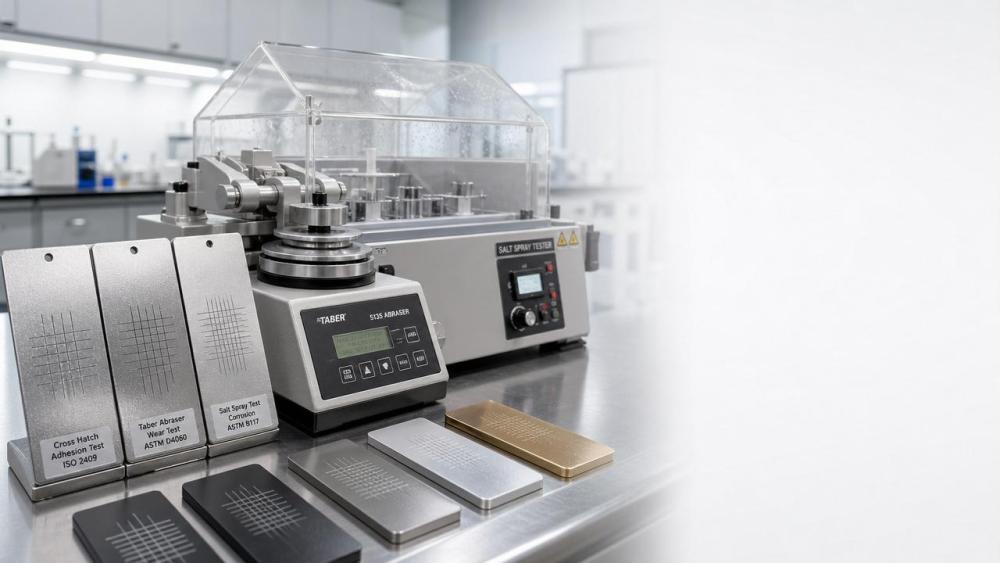
For quality control and safety teams, coating performance testing ASTM standards are the practical benchmark behind coating reliability.
They help confirm whether a coating survives real stress, not just supplier claims.
That matters when coatings protect metal parts, equipment housings, tools, pipelines, or consumer-facing surfaces.
In daily operations, coating failure rarely starts as a dramatic event.
It often begins with weak adhesion, gradual wear, or small corrosion spots that spread over time.
This is why coating performance testing ASTM methods remain central in qualification, incoming inspection, and failure analysis.
The key is not to run every possible test.
The smarter approach is choosing ASTM coating tests that match the coating type, end-use environment, and risk level.
From a compliance and product safety perspective, that choice directly affects approval speed and long-term consistency.
Below are the ASTM standards that usually matter most for adhesion, wear, and corrosion decisions.
Why coating performance testing ASTM standards matter in production
A coating may look smooth, glossy, and uniform, yet still fail under service conditions.
Appearance alone cannot predict bond strength, abrasion resistance, or corrosion protection.
That gap is where coating performance testing ASTM procedures become useful.
They create repeatable conditions for comparing coating systems, suppliers, pretreatment quality, and process stability.
In actual business settings, this supports several decisions at once.
- Approve or reject a new coating specification.
- Verify whether surface preparation is controlled.
- Compare liquid paint, powder coating, and plated systems.
- Support audit records and customer documentation.
- Reduce warranty risk linked to early coating breakdown.
More importantly, coating performance testing ASTM standards help teams focus on evidence instead of assumptions.
Which ASTM tests matter most for adhesion
Adhesion is often the first checkpoint because almost every other property depends on it.
If the coating does not stay attached, wear and corrosion resistance quickly collapse.
ASTM D3359 cross-cut tape test
ASTM D3359 is one of the most common coating performance testing ASTM standards for adhesion screening.
A lattice pattern is cut into the coating, then tape is applied and removed.
The rating shows how much coating detaches from the substrate or between layers.
This method is fast, low cost, and suitable for routine quality checks.
It is especially useful for painted panels, powder-coated parts, and general industrial finishing lines.
ASTM D4541 pull-off strength test
ASTM D4541 gives a more quantitative view of adhesion.
A loading fixture is bonded to the coating and pulled until separation occurs.
The result shows tensile force and failure mode.
This matters when teams need stronger evidence for critical assets, marine structures, or protective coatings in harsh service.
It also helps separate coating weakness from poor surface preparation or substrate contamination.
How to choose between them
- Use ASTM D3359 for fast process checks and supplier comparison.
- Use ASTM D4541 when a numeric adhesion value is required.
- Use both when the coating protects high-value or safety-sensitive equipment.
For most industrial programs, these two adhesion tests form the core of coating performance testing ASTM selection.
Which ASTM tests matter most for wear resistance
Wear becomes critical when coated parts face repeated contact, cleaning, friction, or handling.
This includes equipment covers, tools, appliance panels, transport components, and factory fixtures.
ASTM D4060 Taber abrasion test
ASTM D4060 is one of the most recognized coating performance testing ASTM methods for abrasion resistance.
A coated sample rotates under abrasive wheels for a defined number of cycles.
Weight loss or visual damage shows how quickly the coating wears away.
The test is useful when comparing coating formulations, cure quality, thickness, and topcoat durability.
ASTM D2486 scrub resistance test
ASTM D2486 is often used for coatings exposed to repeated cleaning.
It measures resistance to scrubbing and washability under controlled conditions.
For sectors with hygiene or appearance demands, this test can be more realistic than pure abrasion data.
What wear results really tell you
A good wear result does not automatically mean the coating is chemically resistant or corrosion-proof.
It simply confirms how the surface handles mechanical stress.
That is why coating performance testing ASTM plans should combine wear testing with adhesion and corrosion evaluation.
Which ASTM tests matter most for corrosion resistance
Corrosion protection is often the final reason a coating exists.
If corrosion creeps under the film, visual quality and structural integrity can both decline.
ASTM B117 salt spray test
ASTM B117 is the best-known coating performance testing ASTM standard for corrosion screening.
Samples are exposed to a salt fog environment for a defined period.
Inspectors then assess blistering, rusting, creepage, or coating breakdown.
It is widely used for metal finishing, automotive components, powder coatings, and protective industrial systems.
Still, it should be interpreted carefully.
Salt spray is a comparative tool, not a perfect prediction of outdoor life.
ASTM D1654 evaluation of painted specimens
ASTM D1654 supports corrosion testing by rating failure around scribes or damaged areas.
This is valuable because real coatings rarely fail only on perfect surfaces.
They fail at edges, cuts, fastener points, and mechanically damaged zones.
ASTM D714 and ASTM D610 visual corrosion ratings
ASTM D714 addresses blistering, while ASTM D610 addresses rust grading.
These supporting standards improve consistency in corrosion result reporting.
For teams comparing suppliers, consistent rating language is just as important as exposure time.
How to build a practical coating performance testing ASTM plan
A useful test plan starts with application risk, not with a random list of standards.
In practice, three questions usually guide the decision.
- Will failure create safety, compliance, or warranty exposure?
- Will the surface face friction, cleaning, weather, or chemicals?
- Is the coating decorative, protective, or both?
Once those answers are clear, test selection becomes much easier.
- For general industrial painted parts, start with ASTM D3359, ASTM D4060, and ASTM B117.
- For critical protective coatings, add ASTM D4541 and ASTM D1654.
- For frequently cleaned surfaces, include ASTM D2486.
- For visual result consistency, use ASTM D714 and ASTM D610 where relevant.
This balanced approach keeps coating performance testing ASTM programs focused and cost-effective.
It also reduces the common mistake of over-testing low-risk parts while under-testing critical ones.
Common mistakes when interpreting ASTM coating test results
Even solid coating performance testing ASTM data can mislead if context is missing.
Several mistakes appear again and again in factory and sourcing decisions.
- Assuming one strong test result proves total coating reliability.
- Ignoring substrate preparation, cleanliness, and coating thickness.
- Comparing results generated under different cure or exposure conditions.
- Treating ASTM B117 hours as a direct service-life guarantee.
- Failing to document failure mode, not just pass or fail status.
A coating can fail cohesively, adhesively, or at the substrate interface.
Those differences matter because they point to different root causes.
When teams capture that detail, coating performance testing ASTM results become much more actionable.
A practical decision framework for adhesion, wear, and corrosion
If the goal is fast, defensible decision-making, a simple framework works well.
This kind of matrix helps standardize internal review across engineering, sourcing, and compliance functions.
It also makes supplier discussions more precise because everyone is looking at the same performance logic.
Final takeaway
The most effective coating performance testing ASTM strategy is not the biggest test list.
It is the one that connects real failure risks with the right ASTM evidence.
For adhesion, ASTM D3359 and ASTM D4541 usually matter first.
For wear, ASTM D4060 and ASTM D2486 often give the clearest picture.
For corrosion, ASTM B117 supported by ASTM D1654, ASTM D714, and ASTM D610 remains highly relevant.
When these standards are chosen with intent, coating qualification becomes faster, clearer, and more defensible.
That also means fewer surprises after products leave the factory.
A practical next step is to review current coating specifications against actual service risks and align them with the most relevant coating performance testing ASTM standards.
That is where stronger quality control and safer long-term performance usually begin.