
Why Manufacturer Selection Matters in Anti-Corrosion Engineering
Selecting an Anti-Corrosion Engineering manufacturer is rarely a simple price comparison. The decision affects coating life, shutdown risk, inspection burden, and the long-term stability of industrial assets.
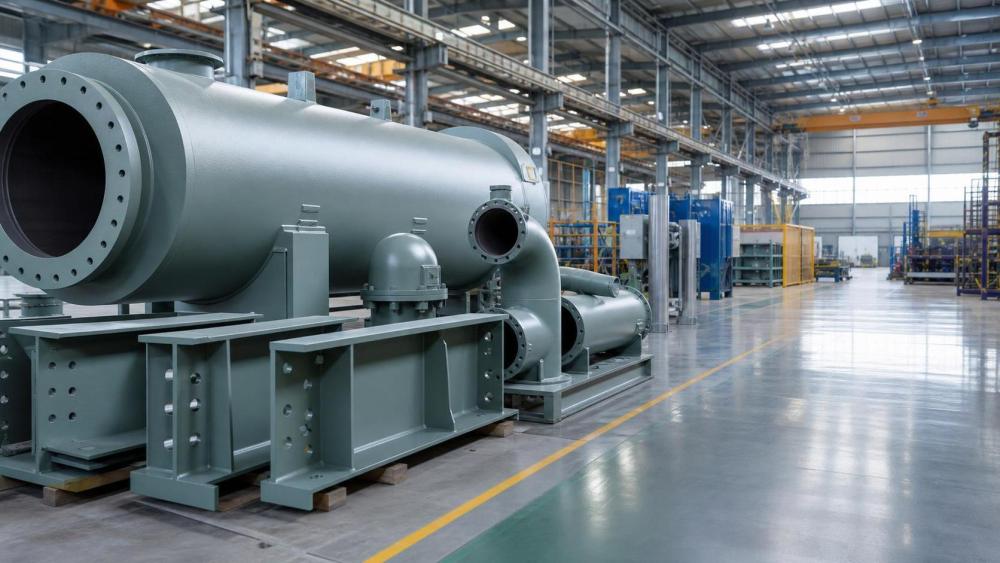
In many sectors, corrosion protection sits inside broader auxiliary system planning. It connects with surface treatment, electrostatic coating, cleaning quality, traceability, and process consistency across manufacturing operations.
That is why the subject has become more visible on platforms such as GIAS, where industrial buyers compare process-support technologies that shape final product reliability, compliance readiness, and maintenance cost.
A capable Anti-Corrosion Engineering manufacturer does more than apply paint. It interprets operating conditions, selects coating systems, controls preparation quality, and supports inspection through the project lifecycle.
For business evaluation, the real question is not only who can supply a coating package. It is who can deliver predictable performance under actual exposure, operating temperature, and maintenance constraints.
What an Anti-Corrosion Engineering Manufacturer Actually Provides
The term covers manufacturers and engineering providers that design, produce, apply, or integrate corrosion protection systems for metal structures, pipelines, tanks, equipment housings, and process infrastructure.
Their scope may include material assessment, blasting and cleaning, coating formulation, application methods, curing control, inspection, documentation, and field service support.
In practice, the strongest Anti-Corrosion Engineering manufacturer usually combines manufacturing capability with process discipline. Surface cleanliness, coating thickness, adhesion, and holiday detection often matter as much as material selection.
This is especially relevant in advanced manufacturing environments. Micron-level contamination, inconsistent pretreatment, or poor traceability can undermine corrosion resistance before equipment enters service.
That overlap with cleaning, surface treatment, and coating control aligns closely with the industrial themes covered by GIAS. Corrosion protection is not isolated from other auxiliary systems; it depends on them.
Standards That Separate Qualified Suppliers from Basic Contractors
Standards are one of the clearest ways to compare an Anti-Corrosion Engineering manufacturer. They show whether the supplier works from measurable criteria or from informal site habits.
Common reference frameworks include ISO 12944 for protective paint systems, NACE and AMPP practices for corrosion control, SSPC surface preparation standards, and ASTM test methods.
In regulated or export-facing projects, additional attention may be required for VOC limits, REACH compliance, RoHS restrictions, environmental permitting, and customer-specific approval protocols.
A credible Anti-Corrosion Engineering manufacturer should explain which standards apply to each project and why. That explanation should match the service environment, substrate condition, and expected design life.
Usually, standards competence also shows up in documentation quality. If reports are inconsistent, incomplete, or impossible to trace, project control is already weaker than it appears.
Coating Systems Should Match the Exposure, Not Just the Specification
Many projects fail because the chosen system looks adequate on paper but does not match the actual corrosion drivers. Exposure class, immersion status, abrasion, UV, chemicals, and temperature all change the answer.
An Anti-Corrosion Engineering manufacturer should be able to compare epoxy, polyurethane, zinc-rich primers, vinyl ester, fluoropolymer, powder coating, rubber lining, and thermal spray options with practical reasoning.
Where coating selection often becomes complicated
External steel in marine or coastal service may need a multi-layer system built around zinc protection, barrier performance, and UV-stable topcoats.
Chemical tanks and process vessels may need stronger resistance to acids, solvents, or elevated temperatures, which shifts evaluation toward specialized linings rather than standard decorative coatings.
Equipment enclosures in electronics, battery, or precision manufacturing may prioritize appearance, uniformity, cleanability, and environmental compliance alongside corrosion resistance.
That last point matters because surface quality is increasingly tied to broader process control. Pretreatment, cleanliness, and electrostatic coating consistency directly influence both performance and visual acceptance.
Questions worth asking during coating review
- What failure mode is the system designed to resist first: rusting, blistering, underfilm corrosion, abrasion, or chemical attack?
- What substrate preparation is mandatory for the promised service life?
- Which tests were used to validate the system under similar conditions?
- Can the Anti-Corrosion Engineering manufacturer show comparable field references instead of only laboratory claims?
Service Scope Often Determines Real Project Risk
Two suppliers may quote similar coatings but offer very different service boundaries. That difference can create hidden cost later, especially in shutdown-sensitive facilities.
Some companies focus on product supply only. Others provide engineering review, application supervision, inspection plans, onsite repair guidance, and post-installation support.
A stronger Anti-Corrosion Engineering manufacturer usually defines service scope in operational terms. The proposal should clarify who owns surface preparation, environmental control, acceptance testing, and defect correction.
This matters even more when projects cross regions. Export packaging, climate during transport, installation sequence, and local regulatory expectations can all affect final coating performance.
For industrial buyers using GIAS-style research methods, supplier comparison becomes more useful when service scope is mapped beside technical performance and compliance evidence.
Typical Use Scenarios Across General Industry
Anti-corrosion engineering is relevant well beyond heavy infrastructure. It supports process equipment reliability across sectors that depend on clean, stable, and traceable production systems.
In food, pharmaceuticals, and chemicals, corrosion control helps protect hygienic surfaces, utility lines, dosing systems, and storage assets that must remain stable under washdown or chemical exposure.
In electronics, semiconductor, and battery production, coating performance can affect cleanroom-adjacent equipment, vacuum system housings, frames, piping, and process-support structures.
In export manufacturing, surface durability also influences product presentation, shelf stability, and warranty claims. A poor finish may look cosmetic at first, then become a traceable quality issue later.
An experienced Anti-Corrosion Engineering manufacturer should understand these scenario differences and avoid one-system-fits-all recommendations.
A Practical Framework for Comparing Suppliers
A disciplined comparison model usually produces better outcomes than a quote-only review. The aim is to test technical fit, delivery confidence, and lifecycle implications together.
Core checkpoints
- Define the exposure environment clearly, including chemical contact, humidity, temperature swings, and maintenance access.
- Ask each Anti-Corrosion Engineering manufacturer to propose a system with stated standards, expected service life, and inspection requirements.
- Compare documentation discipline, not only coating chemistry or unit price.
- Review past projects that match the same substrate, location, and operating profile.
- Check whether failure analysis, repair procedures, and warranty boundaries are documented before award.
More importantly, evaluate how the supplier handles process interfaces. Cleaning quality, pretreatment stability, coating line control, and traceability often predict final reliability better than brochure language.
This is where broader industrial intelligence becomes valuable. When surface protection is reviewed alongside cleaning, marking, batching, vacuum, and coating technologies, hidden risks become easier to identify.
Moving from Research to Shortlist Decisions
The most useful next step is to turn general interest into a project-specific checklist. That means defining operating conditions, required standards, service boundaries, and acceptable evidence before supplier discussions deepen.
A good Anti-Corrosion Engineering manufacturer should make those variables clearer, not more ambiguous. Clear answers on coatings, testing, documentation, and after-service support are often the best sign of future execution quality.
Where the evaluation is still open, compare suppliers through real application cases, inspection records, and lifecycle assumptions. That approach creates a stronger basis for selection than unit price alone.
For organizations using GIAS as a research source, the advantage lies in connecting corrosion protection with the wider auxiliary systems that shape manufacturing consistency. That wider view usually leads to better long-term decisions.